The federal agent described her wounds as “boo-boos.”
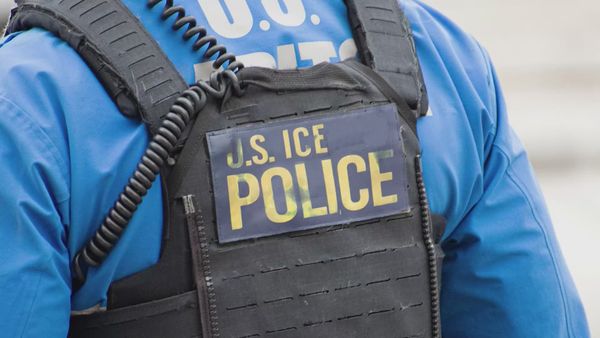
Nevertheless, the Justice Department aggressively pursued the alleged perpetrator. They jailed Sidney Lori Reid on a charge of felony assault, accusing her of injuring the agent during a July protest of President Donald Trump’s immigration crackdown in Washington, D.C.
When grand jurors thrice declined to indict the 44-year-old on the felony, prosecutors tried Reid on a misdemeanor.
Body camera footage played at trial revealed that Reid had not intentionally struck the agent. Instead, the agent had scratched her hand on a wall while assisting another agent who had shoved Reid and told her to “shut the f—- up” and “mind her own business.”
It took jurors less than two hours to acquit the animal hospital worker.
“It seemed like my life was just going to be taken away from me,” said Reid, who spent two days in jail and worried she would lose her new job and apartment. “It broke my heart because this is supposed to be a good and fair country and I did not see anything surrounding my case that was good or fair at all for anybody.”
Reid’s case was part of the Justice Department’s months-long effort to prosecute people accused of assaulting or hindering federal officers while protesting Trump's immigration crackdown and military deployments. Attorney General Pam Bondi has ordered prosecutors to charge those accused of assaulting officers "with the highest provable offense available under the law.” In a recent statement, Bondi pledged that offenders will face “severe consequences.”
The Justice Department has struggled to deliver on that commitment, however. In examining 166 federal criminal cases brought since May against people in four Democratic-led cities at the epicenter of demonstrations, The Associated Press found:
— Of the 100 people initially charged with felony assaults on federal agents, 55 saw their charges reduced to misdemeanors, or dismissed outright. At least 23 pleaded guilty, most of them to reduced charges in deals with prosecutors that resulted in little or no jail time.
— More than 40% of the cases involved relatively minor misdemeanor charges, a figure that appears to undermine Trump’s claims that many of those accused are domestic terrorists.
— All five defendants, including Reid, who went to trial so far were acquitted.
— Prosecutors have successfully secured felony indictments against at least 58 people, some initially charged with misdemeanors. Those people have been accused of an assortment of assaults that include throwing rocks at federal vehicles, and punching or kicking officers. Those cases are awaiting trial.
Several factors help explain the mixed record. Sometimes prosecutors have failed to win grand jury indictments required to prosecute someone on a felony. In other instances, videos and testimony have called into question the initial allegations, resulting in prosecutors downgrading offenses. In dozens of cases, officers suffered only minor injuries, or no injuries at all, undercutting a key component of the felony assault charge that requires the potential for serious bodily harm.
Felonies carry stiff sentences, often years in prison. A misdemeanor conviction, on the other hand, typically results in no jail time or only a few weeks or months behind bars.
Former prosecutors and law professors said the AP’s analysis raises questions about how the Justice Department has prosecuted protesters.
“It’s clear from this data that the government is being extremely aggressive and charging for things that ordinarily wouldn’t be charged at all," said Mary McCord, a former federal prosecutor who is the director of Georgetown University Law Center’s Institute for Constitutional Advocacy. "The other thing that is missing here from the way the federal government appears to be looking at these protests is there seems to be no respect for First Amendment rights. They appear to want to chill people from protesting against the administration’s mass deportation plans.”
Randall Eliason, a former federal prosecutor and former adjunct professor at the George Washington University Law School, said Justice Department officials could be working on other cases instead of "minor, minor misdemeanors.”
“Many of these cases also show how the rhetoric on Twitter and in press releases and statements is not surviving the courtroom,” he said. “What that tells you is that the Trump administration is hoping to send a message and chill future protests, not pursue serious criminal cases that need to be prosecuted.”
The Justice Department said it will continue to seek the most serious available charges against those alleged to have put federal agents in harm's way.
“We will not tolerate any violence directed toward our brave law enforcement officials who are working tirelessly to keep Americans safe,” said Natalie Baldassarre, a department spokesperson. "Those who attack law enforcement will be held fully accountable for their actions, despite the best efforts of activist liberal judges who would rather see violent criminals walk free.”
From the start of Trump’s second term through Nov. 24, the Department of Homeland Security says there have been 238 assaults on Immigration and Customs Enforcement personnel nationwide, up from 19 during the same period last year. The agency declined to provide its list or provide details about how it defines assaults.
The assaults have occurred amid a pair of shootings targeting immigration detention facilities in Texas and the deadly attack on National Guard troops in Washington by a former Afghan soldier who had worked for the CIA.
The specter of antifa
The administration has deployed — or sought to deploy — troops to the four cities where AP examined the criminal cases: Washington, D.C, Los Angeles, Portland and Chicago. Judges have blocked the deployments in Portland and Chicago, citing a lack of credible evidence there is any organized rebellion and finding that Trump administration officials had often exaggerated or lied about threats posed by protesters. A district judge and appeals court have gone back and forth over whether Trump must give control of the troops in California back to the state.
Trump and his administration have sought to justify the military deployments, in part, by painting immigration protesters as “antifa,” which the president has sought to designate as “domestic terrorist organization."
“President Trump will not turn a blind-eye to the sustained campaign of violence destroying American cities perpetrated by leftists and those who enable them,” said Abigail Jackson, a White House spokeswoman.
Short for “anti-fascists,” antifa is an umbrella term for far-left-leaning protesters who confront or resist neo-Nazis and white supremacists, sometimes clashing with law enforcement.
The AP’s review found only a handful of references to “antifa” in court records for any of the 166 cases it reviewed. Federal prosecutors wrote in court papers that a defendant in Portland was someone who “claims a loose association with Antifa.” In another case, an FBI agent wrote in an affidavit that conservative influencers had described a protester as an “Antifa helper or agitator."
The AP found no case in which federal authorities officially accused a protester of being a “domestic terrorist” or part of an organized effort to attack federal agents.
In affidavits for many of the Portland cases, federal agents referred to so-called “black bloc” protesters who wear all black clothing but did not use the word “antifa” to describe them.
In at least one press release, DHS has alleged a protester was a suspected member of antifa. That person was arrested outside a Chicago-area ICE facility in October while allegedly carrying a firearm. He has not yet been charged with a crime, court records show.
Five people pleaded guilty last month to terrorism-related offenses stemming from a July 4 shooting that wounded a police officer outside an immigration detention center near Dallas. Prosecutors in that case accused the defendants of being part of an antifa cell. It was not included in AP’s analysis because it did not occur in one of the four cities where Trump has sought to deploy troops.
“Rioters and other violent criminals have threatened our law enforcement officers, thrown rocks, bottles, and fireworks at them, slashed the tires of their vehicles, rammed them, ambushed them, and even shot at them,” said DHS Assistant Secretary Tricia McLaughlin.
Evaporating Felonies
The AP’s analysis showed that dozens of people charged with felonies have seen their offenses reduced to misdemeanors.
Among them was Dana Briggs, a 70-year-old Air Force veteran who was charged in September with assault after a protest in Chicago. Prosecutors first downgraded the charge to a misdemeanor. After video footage emerged of federal agents knocking Briggs to the ground, prosecutors dropped the case. Prosecutors declined to say why they dismissed it.
In Portland, 28-year-old Lucy Shepherd was charged in November with felony assault after she batted away the arm of a federal officer who was attempting to clear a crowd outside the city’s ICE facility. Her lawyers argued in court filings that a video of her arrest proved there had not been an assault. The video, they wrote, showed she brushed aside an officer with “too little force to have been intended to inflict any kind of injury on the officer whatsoever.” Prosecutors dropped the case.
The office of the U.S. attorney for Oregon declined to comment.
Prosecutors are not required to disclose why they sought to downgrade a charge, and much of that process is cloaked in secrecy. Legal experts said prosecutors typically take such action when they learn the evidence is weaker than expected or uncover facts that do not support a felony charge.
Court records showed that prosecutors have secured felony indictments against people who are accused of assaulting federal officers and agents in a host of ways. They have been accused of hurling rocks and projectiles at officers, punching or kicking them and shooting them with paintballs.
How a case dissolved
Marimar Martinez, a 30-year-old teaching assistant at a Montessori school, was arrested and charged in October with a felony, accusing her of trying to use her car to ram into a Border Patrol agent in a southwest Chicago neighborhood. A DHS press release asserted that she and the driver of another car involved in the incident were “domestic terrorists.”
In court papers, an FBI agent alleged that Martinez and the other driver were “aggressively” driving and chasing a Border Patrol vehicle.
When Border Patrol agents got out of their vehicle, the FBI agent wrote, Martinez drove at one of the agents. The agent was forced to open fire, the agent alleged, striking Martinez at least five times. She was treated at a hospital and released. Inside Martinez’s car, authorities recovered a loaded firearm, the agent wrote.
DHS noted in a press release that Martinez had been armed with a “semi-automatic weapon.” Martinez and a 21-year-old man were charged with assaulting a federal officer with her vehicle, which was classified as a dangerous weapon. They faced up to 20 years in prison.
Then the case fell apart.
It turned out Martinez legally owned the gun, and her attorneys contended that video footage — from security cameras and body cameras worn by Border Patrol officers — undermined the official narrative. The videos showed a Border Patrol agent steering his vehicle into Martinez’s truck, rather than the other way around, her attorney said. Text messages showed the federal agent bragging about his marksmanship after the shooting.
“I fired 5 rounds and she had 7 holes,” read a text message that the agent, Charles Exum, sent to colleagues. “Put that in your book boys.” Twenty-four hours after the shooting, Exum texted, “Cool, I’m up for another round.”
Federal prosecutors last month dismissed all charges against Martinez and the other driver. Martinez’s attorney celebrated the move but emphasized that his client’s “life is changed forever” due to her physical injuries, trauma and long-term impacts of being publicly branded a “domestic terrorist.”
“They call this ‘Operation Midway Blitz,’ but I call it ’Operation Midway Bust’ because this and every case that has come out of this has fallen apart,” said the lawyer, Christopher Parente.
Joseph D. Fitzpatrick, an assistant U.S. Attorney for the Northern District of Illinois, said prosecutors are constantly evaluating evidence to ensure “the interests of justice are served in each and every case.”
Legal experts said dropping cases or reducing charges are not straightforward victories for the accused.
They noted that defendants have to hire lawyers and may face significant legal expenses. They may also be held in jail for days or weeks, potentially losing jobs and seeing their families disrupted.
Lost at trial
Former federal prosecutors and defense attorneys said they were surprised that the Justice Department took at least five misdemeanor cases to trial. Such trials eat up resources, and those convicted frequently receive little jail time. The experts said they were also shocked DOJ lost all five cases at trial, a sign that the cases were particularly weak.
“When the DOJ tries to take a swing at someone, they should hit 99.9% of the time. And that’s not happening,” said Ronald W. Chapman II, a defense attorney with extensive experience in the federal courts.
The highest-profile loss involved Sean Charles Dunn, a Washington, D.C., man who tossed a Subway-style sandwich at a Border Patrol agent he had berated as a “fascist.” Dunn was acquitted Nov. 6 after a two-day trial.
Katherine Carreño was arrested in August on a felony assault charge, accused of striking a federal officer in Los Angeles. The 32-year-old was protesting with a group outside the downtown federal building when DHS security officers asked them to move out of the way of a vehicle that was trying to enter a gate, according to a criminal complaint.
Carreño, a paralegal, said it was one of many times she had gone to demonstrate in front of the federal complex where immigrants were being detained.
An officer gave “two loud commands to move back,” which all protesters did except Carreño, the complaint alleged. The officer pushed her away from the vehicle, and Carreño “raised her hand and brought it down in a slapping/chopping motion” onto the officer’s arm. She did this twice before being detained, the complaint said.
Prosecutors reduced the charge to a misdemeanor and took her to trial.
Social media video shown to jurors showed an officer striding toward Carreño and pushing her back. She was not standing in front of the vehicle but to the right and slightly forward of it. The video did not show whether Carreño hit the officer.
The officer said she did not push Carreño. Some jurors, pointing to the video evidence, said they disagreed. It took them just under five hours to reach their verdict — not guilty.
___
Ding reported from Los Angeles, Fernando from Chicago, Rush from Portland, Oregon, and Foley from Iowa City, Iowa.
___
Contact the AP’s global investigative team at Investigative@ap.org or https://www.ap.org/tips/
Trump claims checks are ‘on the way’ to military members for a ‘warrior dividend’
Trump gives national address speech on economy: Live
Florida man set to be executed for killing 2 during a home invasion
Refugee firefighters in Mauritania battle bushfires to give back to the community that took them in
The shortest day of the year is descending on the Northern Hemisphere. Here's what to know
One Tech Tip: Tis the season to unplug and enjoy the holidays IRL