Have you ever wondered whether corporate social responsibility or CSR is little more than a buzzword? Many businesses still seem to equate superficial image campaigns with CSR, so it's no surprise that the public is often sceptical about their motives. But the real meaning of CSR is far deeper, and there is no denying that it's something every business should embrace.
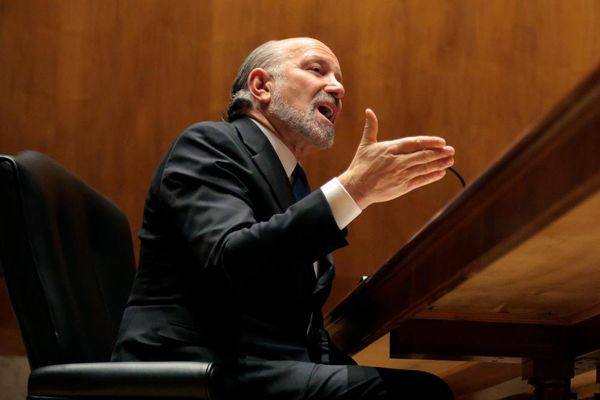
"CSR is about creating changes ultimately," says Richard Welford, the chairman of CSR Asia, who has been spreading the good word about positive corporate engagement with society for two decades.
"It's about a big cliché -- making the world a better place. Those of us who are interested in CSR want to see the private sector contribute to the change that we need in the world, essentially."
Based in Hong Kong, CSR Asia was co-founded by Mr Welford in 2004 when he was an academic at the University of Hong Kong. From a small operation with just four people, it has grown to five offices -- Hong Kong, Singapore, Bangkok, Sydney and Tokyo -- and a corporate membership of 80, many of them large Asian companies.
"Back then, a number of companies came to me asking for help around environmental and social issues," Mr Welford says during an interview in Bangkok. "As a professor, I worked really independently. It seemed to me that it would be sensible to have a small business on the side. I could not really imagine that it would grow to the size as we are now."
The number of members has grown in line with the substantial development of the CSR scene in Asia in the past decade or so, according to Mr Welford, whom I met at the 2017 CSR Asia Summit in Bangkok. Held annually, the one-day event now draws 500-plus people.
"In 2004, a lot of what we saw in Asia was philanthropy -- just giving away money to charity and NGOs -- but I think over the last 10 or 12 years, it has becomes much more strategic," he says of the change in the way companies interact with the wider world.
"Companies seeing value in sustainability means they see being socially responsible has economic value, so it's not just doing the right thing but also creating the brand, the reputation and trust around the company itself," he notes.
"It is also increasingly recognised that there are business opportunities around products and services for meeting social needs, environmental needs. There are some activities around making the supply chain more secure, more competitive, so there is economic value now to sustainability, not just to brands and reputations."
With more than 20 years of experience working in the fields of environmental management and social responsibility, Mr Welford was one of the pioneers in developing social audit and reporting methodologies with organisations such as The Body Shop, IBM and Eastern Electricity in the 1990s.
While he was teaching at the University of Hong Kong from 2002-10, he also headed the Corporate Environmental Governance Programme. A UK native now based in Hong Kong, he has worked with some of the leading multinational enterprises and local companies and NGOs in Asia including Disney, CLP, Nike, Shangri-La Hotels and Resorts, Swire Pacific, Cathay Pacific, HP, IBM, HSBC, Citigroup, Accor, Credit Suisse, UBS, Procter & Gamble and Adidas.
Now an adjunct professor at the University of Technology in Sydney, Mr Welford has also worked on policies and implementation plans covering a range of issues including governance, supply chain risk, human rights, community investment, poverty alleviation, conservation and biodiversity.
GROWING CHALLENGES
Asia's fast-growing economy has drawn massive inward investments and led to a rapid increase in the wealth of multinational businesses operating in the region. Yet, the poorest of the poor often remain left behind, and society still struggles to deal with many challenges associated with health, education, human rights abuses and environmental degradation.
Staunch defenders of capitalism will talk about wealth creation -- a rising tide lifts all boats, as the saying goes -- but critics say the influx of business into the region has not done much to alleviate the social needs associated with poverty, inequality and vulnerability.
Mr Welford's response is to point out to businesses that they themselves risk being left behind if they do not recognise their responsibility to make society better.
"A deteriorating environment, a growing social divide and fast-changing technology are leaving businesses more vulnerable than ever," he wrote in a recent article for CSR Asia. There is an urgent need for everyone, businesses included, to adapt to risks that are inevitable, such as those linked to climate change; however, it is harder to predict where new risks may come from.
"Now the environment is changing so fast with world events such as climate change, pollution, water shortages or sometimes too much water, like floods in Thailand. Those are the challenges that we have increasingly faced," he tells Asia Focus.
Meanwhile, the process of starting a business has become much faster, but failure can occur equally rapidly. Through social media, companies and individuals can effectively communicate about new products and services, but those same channels can even more quickly spread news about consumer dissatisfaction, corruption scandals, environmental destruction and community conflict.
At the heart of any future-proofing strategy for a business, says Mr Welford, there needs to be a commitment to contributing to the social development of our planet.
"Although the future is uncertain, businesses today realise that they will need to contribute to the challenges associated with sustainable development. To do so means engaging with global challenges and making a contribution to development in line with core business activities."
He points to the overwhelming evidence from research studies confirming that sustainable business can create value for society and increase profits at the same time. There are measureable benefits associated with having a sound sustainability strategy. To leverage this strategy, companies need to move from being reactive to proactive.
"There are the real economic benefits that businesses can get from CSR -- not just a better image, for example, in terms of waste reduction. It certainly helps with image but there is also a lot of evidence now that you can save costs, particularly on the environmental side," he says.
"You can increase the revenue for products that have some sustainability characteristics. Sometimes, not always, you can sell at a premium price. There is cost saving, and a potential revenue increase. There is competitive positioning that makes you a favoured company among suppliers, customers, governments and stakeholders. So there are so many beneficial aspects focused in the end at the bottom line. Ultimately there is the profit to have and to be saved."
Looking forward, he sees the trend of CSR toward companies being more strategic, adding value, looking for viable business communities that make profit but also meet social needs, and meeting environmental challenges. "Providing products for poor people which are affordable, cheap with low margins, but if you sell them with a big enough margin, they can still make profits."
EFFECTIVE EXECUTION
For companies seeking advice on how to effectively execute CSR programmes, Mr Welford says they need to start with "a focus".
"I don't think companies should try to do everything. There's no point doing everything. I think companies need to identify what they can improve," he states. "You need to focus on what changes you can make. By that I mean looking at the assets and expertise, the knowledge the company has, and using those core business assets to really focus in on the changes that you can create.
"Don't try to change everything. Ask yourself how can I use business to improve whatever it is -- development, health, education, the environment and climate change."
At Coca Cola, for example, its activities are dominated overwhelmingly by water because if there is no water, there is no Coca Cola. "So CSR is about the thing that you know, the thing that you are good at. That's the key."
As well, CSR needs leadership decision-making and partnership. "I think good sustainability, good CSR is driven from the top, so you have very senior management who actually provide a degree of leadership on CSR," says Mr Welford.
"There is also a need for collaboration and partnership to make it happen as well. Businesses cannot really do this on their own."
Some companies, including those in Asia, are beginning to appoint chief sustainability officers, which Mr Welford welcomes as an essential element in driving CSR. "Even in Asia, companies are starting to have a very senior [sustainability] position, often reporting to the CEO.
"If you really want to see the focused effect sustainability, you need someone senior to really drive it because it's really allied with business strategy. Then I think they will get the real benefits."
He offers the example of Esther Ann, the chief sustainability officer of Singapore-based City Developments Ltd (CDL). A pioneering CSR practitioner for more than 20 years, she has been instrumental in building the property developer's sustainability leadership.
CDL is the only Singaporean company to have been listed on the Global 100 most sustainable corporations in the world for eight consecutive years and is currently the top real estate company. Furthering its position as a sustainability leader, CDL successfully issued a "green bond" in April this year, the first of its kind in Singapore.
Investors are also becoming increasingly interested in companies that have sustainability characteristics.
"There are investors now looking for opportunities in the sustainability space," says Mr Welford. "Even mainstream investors, they are thinking about types of challenges such as risks associated with things like climate change. For companies themselves, these risks are going to cost the company some money in the long run so they had better start to think about some of those issues now."
In terms of public awareness, Mr Welford sees taxation -- incentives for sustainable practices and penalties for wasteful activity by individuals or businesses, for example -- as only part of the solution to stimulate awareness about the importance of sustainability.
"Of course, sometimes tweaking taxes might help but I don't think it's the major one," he notes. "I think the biggest solution is a drive towards collective responsibility.
"You and I should be working on recognising that our behaviour impacts everybody in a positive way so if everyone works on positive things, we can create positive changes.
"It's a general commitment among government, NGOs and businesses to actually generate a more sustainable society that we need."
As the interview nears its end, I ask Mr Welford about individual responsibility. What aspects of his lifestyle can be classified as sustainable?
"We always have a contradiction. I try to behave myself when I consume but I fly too much ... three to four times a month. That has an impact," he replies cautiously.
"We always look at our own impact and that includes the food we eat, the car we drive, the plane that we take and how frequently we fly. All of those things add up to having an impact. If we can do a bit better, the world would be more sustainable.
"If you need to fly as I do, you try to fly with airlines that use fuel-efficient planes. If you look at planes today, they are 25% more fuel-efficient than 10 years ago, so flying on a new plane, flying with the companies that buy new planes is what we need to do."
As an academic, Mr Welford is the author of 15 books and numerous articles in the field of environmental management and sustainable development. He is also the editor of three internationally recognised academic journals, mostly devoted to research around business and sustainable development.
As well, he is also a director of ERP Environment, a UK-based publisher and sits on the board of Aids Concern in Hong Kong.
So what kind of books does he read? "I like fiction books as they give me escapism from everyday work," he replies.