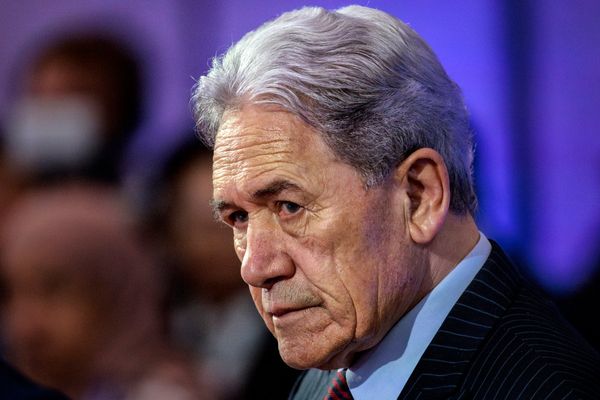
Vladimir Putin has put Russia's strategic nuclear weapons forces on high alert, prompting fears that its invasion of the Ukraine could escalate even further.
The Russian president has placed his nuclear arsenal on 'special combat duty regime', amid sanctions imposed on the country by Western nations. You can read the latest news about the Ukraine conflict here.
With Russia now in its second week of occupying several territories of the Ukraine, recent days have seen a further escalation of tensions. Western countries are reportedly considering further sanctions including an oil import ban, and Russia has said it could cut Europe's energy supplies in retaliation.
Read more : Does Vladimir Putin have health problems and why do people think he has cancer?
Reports also suggest a no-fly zone could be put in place over all or part of the Ukraine, which would restrict military planes from flying over the region, although the fear is that this could see Nato aircraft shooting down Russian planes, drawing other countries into the conflict and risking a severe escalation.
Does Russia have nuclear weapons?
The Treaty on the Non-Proliferation of Nuclear Weapons (NPT), which came into effect in 1970, marked the start of a coordinated effort from countries to commit to reducing their nuclear arsenals following the Cold War.
According to the NPT, Russia is one of eight states confirmed to possess nuclear capabilities. It is estimated to have 6,257 nuclear warheads, most of which are thought to be located towards the country’s west. This includes 527 intercontinental ballistic missiles (ICBMs), submarine-launched ballistic missiles and strategic bombers. ICBMs can get up to a top speed of four miles per second in about ten minutes after being launched, meaning the weapons could potentially reach the UK from Russia within 20 minutes.
Russia is thought to have around 20 known missile bases in total and around 1,456 active warheads which can be used on targets. In February, the country showed off its nuclear capabilities with a series of tests of massive practice missiles.
What has Russia said about using nuclear weapons in the Ukraine?
Russia has not explicitly said it would use nuclear weapons in its conflict with the Ukraine, but Russian press secretary Dmitry Peskov confirmed "all the missiles hit their targets, confirming their performance objectives" in its recent tests.
“Such test launches, of course, are impossible without the head of state. You know about the famous black suitcase and the red button," he was reported to have said at the time.
Almost two weeks into Russia's invasion of the Ukraine, Vladimir Putin has placed his nuclear arsenal on 'special combat duty regime', suggesting a rise in the alert level. It came as Western nations imposed a number of sanctions on Russia, including freezing the assets of its central bank and banning people and businesses from dealings with the Russian central bank, its finance ministry and its wealth fund.
The specific threat made by Putin remains unclear, as the terminology used does not match anything in Russia's nuclear doctrine, which outlines how its government might use nuclear weapons. Belarus, a Russian ally, has also changed its constitution to remove a ban on nuclear weapons.
However, experts say this "ambiguity and uncertainty" ties in with Putin's tactic of keeping rivals on high alert without needing to take concrete action. According to the Financial Times, Mr Putin's latest threat is a way of saying Russia is "prepared to strike back" if there are any attempts by NATO or western leaders to intervene in the Ukrainian conflict.
But talk of nuclear weapons in recent weeks has raised fears that the threat of nuclear war, and the devastation it would bring on the world, is higher than it has ever been since the Cold War.
What has been said about a no-fly zone?
Ukrainian President Volodymyr Zelenskyy has called on NATO to impose a no-fly zone over Ukraine to limit attacks from Russian warplanes — a request the West has firmly rejected.
If implemented, a no-fly zone could prevent a country from using warplanes to attack military targets or civilians on the ground. But if it was declared, NATO would be responsible for patrolling the area with its own planes and be prepared to fire at enemies to ensure the safety of civilians.
NATO's 30 allied nations have so far rejected talk of a no-fly zone, claiming it could drag the alliance directly into Moscow’s war against its neighbour, something it seeks to avoid.
What would be the consequences of a nuclear attack?
The consequences of a nuclear attack in Europe would not just affect Russia and the Ukraine - it would cause widespread devastation and likely mass casualties.
When the United States detonated two nuclear weapons over the Japanese cities of Hiroshima and Nagasaki on August 6 and 9, 1945, between 129,000 and 226,000 people, most of whom were civilians, were killed.
According to Politico, there is no health care or emergency response capacity to deal with such consequences, either in any of the nuclear-armed states nor any international organisation. This is why so many nations have been expressing concern over any use of nuclear weapons, which could result in millions of deaths if they target densely populated areas.
There are further consequences than direct deaths, too. According to the International Campaign to Abolish Nuclear Weapons, (ICANW): "Less than one percent of the nuclear weapons in the world could disrupt the global climate and threaten as many as two billion people with starvation in a nuclear famine.
"The thousands of nuclear weapons possessed by the US and Russia could bring about a nuclear winter, destroying the essential ecosystems on which all life depends."
To get the latest news from WalesOnline straight to your inbox sign up for one of our newsletters here.