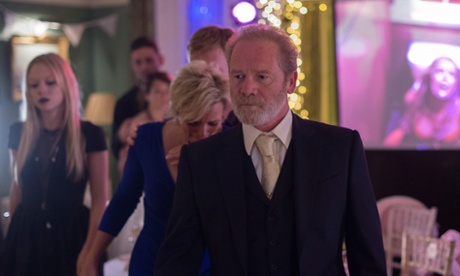
There are many reasons to welcome the presence in the schedules of Stonemouth, which concludes tonight at 9pm on BBC2. It stands as a broadcasting memorial stone to Iain Banks, the author of the source novel, and there are sparky performances from a cast including Peter Mullan and Charlotte Spencer.
In one sense, though, the drama is easily overlooked, since tonight’s final episode comes only seven days after the first. The commissioning plans for any TV network resemble a maths exercise book, with recurrent sums such as 8 x 60, 6 x 60 and so on, where the first figure denotes the number of episodes and the second the length of the slots. The one that adds up to 480 minutes (minus trailers and ads) is currently the most popular shape in UK drama, used by two of the standout television fictions of this year: Poldark (BBC1) and Humans (continuing on Sundays, Channel 4, 9pm).
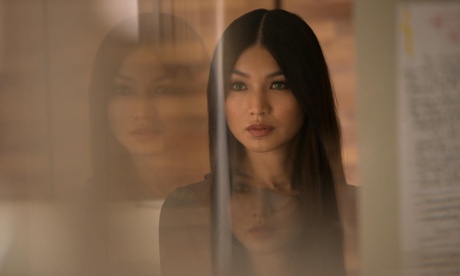
Stonemouth, however, came up with an unusual answer to the question of how best to tell its story – 120, or 2 x 60. Although it qualifies as a mini-series under Bafta rules, it is an unusually mini one. Of this year’s four nominees in the mini-series category, three were 3 x 60s and one (the winner, The Lost Honour of Christopher Jeffries) a 2 x 90. The (not always easily distinguishable) drama series section chose from three 6 x 60s (among them the winner, Happy Valley) and one 8 x 60.
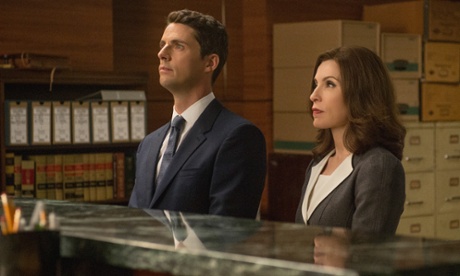
The first number in the sum – the quantity of episodes – has recently taken on a political dimension. While the Conservative government has indicated that the BBC will face cuts in its licence fee and activities, the broadcaster is being encouraged to extend in one direction. When I interviewed him during the election, George Osborne expressed concern that British broadcasters (including Channel 4 and ITV) failed to produce their hits – such as Poldark and Downton Abbey – in sufficient bulk to maximise their artistic and commercial impact. An American network hit – such as The Good Wife – does annual runs of 22 episodes, while even shows produced by cable or streamed networks – Breaking Bad, House of Cards – come in seasons of 13.
Although the chancellor was correct to suggest that Downton Abbey and Call the Midwife would be two or three times longer if made in America – and he will be pleased that Channel 4’s Indian Summers runs in multiples of 10 – two industrial conditions in British television militate against this ambition. Almost all major UK dramas are written by a single writer or writing team, whereas the US distributes episodes between large teams of screenwriters. At the moment, Sally Wainwright is working on six more instalments of Happy Valley and Debbie Horsfield another eight of Poldark (based on Winston Graham’s novels) . In order to produce 22 instalments, the creators would have to become insomniac, celibate hermits or surrender the auteur tradition. However, the individual voice has been such a key element of British TV drama historically that there would need to be a debate – and possibly even a referendum – before it were abandoned.
A strong argument for the anti camp would be that spreading opportunity and risk by producing a larger number of shorter series is another part of the British tradition. This is the case, particularly and not unreasonably, at the BBC, which has statutory obligations to reflect and serve various parts and people of the UK. The newspaper headlines – and questions from parliamentary select committees – if the BBC were to commit to 22 parts of a story that turned out to be a flop or a controversy are easy to imagine.
The second figure in these dramatic equations – the screen minutes allocated to each instalment – is more of an artistic rather than a commercial judgement, although it is influenced by the relatively rigid grid system of British network television, which features more or less immovable slots for news bulletins.
This winter marks the 15th anniversary of the final episode of Inspector Morse, but the show’s influence on televisual arithmetic remains strong. Revolutionary when the series started in 1987, the use of a two-hour pseudo-movie length for a detective story was widely copied and still survives, unlike most of the characters, in Midsomer Murders.
The obvious logic for having one murder investigation per episode is that it is hard for an audience to retain clues and suspects in their brains for a week between episodes. One reason for the increasing popularity of the conspiracy or espionage thriller – Line of Duty, The Honourable Woman, The Game – is that stories with frequent twists and new plot lines or flashbacks neatly fit the structure of half a dozen or so hour-long episodes.
Stonemouth, though, is neither one thing (The Lost Honour of Christopher Jeffries) nor the other (Happy Valley). To feel satisfyingly substantial and do justice to the narrative, it surely needed to be either 3 x 60 or a festival or bank holiday special at 1 x 90 or 1 x 120. The solution they arrived at – 2 x 60 – doesn’t add up.