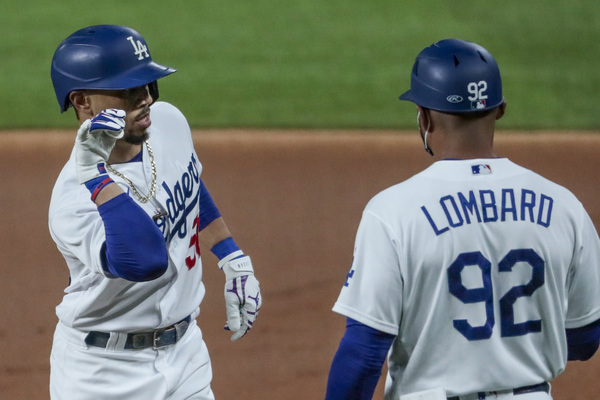
ARLINGTON, Texas _ The match that set Southern California's newest rivalry ablaze was lit in the seventh inning at Globe Life Field, 1,500 miles away, in the Los Angeles Dodgers' 6-5 win over the San Diego Padres on Wednesday.
The Padres had the mighty Dodgers on the ropes in Game 2 of the National League Division Series. They emerged down just one run after Clayton Kershaw's strong six-inning performance. And with a runner on base and two outs, Dodgers manager Dave Roberts emerged to take the ball from Blake Treinen and give it to rookie Brusdar Graterol to face Fernando Tatis Jr., baseball's brightest young star.
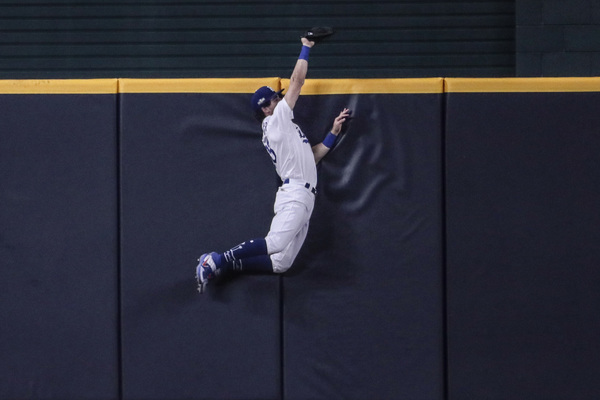
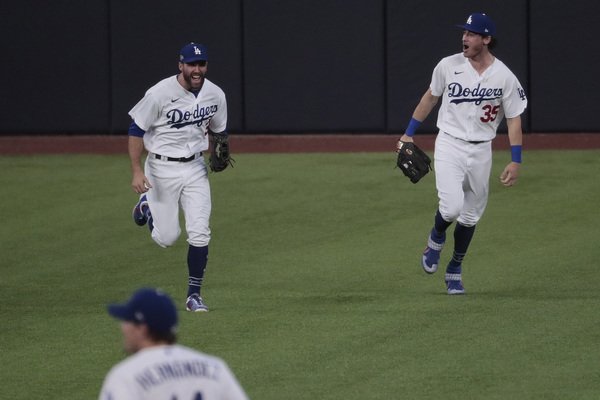
Graterol's first pitch was a 99-mph sinker. Tatis Jr. crushed it 413 feet to straightaway center field. At the other end, Cody Bellinger, after twisting and turning his way to the warning track, leaped at the wall to rob what would've been the go-ahead, two-run home run.
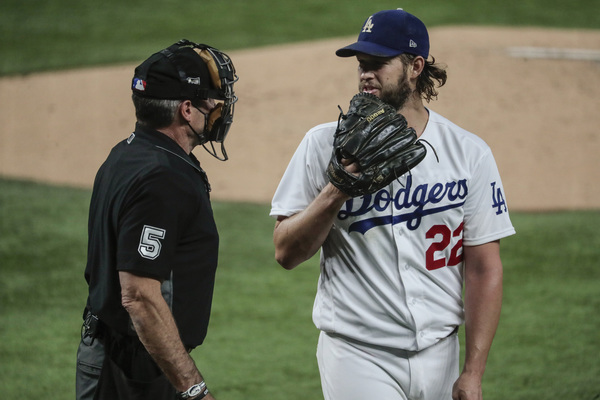
As Bellinger jumped with joy over his series-changing athletic feat, Graterol threw his glove in celebration. He took off his hat and pointed to the heavens. On the other side, Padres third baseman and former Dodger Manny Machado looked on with disgust. He shouted obscenities at Graterol. In response, Graterol waved and blew a kiss as a few of his teammates screamed at Machado to keep it moving.
"I'll be waiting for you," Machado said.
The sequence changed the game's complexity. Inches from disaster, the Dodgers rode the momentum and added two runs in the bottom half of the inning. Both were pivotal.
Needing three outs to move within a win of the National League Championship Series, manager Dave Roberts did what he's almost always done since he started manning the top step in 2016: He gave the ball to Kenley Jansen.
But this isn't the Kenley Jansen of old. This is a deteriorated version, one that Roberts recently said is essentially the Dodgers' closer in title only. The Dodgers have decided Jansen won't pitch in every save situation in these playoffs. He wasn't given the assignment in Game 2 of the wild card series last week. But there he was, on the mound at Globe Life Park with a three-run lead in Game 2 of the National League Division Series against the San Diego Padres.
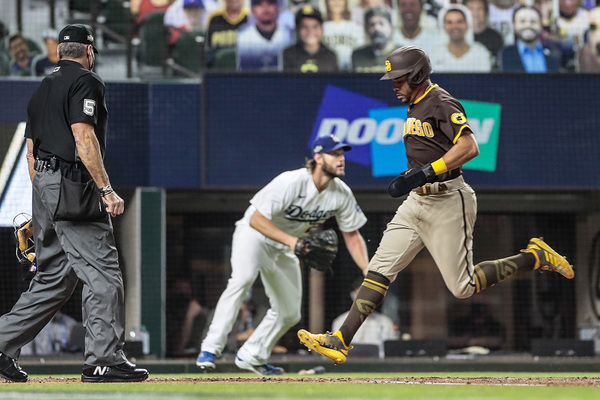
He walked off that mound without getting the job done. The Padres scored two runs before he was replaced by Joe Kelly with two outs. Kelly walked Tatis and Machado to load the bases for Eric Hosmer, who grounded out to end the game and calm the nerves.
The Dodgers have a chance to sweep the best-of-five series in Game 3 on Thursday.
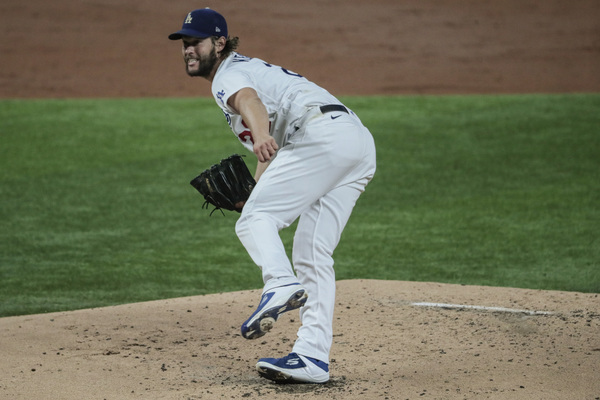
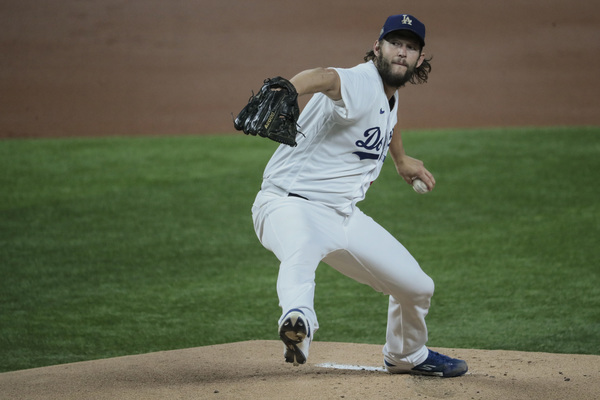
The first indication that Kershaw had some of his best stuff surfaced immediately: his first pitch was a 93-mph fastball. It represented the subtle, but important, uptick in velocity Kershaw has mustered after having the radar gun number decline in recent years. Tatis popped it up for the night's first out. He threw two more 93-mph fastballs in the inning. Machado whiffed through the second one for Kershaw's first strikeout.
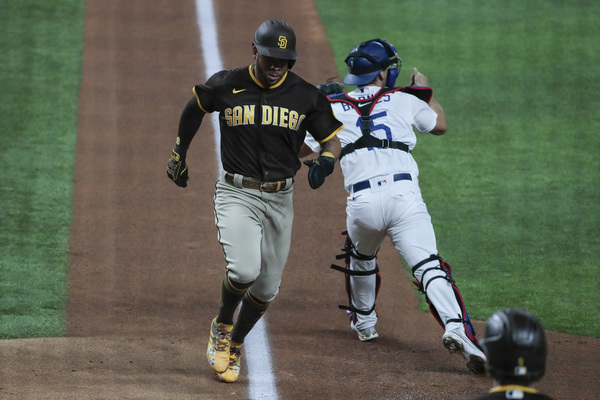
The second indication was Kershaw's first-pitch prowess. Getting ahead in counts has been crucial to Kershaw's success and he threw first-pitch strikes to 15 of the first 16 batters he faced. Only Wil Myers managed to see a 1-0 count. It became 2-0 before he lined an RBI double to put San Diego ahead in the second inning.
That was all the Padres produced until the sixth inning. Machado pulled a 2-1 slider out of the strike zone for a leadoff home run. The Padres dugout erupted with the blast. Machado chucked his bat after watching his ball sail over the wall. He pumped his chest.
Then Hosmer turned on a 1-2 fastball over the inner half of the plate to make it back-to-back homers. The Dodgers' lead shrunk to one. Blake Treinen began warming up in the bullpen. Kershaw retired the next three batters to end the inning and his outing. He allowed three runs on six hits. He struck out six, didn't issue a walk, and threw 87 pitches.
The Padres needed length from Zach Davies after using at least eight pitchers in each of their first four postseason games and nine in the last two. He had more success against the Dodgers than most other pitchers during the regular season. The right-hander, who relies on precise command around the plate to induce weak contact, held Los Angeles to five runs over 13 innings in two starts.
The Dodgers took a patient approach against Davies. Corey Seager was the only batter to swing at the first pitch in the first two innings. The strategy paid dividends in the third.
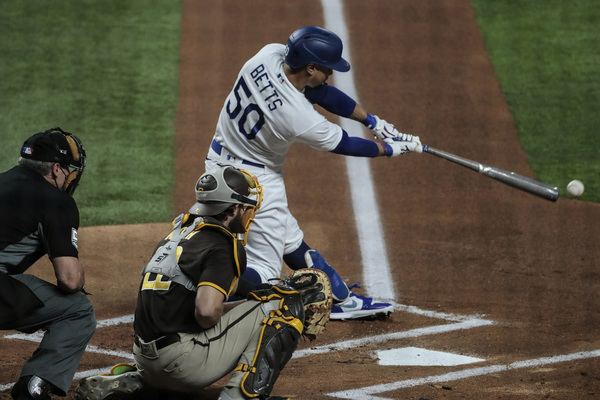
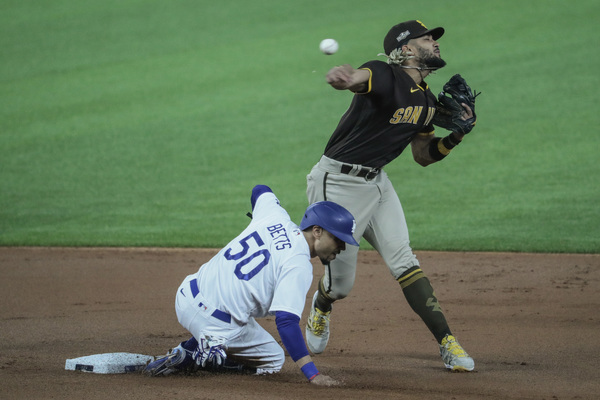
AJ Pollock lined a leadoff single. Next, Austin Barnes, after a failed sacrifice bunt attempt, lined another single. Mookie Bets followed with a 100-mph line drive right at third baseman Machado for the first out.
Seager had better luck. The shortstop cracked a 100.8-mph line drive down the right-field line for a two-run double to give Los Angeles the lead. The hit ended Seager's stretch of misfortune; before the double, one of the seven balls in play off his bat in the playoffs landed for a hit. Two batters later, Max Muncy scored Seager with a single.
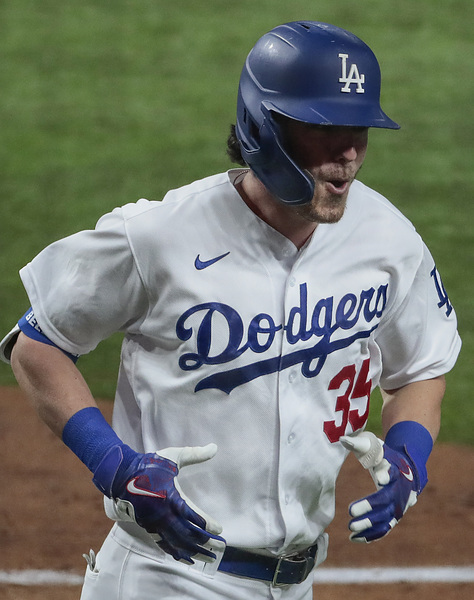
Bellinger added to the lead in the fourth inning by doing the seemingly impossible: clubbing a ball over the fence in this power-sapping ballpark.
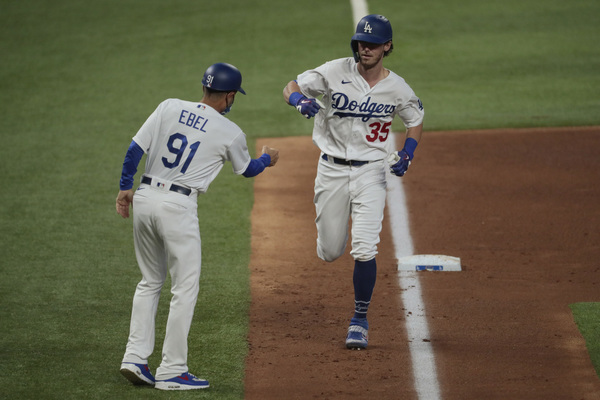
Bellinger struck out on three pitches down and away _ and arguably off the plate _ in his first at-bat. In his second, he pounced on the first pitch he saw _ a changeup down and away _ and launched it 433 feet over the center field wall for a leadoff home run. It was the first home run of the series for either team.
But Bellinger will be remembered for the home run he stole in the seventh inning. It changed the game and lit the match.