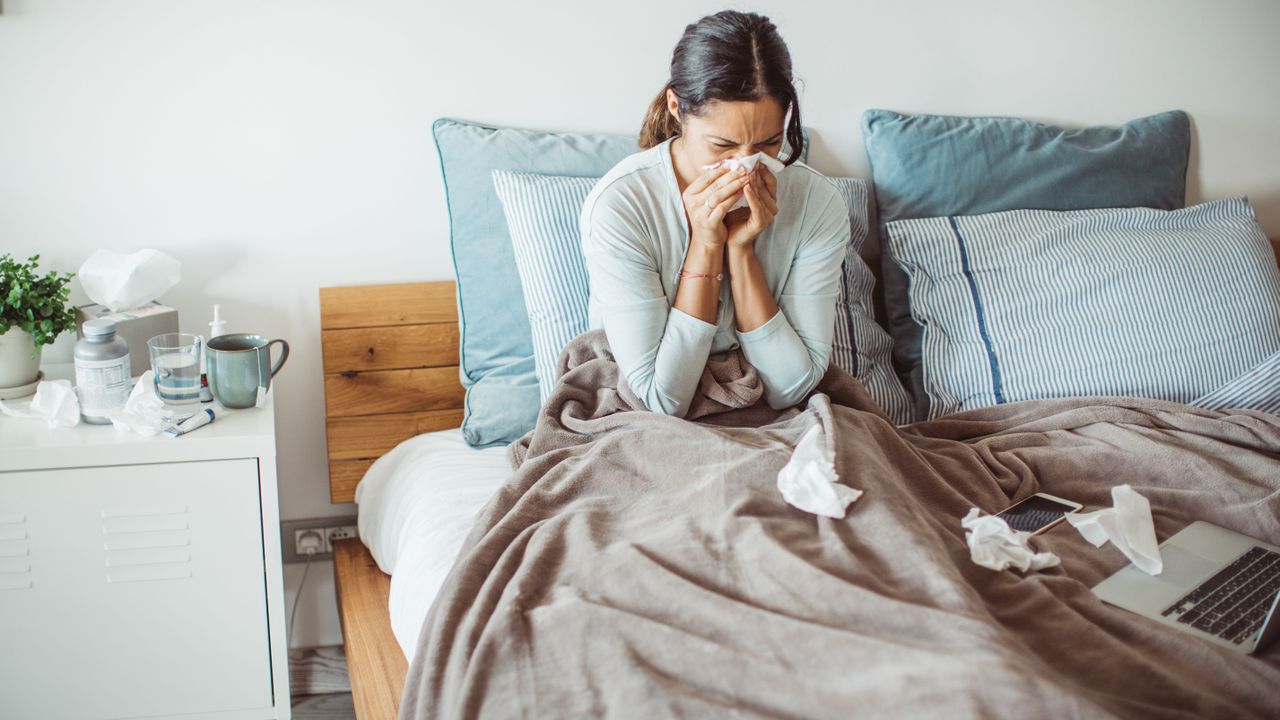
When I recently had the flu, I spent the first few days in bed coughing, sneezing and sweating off a fever. My mattress was disappearing beneath a mountain of soggy tissues, to the point where my bed was like this giant flu bomb waiting to explode all over the bedroom.
And that got me thinking: exactly how long does the flu virus live on bedding and mattresses? And does it survive longer on some surfaces compared to others?
I recently reached out to Pulmonary and Sleep Medicine Physician Dr Emma Lin to get her expert take, and to find out how often you should wash your bedding when you’re sick. Here’s what Dr Lin said…
How long do flu viruses live on bedding?
“Flu is a respiratory virus transmitted through cough droplets, sneezing, and respiratory activity,” explains Dr Lin. “Flu viruses can remain on bedding if the cough droplets happen to land on it.”
I know how to cough and sneeze into a tissue but, even so, I still saw lots of stray droplets of snot and phlegm (sorry, TMI) rain down onto my sheets and soak into my pillow.
Once those droplets have landed, the flu virus can survive longer than you think, says Dr Lin: “On bed sheets and pillowcases, the flu virus can live for a few hours up to 24 hours.

“With regards to mattresses and bed frames, it may last up to 48 hours. I warn patients that if a person coughs or sweats in bed, the virus will remain on the bed long enough to re-expose you when you’re ill.”
In other words, not cleaning your mattress and sheets enough when you’re sick will increase your chances of being sick for longer.
“As a pulmonologist, being re-exposed to the same virus through your respiratory system can exacerbate your hacking, chest constriction, and airway irritation, especially at nighttime.”
Flu viruses live longer on certain types of bedding
Pillows, bed sheets and mattresses are made from many different materials, and are manufactured in different ways. Both of these factors affect how long a flu virus can survive on your bedding.
“Pillows and comforters are areas where breathing and sweating cause the retention of heat and moisture,” Dr Lin explains. “It’s easier for viruses to survive in such environments.
“A cotton sheet will dry faster; therefore, the virus’s lifespan will reduce.”
You know when I mentioned earlier how my bed felt like a giant flu bomb? As it turns out, I wasn’t far off the mark. “Mattresses are fluid-absorbing objects that are rarely cleaned. They are thus potential reservoirs of microorganisms [flu viruses are microorganisms].”
That’s why we at Tom’s Guide are super-hot on regularly cleaning your mattress. And don’t forget your bed frame and headboard too, as these could also harbour the virus.
How often should you wash your bedding when you have the flu?
Whenever I have the flu and feel weak as a kitten, the only thing I want to do is bedrot for days on end. So the thought of stripping bed sheets and sticking them in the wash is pretty horrifying.
However washing your sheets very regularly when you have the flu is key to stopping you from becoming re-infected with the virus.
“I tell my patients to change bed sheets and pillowcases every one to two days,” says Dr Lin. “Use hot water and dry them thoroughly. Comforters should be washed at least once during the illness or should be covered with a washable cover.
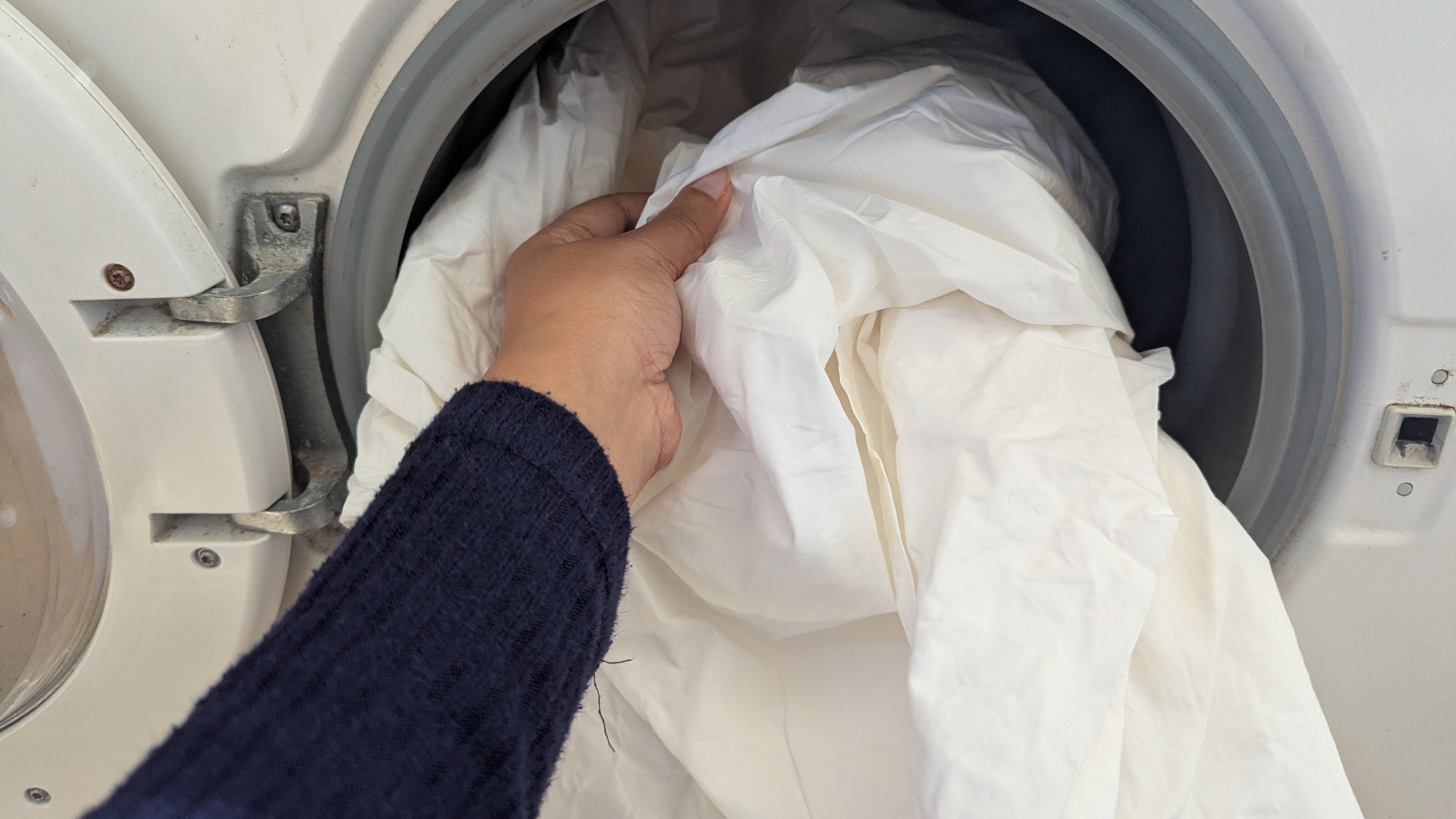
“This limits the amount of virus surrounding your face and air passages and prevents re-infections,” the board-certified physician explains. “I regularly notice that my patients sleep better as a result of following this.”
How to sleep better when you have the flu
I don’t know about you, but my flu symptoms always get worse at night. That leads to broken sleep and feeling super-tired the next day.
Based on her personal experience in sleep and pulmonary care, here’s what Dr Lin suggests to help you sleep as well as possible when you have the flu:
- Sleep with your head elevated to alleviate coughing and congestion
- Use saline nasal spray to open nasal passages
- Hydrate by drinking fluids to thin the mucus in the lungs and throat
- Manage the fever so that your body can get the rest that it needs.
- Bedding should be clean to prevent breathing in virus particles
- Maintain a comfortable room climate – not too dry
“Sleeping helps to fight off the infection in the body. Sleeping poorly will slow the healing process.”