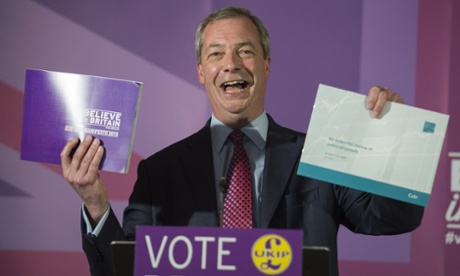
Ukip’s manifesto is certainly eye-catching. More hospitals, more kit for the armed forces, lower business rates, a £13,000 personal allowance, a new 30% rate of tax for higher earners, extra spending on social care, no bedroom tax. It is like a compilation album of the greatest hits from the Conservatives, Labour and the Liberal Democrats.
All this carries a hefty price tag: a little shy of £32bn by the end of the next parliament. How is it all going to be paid for?
No problem, according to Nigel Farage’s party. Ukip will save £9bn by withdrawal from the EU, £11bn by cutting Britain’s aid budget, £4bn by scrapping plans for a second high-speed rail link to the Midlands and the north, and a further £5bn by getting rid of the Barnett formula that tops up per-capita public spending in Scotland. Add in a few additional savings and the £32bn of giveaways are matched almost pound for pound by an equivalent amount of savings.
As if anticipating that its manifesto would be greeted with scepticism, Ukip has had it costed by an economic consultancy, the Centre for Economic and Business Research.
It would be within the discretion of a Ukip government to cut the amount Britain spends on aid. The UK is one of only five countries that meets or exceeds the UN target for spending 0.7% of national income on development assistance. Reducing that to 0.2% would save £11bn. Similarly, there would be substantial savings from abandoning plans for HS2.
But would withdrawal from the EU actually save £9bn a year? Opinions vary widely and some estimates say the UK would suffer a financial cost from withdrawal. At the moment, net UK contributions to the EU budget (ie after taking into account Britain’s rebate, payments under the common agricultural policy and support for the regions) comes to around £10bn a year. The CEBR says the £9bn saving sounds “cautious and reasonable” but adds a caveat that it cannot comment on how EU policies towards Britain would change as a result of withdrawal.
Even assuming there was no direct retaliation from Britain’s former EU partners, there could be costs involved. Almost half of Britain’s exports go to other EU countries, so departure could carry an economic cost. An independent UK would also have to replace the funding that currently comes from Brussels.
The savings from the Barnett formula are based on estimates from the TaxPayers’ Alliance, a body that lobbies for lower taxes. It estimates that the formula will cost the UK £200bn over 20 years, so Ukip could save £5bn a year by phasing in its abolition. These numbers need to be treated with some caution.