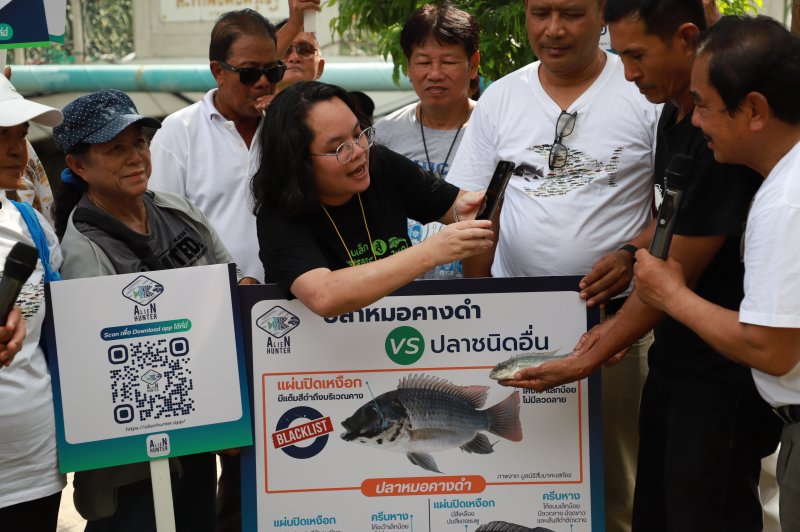
A new study by researchers from Chulalongkorn University has concluded that invasive blackchin tilapia were introduced to Thailand at multiple places and in multiple ways, and not as a result of a single introduction as believed earlier.
The six-member research team based their conclusions on a DNA analysis of 466 fish samples from 20 locations nationwide. The results were published in Aquaculture Reports.
The scientists, from the university’s Aquatic Resources Research Institute, said they identified 19 distinct genetic haplotypes, including 13 unique local variants.
A haplotype is a group of genes or DNA variations on a single chromosome that are inherited together from a single parent.
The researchers said the high genetic diversity they found contradicts the theory that the spread of blackchin tilapia originated from one small founding population.
Fish populations in Prachuap Khiri Khan and Surat Thani were linked to different ancestral lineages from West Africa, they found.
As well, some genetic patterns were inconsistent with natural spread alone. This suggested human involvement through aquaculture, fish transport, and even the ornamental fish trade.
Blackchin tilapia is an African species that was originally imported to Thailand for research purposes in 2010.
The importer, the agribusiness group CP Foods, said the fish at its facility in Samut Songkhram died within three weeks and were subsequently disposed of using approved methods, with samples and documentation sent to the Fisheries Department.
However, blackchin tilapia later started showing up in local waterways, with the first reports in 2012. As their population grew, native fish species started decreasing in number, leading to a major eradication campaign in 2024.
Population density has since decreased but complete eradication is unlikely, leading to a focus on long-term management and coexistence, Thai authorities have said.
The authors of the study acknowledged that it was supported by the Charoen Pokphand Group, but said they had “no known competing financial interests or personal relationships that could have appeared to influence the work”.