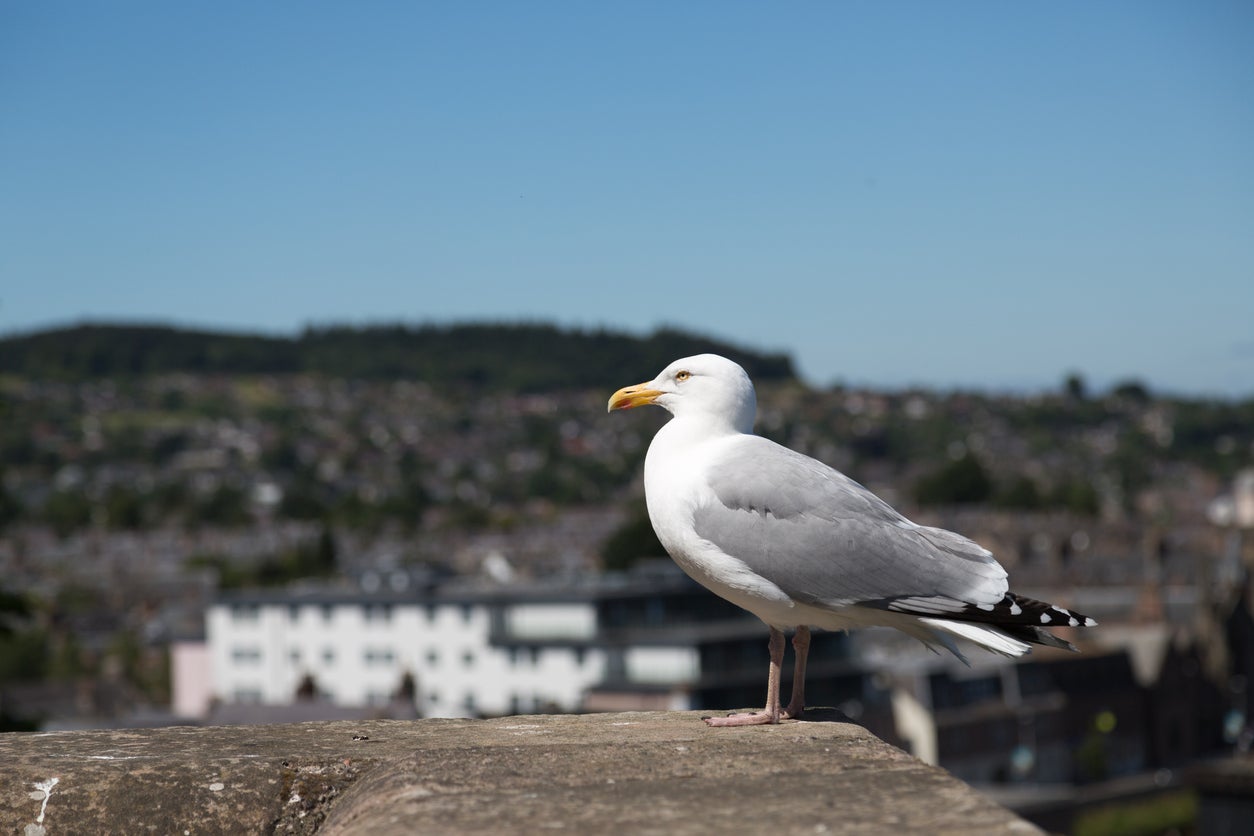
Aggressive gulls are becoming an escalating menace in Inverness in Scotland, forcing the council to roll out a new strategy to reduce clashes between residents and the birds – an issue common in many coastal towns around the UK.
A new report by the Highland Council details the ongoing conflict between the birds – mostly herring gulls – and people in the area, who have complained of being woken by noisy gulls, food being snatched out of their hands as they've been dive-bombed by the birds, and also the aggressive swooping behaviour by birds apparently defending nesting areas.
Last month an Easter egg hunt in the city was thrown into chaos by a series of more than a dozen violent gull attacks on children.
With the city estimated to contain around 700 nesting sites, the council and Scottish natural heritage body NatureScot has spent £20,000 appointing external consultants to undertake a "baseline census and distribution study" of gulls in a 5km squared area in the centre of Inverness.
A pilot gull management plan has been put together, with the aim of reducing conflict between people and the birds, with local councillors urged to approve the measures designed to help reduce incidents through "prevention, public awareness, and lawful control measures".
A Highland Council spokesperson told The Independent the council will "consider and discuss" the management options later this month.
"Urban gull activity in Inverness has increasingly given rise to public concern, particularly in relation to noise disturbance, aggressive behaviour, food scavenging, fouling and nesting on buildings.”
They added: “To date we do not have accurate data to determine the impact of gull attacks on residents in the city. An online survey was launched by The Highland Council on 9 April 2026 to capture this data." The survey remains open and the council urged residents to fill it in.
Nature Scot, which funded the work of the external consultancy said the problem of urban gulls in Britain is complex due to falling numbers of herring gulls and other species which appear to be a growing problem in urban settings, but face severe declines overall.
A spokesperson told The Independent: "People and gulls live alongside each other in many towns and cities across the country and we recognise they can sometimes cause problems.
"In some cases, this can lead to health and safety issues, particularly in places where there are vulnerable people such as schools, care homes and hospitals."
"Gulls are intelligent and adaptable birds, and the evidence suggests that more have moved into our towns and cities for two main reasons: easily available food and safe nest sites on roofs, free of predators and disturbance."
They added: "But while we might be seeing more gulls in our day-to-day lives, this does not mean that there has been an increase in the population as a whole. In fact, we know the opposite to be the case. Gulls are struggling in their coastal habitats and numbers are down overall. As a result, gulls are moving into urban areas, particularly along the coast."
The Britain and Ireland's most recent Seabirds Count census reveals that all five species of commonly encountered gull that breed in Scotland are now in serious decline, with numbers having collapsed by between 44 per cent and 75 per cent depending on species.
Common gull, great black-backed gull and herring gull are now all red listed species of conservation concern in the UK, while lesser black-backed gull and black-headed gull are amber listed.
Nature Scot said these declines were mostly due to shifts in food availability as well as to land use management in the birds' traditional breeding areas. Meanwhile, some species have also suffered "significant losses because of the recent devastating outbreaks of avian flu".
Nature Scot said they have placed greater emphasis on non-lethal control methods for urban gulls in recent years.
"Gulls are an important part of Scotland's wildlife. By working collaboratively with communities and stakeholders, we aim to find sustainable solutions that reduce gull-related issues while protecting these declining species," they said.
Nonetheless, the agency has been criticised for not taking a hard enough line on the problems people have with the birds, after figures revealed an increase in the number of blocked applications to remove the “nuisance” birds.
Data shows that NatureScot had approved more than 80 per cent of applications to remove gulls and nests as recently as 2022.
But The Times reported last year that the figure had dropped to less than a third by last year, leading to calls for the agency to be stripped of its ability to rule on applications.
At the time, Nature Scot said: “We understand gulls can sometimes cause problems in our towns and cities. At the same time, gull populations are facing serious declines. NatureScot has a duty to balance health and safety concerns with gull conservation."
Vultures have taken over a North Carolina neighborhood and damaged homes, town says
Home Office urged to investigate Green MSP in UK on student visa
Officers condemn ‘sickening’ sexual assault on crowded train
Scotland’s first-ever baby sloth named in honour of David Attenborough
Majority of Britons would back a smoking ban in pub gardens
Shock study reveals popular UK sandwich contains more salt than five cheeseburgers