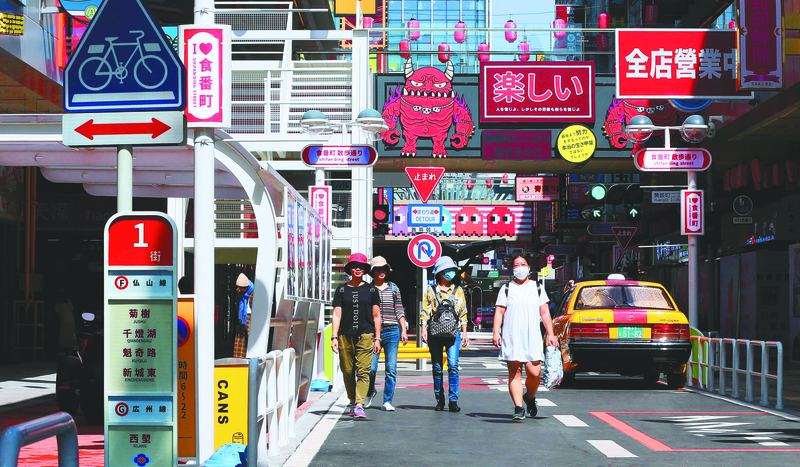
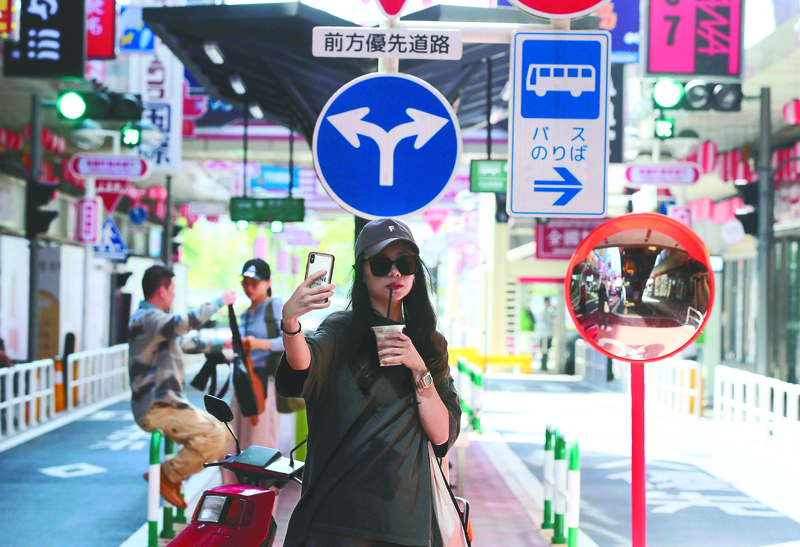
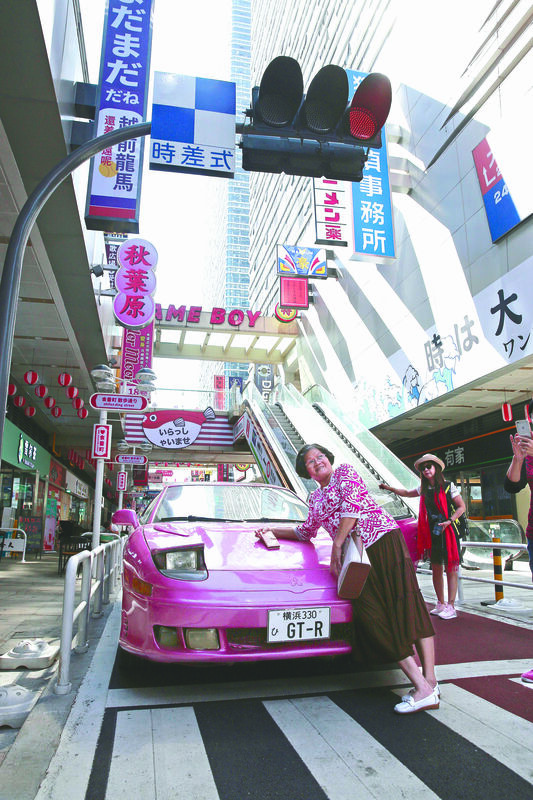
BEIJING -- A street in the southern Chinese city of Foshan, Guangdong Province, made to resemble a Japanese shopping district, opened back in August and has been capturing the interest of local residents. Although some have criticized the project as "glorifying Japan," the street is full of people wanting to experience a Japanese atmosphere during a time when travel overseas is restricted because of the novel coronavirus.
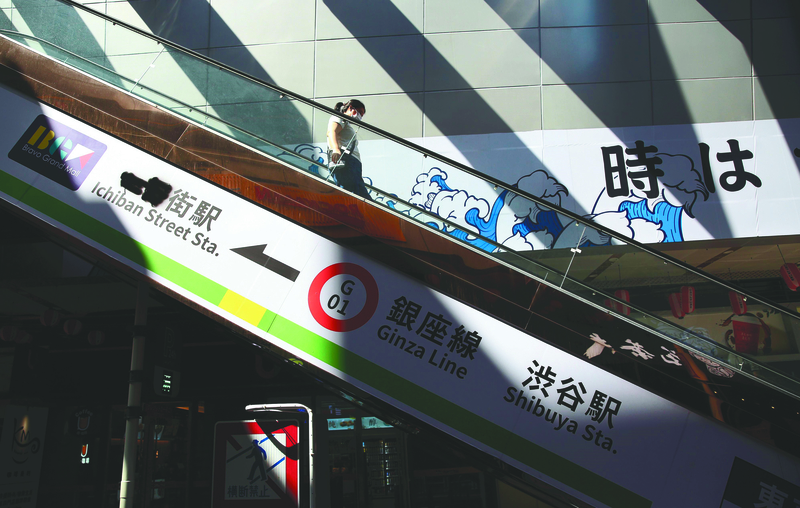
A number of signs written in Japanese are posted along the roughly 100-meter-long street that includes some resembling the ones found in subway stations and Japanese traffic signs.
While there are streets in Japan that resemble those of foreign countries, the level of interest in Japan seen here was surprising. There were even some areas that seemed a bit out of place, such as a large signboard that simply read "tanoshii [fun]."
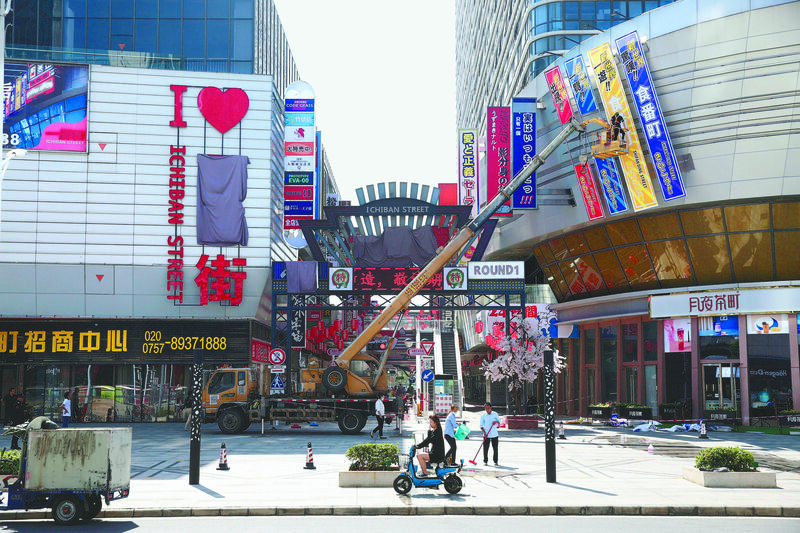
It seems that although the street was originally dubbed Ichibancho (First Avenue), it was later renamed Shifan Ding Street (Food Avenue), and the kanji for "ichiban" have been covered up. Other kanji that were seemingly taken from a famous Japanese video game were also modified. It's unclear if these changes were made in response to criticism about glorifying Japan or rights-related issues.
A seemingly never-ending number of visitors could be seen taking photos in front of the Japanese signs.
"Since I can't visit Japan because of the pandemic, I want to enjoy the feeling of traveling here," said one local resident.
Read more from The Japan News at https://japannews.yomiuri.co.jp/