The Future Forward Party (FFP) has gone through a rough patch lately and the internal cracks are all too conspicuous.

The party, which roared onto the political scene with its avant-garde appeal to 20-something voters, is having a hard time putting its house in order, according to political sources.
The discontent brewing within the party has turned public attention away from its policies. Instead, people have been hearing every now and then of members calling it quits after becoming disenchanted by the inability of FFP bigwigs to practice what they preach.
Some young founding members gave various reasons for turning their backs on the party.
However, one issue commonly cited as being the reason for their resignation is that executives, including party leader Thanathorn Juangroongruangkit, are running the party with an iron fist, contrary to the FFP's attempt to paint itself as an equitable, democratic and readily available party.
The feud has escalated and come to dominate the news to such an extent that it overshadowed the FFP's recent conference, which was meant to be a grand event to divulge the party's campaign manifesto for the Feb 24 election.
On the same day, the FFP was rocked by reports of at least five members submitting their resignation letters out of frustration at being allegedly ignored after they declared their intention to stand in the party's primary voting and compete for the chance to represent the FFP as an MP candidate in the poll.
An observer said the party appears to be fraught with bickering from within and it does not bode well for the future. The FFP is a melting pot of young people from many quarters who may be ill-prepared to take on the challenges of national politics.
Some former party members complained their suggestions about its management had fallen on deaf ears.
Party unity is being put to the test as the FFP arranges compulsory primary voting to shortlist a pool of potential MP candidates. The names of the candidates will be put to the party's executive board, which will have the final say in choosing the MP candidates.
Political parties are moving to a critical juncture where they must sponsor the primaries to find potential MP candidates. For established parties, the job may not be too hard as there are politicians waiting in their respective wings who have contested previous elections and are staying put.
But for newly established parties, it may be an uphill battle enlisting individuals who are politically experienced and also appeal to voters.
A political analyst said the FFP might have a narrow support base if it relies too much on young voters who show little interest in politics. The analyst said many first-time voters in the past could not be bothered to cast their ballots.
The party is thought to be banking on the votes of young professionals who do not favour any of the colour-coded political groups.
But the FFP should also bear in mind that it is not the only party offering new faces as MP candidates. Others, including the Democrats, Pheu Thai and Thai Raksa Chart, have added young politicians to their lists of members as they are bent on capitalising on the voting power of the younger generation.
The FFP has been chided for trying to walk before it can run. Critics insist it must first learn basic administrative management and then pacify the various tensions between its young members.
In the latest spat, five members who were disappointed with the party for excluding them from the list of potential MP candidates in the primary vote, have tendered their resignations. They blamed the party for not valuing them for bringing in members.
FFP secretary-general Piyabutr Saengkanokkul said the party was running a check to see if some of the members it has "deleted" from its membership database were opponents in disguise who wanted to stir up trouble for the party.
PPRP treading a fine line
The Palang Pracharath Party (PPRP) has been the target of indignation from other parties for having one foot in the government camp and the other in the position of contender for the next ruling party.
In national politics, wearing one hat is more than enough, let alone two, as is the case with four ministers running the PPRP, according to government critics.
The PPRP should be on a level playing field, say critics who are demanding that the ministers walk away from the cabinet and concentrate on the task at hand, which is to prepare for the next election.
The ministers in question are PPRP leader Uttama Savanayana who is also industry minister; Science and Technology Minister Suvit Maesincee who is concurrently serving as the party deputy leader; Commerce Minister Sontirat Sontijirawong, the party's secretary-general; and Prime Minister's Office Minister Kobsak Pootrakool, who was appointed as spokesman.
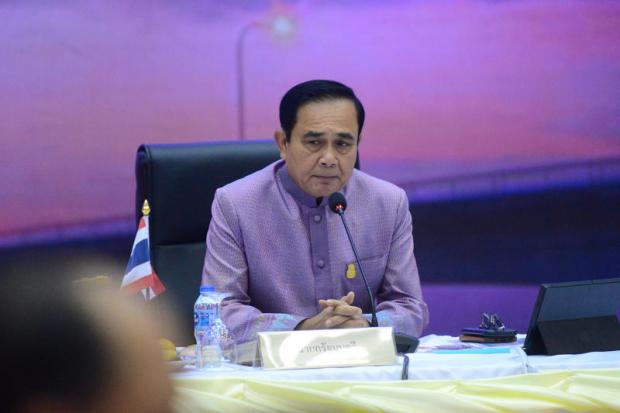
The more welfare schemes the government serves up, the louder the accusations grow that they are populist policies launched with the intent of buying votes for the PPRP which also plans to nominate Prime Minister Prayut Chan-o-cha as its prime ministerial candidate for the next government.
Gen Prayut, however, has countered by reiterating that these welfare schemes are carefully laid out and conform to prudent spending. He insists the schemes will not hurt the fiscal discipline of the country and will improve the quality of life of the poor and underprivileged.
To keep criticism against the four ministers-cum-PPRP executives accused of misusing public office by greenlighting welfare scheme to gain votes at bay, Gen Prayut has given clear instructions to the ministers that they must not engage in electioneering while they remain members of the cabinet, according to government spokesman Buddhipongse Punnakanta.
The ministers must not confuse people by blurring the line between the PPRP manifesto and current government policies. They must create a distinction and make it known to the public.
Gen Prayut has also said political parties are free to declare on the campaign trail if they wish to support the government's policies and adopt them in their election platform.
The PPRP, meanwhile, has voiced confidence that it will pull in more than 200 MPs, enough to form a coalition government with certain aligned parties. But this is an estimate which is grossly out of sync with reality, said Chalerm Ubumrung, chief of the Pheu Thai Party's electoral campaign committee.
Mr Chalerm spared no kind words for the PPRP when he said this week that the PPRP will not win the next election and predicted the pro-regime party is doomed to failure at the poll.
He insisted it could be reasonably assumed that the so-called "pro-democracy" parties, including Pheu Thai, will rake in almost 300 seats between them. That will place the pro-democracy camp well above the needed majority of 251 MPs in the 500-seat House of Representatives.
If that became post-election reality, the PPRP would be left with no option but to rule as a minority government, in which case it would not last very long and could eventually be forced to dissolve the House sooner rather than later, he said.
The PPRP might nevertheless opt to muster MPs from allied parties and set up such a minority government since its prime ministerial candidate could well be endorsed because of support from the 250 senators picked by the National Council for Peace and Order.
Mr Chalerm threw a question to the government: "How can you form a government if more than half of the members in the House are not with you?"
He warned that the longer the four ministers running the PPRP concurrently retain their ministerial posts, the less dignified they will seem in the eyes of voters, which will hurt the party's overall standing in the election.
Case for observers raises eyebrows
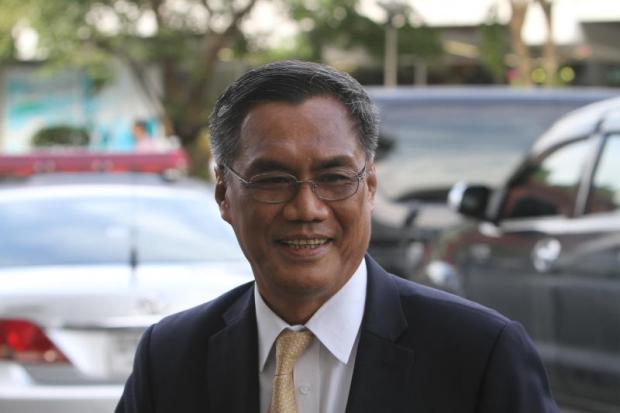
Afew months ago, the five members of the Election Commission (EC) raised eyebrows when they chose Ittiporn Boonpracong, a former career diplomat, to head the poll agency.
While all five members possessed what many pundits reckoned were impeccable records, two of them were widely tipped to head the EC. They were Thawatchai Terdpaothai, a former governor, and Chatchai Chanpraisri, a Supreme Court judge.
Mr Ittiporn was a dark horse, but he still landed the top job. After his selection, political observers wondered how he could put his extensive expertise in the international realm to good use at the EC, which is mainly involved in organising and overseeing elections.
The former chief of the Foreign Ministry's Treaties and Legal Affairs Department did not have to wait long to meet a challenge. Election observation by the international community has recently triggered controversy as the EC makes preparations for the upcoming polls.
The issue sparked fierce debate when Foreign Minister Don Pramudwinai openly opposed the idea of allowing outside observers to monitor the general election. Based on media reports, Mr Don argued that allowing non-residents or outside observers to monitor the elections would make the country look inept in managing its own affairs. The regime's critics lashed out at Mr Don and insisted that confidence in a free and fair election could be bolstered by the presence of international observers.
When prodded with the issue, Prime Minister Prayut Chan-o-cha passed the buck to the EC, saying it was the commission's job to make a final decision on whether to allow outside observers.
According to a source at the EC, the observers in question were the European Union, which reportedly wanted to send a mission of 200 people to observe the Feb 24 poll. However, the bloc reportedly wanted Thailand to first send them an invitation to observe the polls.
The EU reportedly wanted to come as the Election Observation Mission (EOM), which is unlikely to fit with Thailand's visitor programme.
In the past, the EU had sent the Election Expert Mission (EEM), not the EOM. This time it was different because the poll would be held under extraordinary circumstances and it would be the country's first since the 2014 coup, according to experts.
The EOM would be a huge burden for the EC, according to the source, as it means the poll agency would have to prepare interpreters for the visits across the country, not to mention the trouble the staff would go through taking care of the delegation. But the primary concern would be if these outsiders come to observe constructively or to find faults with the polls or the electoral process, according to the source.
When the issue emerged, Mr Ittiporn said: "Initially, we'll stick to what we've always done. If they come to observe constructively, comply with related laws and regulations and do not cause problems in the process, there's no reason to deny their request," he said.
According to the observers, even though Mr Ittiporn may be taking a softer stance than Mr Don, at the end of the day, he is likely to say no to any large-scale observation mission.