The Future Forward Party (FFP) made history by emerging as the third-largest party in last Sunday's polls within a relatively short period of time after its founding.
Although the FFP trails behind another newly established party, Palang Pracharath (PPRP), observers explained that the two parties are worlds apart in terms of how they formulated their strategies for the elections.
While both parties managed to score victories through swaths of constituencies in the March 24 election, the PPRP also resorted to wooing many popular former MPs to boost its image. That was its election strategy -- which explains how the party won more than 8.4 million votes, after the Election Commission spent several days tabulating the number of popular votes each party received in the polls.
The PPRP insists that because it has the most votes out of all the parties which competed in the elections, it has the right to call itself the winner -- despite the fact that the runner-up in terms of the total number of popular votes, the Pheu Thai Party, actually won more constituency seats than the PPRP.
The pro-regime party defied opinion polls that predicted that it would be the second runner-up in the elections, behind Pheu Thai and the Democrat Party.
Critics argued the PPRP's success story replicates the typical wheeling and dealing tactic that many political parties have practised in the past -- a tactic that handed many of them many victories in several elections, which were mostly marred by fraud complaints.
Supporters of the pro-regime party, however, said the PPRP had gone into battle knowing what the voters expected of its candidates and they believed the party could deliver.
The party, according to analysts, did not have the luxury of time to groom its candidates from scratch and nurture them to prominence. It is precisely the reason it entrusted the Sam Mitr -- the Three Allies -- a political outfit led by Somsak Thepsutin and Suriya Jungrungreangkit to court former MPs with high chances of getting re-elected, and gave them the party's membership application forms to sign.
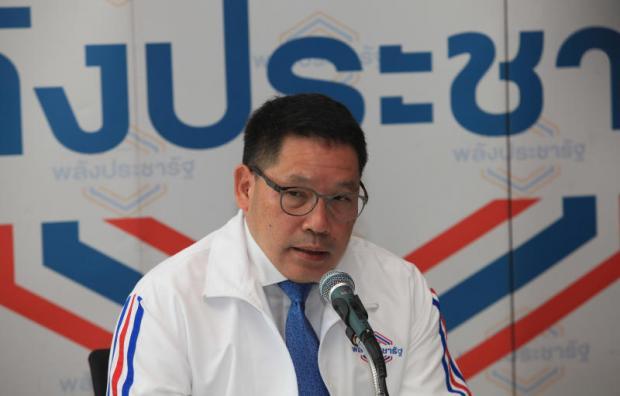
PPRP leader Uttama Savanayana said that his party is satisfied with the provisional poll results.
While the PPRP took a page out of the old playbook, the FFP went in a different direction and took a political road less-travelled, which has proved to be surprisingly rewarding, according to analysts.
Whereas the PPRP relied on familiar faces to win seats, in contrast, the FFP banked its chances of winning the electoral gold by utilising social media to court young voters to its side.
The party did not field noted figures as candidates. Rather, it nominated figures who are little-known within political circles, whom the party did not parade in noisy campaign rally convoys.
Analysts said that the FFP deliberately created an image that is centred around its party leader, Thanathorn Juangroongruangkit, whom its members believe represents everything that the party stands for.
Many voters, they continued, voted for the FFP because they felt a connection to the party and Mr Thanathorn, so its supporters consider the party's candidates capacities and credentials as secondary.
The FFP ruled the social media scene -- especially on Twitter, where it has drawn a large following that spans across various subsections of Thai society, including the LGBT community.
'Cobras' a risk to Pheu Thai bloc
While the dust has yet to settle after last Sunday's election, seven political parties have now joined forces in an effort to put an end to the power of the National Council for Peace and Order (NCPO).
The Pheu Thai Party won the largest number of House seats from the constituency system and just three days later it announced an alliance comprising of the Future Forward Party (FFP), Seri Ruam Thai, the New Economics Party, Prachachat, Puea Chat and the Thai People Power Party.
All the leaders except New Economics Party leader Mingkwan Sangsuwan signed a joint statement committing to forming a coalition government in what political observers believe was a move to pre-empt the Palang Pracharath Party (PPRP) creating a rival coalition in order to nominate Gen Prayut Chan-o-cha to return as prime minister.
It is seen also as an attempt to pressure the NCPO-appointed senators to think twice about choosing the prime minister when they join the House of Representatives in doing so.
However, while Pheu Thai has persuaded six other parties to jump into its bed, there is no guarantee the partnership will hold because the Pheu Thai-led alliance appears only to have a razor-thin majority, according to political observers.
On Wednesday it claimed to have secured 255 MPs out of 500, but on Thursday when the EC released unofficial tallies, the estimated number of seats was revised down to 253.
With the new proportional representation poll system, the devil is in the details.
The number of seats could change any time until the official results are announced on May 9.
In the meantime, some winners may also be disqualified, prompting re-elections.
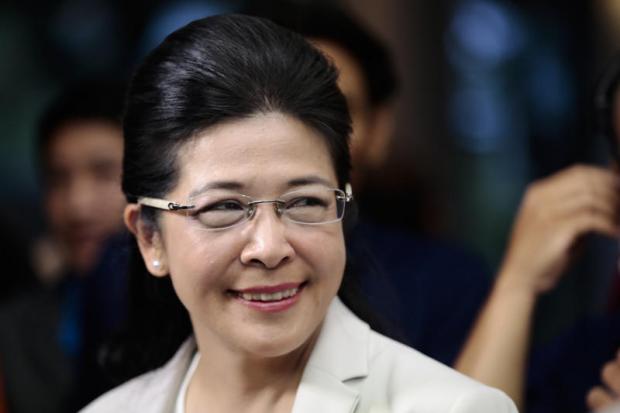
Key Pheu Thai figures, including Khunying Sudarat Keyuraphan, a party prime ministerial candidate, have always asserted that Pheu Thai has the right to form a government.
Khunying Sudarat acted quickly on her party's promise to put together a coalition line-up of like-minded parties opposed to the regime extending its grip on power.
However, Pheu Thai will have a lot more to worry about -- including possible renegade MPs who switch camps known as ngu hao, or cobras. Pheu Thai's predecessor, the now-defunct People's Power Party, had a run-in with turncoats when a group of MPs broke away from it to vote for former Democrat leader Abhisit Vejjajiva to become the prime minister.
Pheu Thai has reason to be fearful because, under the constitution, MPs are allowed to vote for a prime minister in parliament independently of their parties, and are not required to comply with any party directives. In other words, it's a free vote.
It is believed that the PPRP coalition will nominate Gen Prayut for prime minister and it may manage to lobby some MPs from the rival bloc to switch camps.
The term ngu hao was coined in 1997 by the late prime minister Samak Sundaravej who was enraged by the decision of 12 Prachakorn Thai MPs to support Chuan Leekpai's bid for PM instead of Gen Chatichai Choonhavan of the Chart Pattana Party.
To make sure history does not repeat itself, it is reported that Pheu Thai has asked its MPs to sign a pledge stating that they will resign as Pheu Thai members if they vote against the party's choice and support Gen Prayut's nomination to return as premier.
Dems not down and out yet
The Democrat Party suffered an embarrassing defeat in last Sunday's general election, as it lost all its seats in Bangkok where it had won 23 out of 33 in the 2011 election.
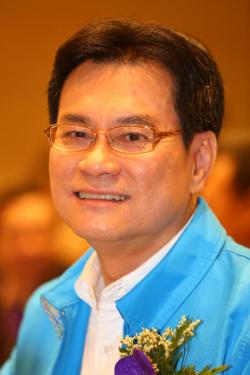
Jurin: Tipped to be new Democrat boss
Apart from the capital, the Democrats also lost seats in the South and lower North which have traditionally been its strongholds.
The disappointing results forced Abhisit Vejjajiva to resign as party leader in order to keep a promise he made during the election campaign that he would do so if the party failed to gain at least 100 seats.
The country's oldest party, which was widely expected to be the runner-up to the Pheu Thai Party this time has become a mid-sized party overnight. Unofficial results show the party won only 33 constituency seats and approximately 22 party-list MPs.
Even though the party may be down, it is still not out as it is being courted by two rival political camps -- the Pheu Thai-led alliance and the Palang Pracharath Party-led coalition -- which are scrambling for allies to form the country's next government.
The two camps are reportedly trying to persuade some key Democrat figures who are tipped to become the party's new leader -- such as Jurin Laksanavit and Korn Chatikavanij -- to join their side.
However, the two potential new party leaders have not yet confirmed whether they have been approached by the two camps because there are several processes involved before a new party executive board is selected. The party's stance will become clear when its executives hold a meeting to decide its position regarding the next government.
Some sources said that Palang Pracharath had offered the post of parliament president to Mr Abhisit as well as several ministerial posts to the Democrats, though Mr Abhisit rejected offers from both sides.
Another source in the Democrat Party said that there were differences of opinion as to whether the party should align with the PPRP.
Some key party figures and senior politicians such as Mr Abhisit, and former party leader Chuan Leekpai, were of the opinion that it should assume the role of an "independent opposition'' rather than join hands with the PPRP, the source said.
But some key party members such as Songkhla politician Thaworn Senneam insisted that the party should align itself with the PPRP-led bloc, the source said.