A pilot who smuggled cocaine into the US for the notorious Medellin cartel has told a court that drug lord Pablo Escobar ordered a double murder in Miami for which a British businessman has wrongly served 28 years in jail.
The former cartel member is a key witness at an evidentiary hearing that could overturn Krisna Maharaj’s conviction for the October 1986 shooting of a Jamaican-Asian money launderer and his son in a hotel room in the city.
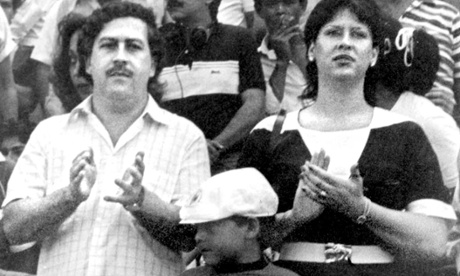
Testifying anonymously for fear of reprisals, the pilot recalled a poolside meeting at Escobar’s Colombian ranch soon after the murders at which the so-called king of cocaine confessed to having Derrick Moo Young and his son Duane “whacked” because they had double-crossed him.
“They had stolen from him and he had had them killed. He didn’t do it personally,” the pilot, identified only by the pseudonym John Brown, told the court.
“He was discussing several people that had stolen from him that he had whacked. He said something about ‘los Chinos’ [the Chinese]. He said one Chino had stolen from him. He said he had killed him across from the hotel that I was staying in. There were several hotels there but the major hotel across from me was the Dupont Plaza.”
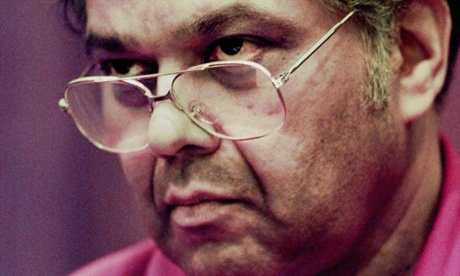
Maharaj’s lawyers say the case is a grave miscarriage of justice and call the hearing the last chance of freedom for the 75-year-old, who spent 15 years on death row and is in failing health. Maharaj, in a red prison jump suit, appeared frail in court, walking in with the aid of a frame and sitting quietly as he listened to proceedings.
His attorney, Clive Stafford Smith, of the international human rights organisation Reprieve, said his client was the perfect fall guy for the crime because at the same time Moo Young was ripping off the cartel he was also being sued for fraud by Maharaj over a failed business deal that lost $400,000.
Judge William Thomas of Florida’s 11th judicial circuit has the power to order a new trial, send Maharaj back to jail or vacate the conviction and order his release. His decision is expected in a written ruling following the week-long hearing.
The case opened earlier with testimony from a former Drug Enforcement Agency investigator that Miami detectives investigating the shooting failed to follow crucial leads that pointed to Maharaj’s innocence.
One was that a close associate of Escobar was staying in a room at the Dupont Plaza hotel opposite the one in which the Moo Youngs were killed. The presence of Jaime Vallejo Mejia, who was under investigation by the DEA for laundering $40m of cocaine proceeds through banks in Switzerland, should have been “a red flag” according to the former agent Henry Cuervo, now an expert on Colombian drugs cartels.
“There was money flowing everywhere, there was a lot of corruption around law enforcement,” he said. “There was an explosion of violent crime by these Colombian groups and it was mainly drug cartels against drug cartels.”
Stafford Smith said the evidence would show Maharaj was lured to the hotel to set him up for the murder, which was then covered up by corrupt members of the Miami police department. He said the city’s police force was rife with corruption in the mid-1980s with kickbacks financed by the millions of dollars that flowed through Miami alongside tons of Colombian cocaine.
Maharaj, who was born in Trinidad, was formerly the successful owner of a banana importation business and lived a lavish lifestyle with a fleet of Rolls-Royce cars and racehorses before falling on harder times in the late 1980s.
He was convicted of the murders in 1987 and sentenced to death, which was commuted to life imprisonment in 2002 when it emerged that the trial judge had colluded with prosecution lawyers to agree the penalty before the sentencing hearing.
As things stand Maharaj is not eligible for parole until he is 101. Stafford Smith told the Guardian that the hearing represented his client’s final opportunity for freedom. “It’s a life-or-death situation,” he said. “Kris is no longer on death row, thank goodness, but he is 75 years old, in bad health, and will die in prison if he’s there much longer. So this is his last chance.”
The hearing will continue on Wednesday.
At the same time that Moo Young was ripping off the cartel, Stafford Smith said, he was also being sued for fraud by Maharaj over a failed real estate deal that lost $400,000.
The evidence will show that Maharaj was lured to the hotel to set him up for the murder, which was then covered up by corrupt members of the Miami police department, Stafford Smith said, and will include testimony from federal and state agents, as well as a former cartel member who says he heard Escobar directly ordering the hit.
He added that Miami’s police force was riddled with corruption in the mid-1980s, fuelled by the massive cocaine trade in the city, the main point of entry from Colombia into the US.
Judge William Thomas of Florida’s 11th judicial circuit has the power to order a new trial, send Maharaj back to jail or vacate the conviction and order his release. His decision is expected in a written ruling following the week-long hearing.
Maharaj, who was born in Trinidad, was formerly the successful owner of a banana-importation business and lived a lavish lifestyle with a fleet of Rolls Royce cars and racehorses before falling on harder times in the late 1980s.
He was convicted of the murders in 1987 and sentenced to death, which was commuted to life imprisonment in 2002 when it emerged that the trial judge had colluded with prosecution lawyers to agree the penalty before the sentencing hearing.
As things stand, Maharaj is not eligible for parole until he is 101. Stafford Smith told the Guardian that the hearing represents his client’s final opportunity for freedom.
“It’s a life-or-death situation,” he said. “Kris is no longer on death row, thank goodness, but he is 75 years old, in bad health, and will die in prison if he’s there much longer. So this is his last chance.”