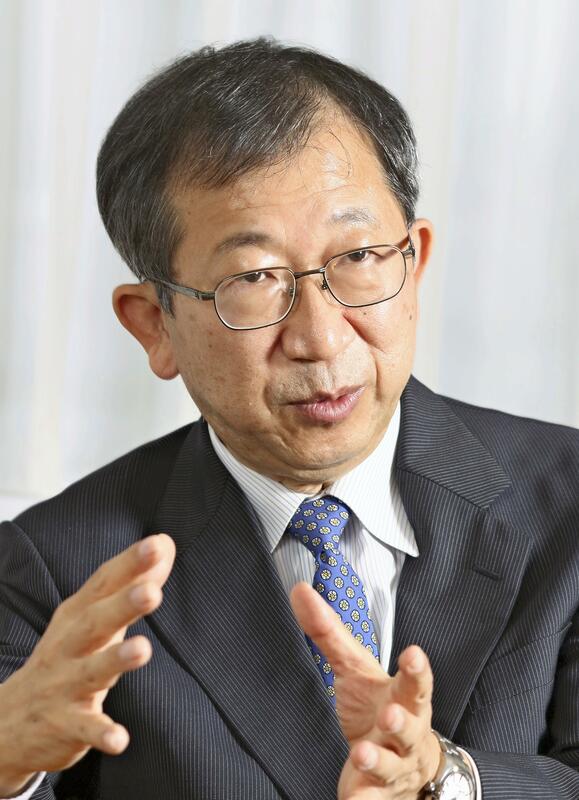
In this sixth installment of a series on issues in the upcoming House of Representatives election, The Yomiuri Shimbun interviewed Tatsuya Terazawa, Chairman of The Institute of Energy Economics, Japan. The following is excerpted from his remarks in the interview.
To prevent global warming, all the political parties have announced measures aimed at reducing greenhouse gas emissions. What worries me is that there may not be enough discussion about the real problems that will arise as a result of these reduction efforts and how to deal with them.
Japan's economic growth has been driven by the manufacturing industry, including automobiles and steel, which emit greenhouse gases. If technological innovation to reduce emissions is not realized, these industries will not be able to survive and Japan's international competitiveness may lessen. The local economies where the companies and factories are located will also decline and jobs will be lost.
Technological innovation is essential to achieve the government's goal of net-zero emissions in 2050. Former Prime Minister Yoshihide Suga's administration proposed the creation of a 2 trillion yen fund, but this is inferior in terms of both quantity and quality compared to other countries, and it is insufficient to realize the practical application of world-leading new technologies.
Now that the government is stepping up its efforts to prevent global warming, the negative impact on people's livelihoods has already become apparent. Prices are stagnant, so are wages, and yet electricity rates at major power companies have risen by an average of more than 10% this year. This is because the demand for natural gas, which emits less carbon dioxide, is increasing worldwide, causing prices to soar.
Japan has been the world's largest importer of liquefied natural gas, but it's certain to be overtaken by China this year. It is essential to discuss energy security in order to secure sufficient quantities of LNG at low prices so as not to cause power shortages.
The Liberal Democratic Party has said it will aim to use nuclear power plants whose safety has been confirmed while expanding renewable energy. The Constitutional Democratic Party of Japan has pledged not to allow the construction of new plants or the expansion of existing facilities, and would set a goal of having 100% of electricity demand covered by renewable energy in 2050.
Suitable land and sea areas for solar power, as well as for onshore and offshore wind power generation, are limited, and the costs to establish such facilities are high. Since the amount of electricity generated at these facilities varies depending on the weather and the time of day, it is necessary to install storage batteries to compensate for output fluctuations and to conduct thermal power generation, which incurs large costs.
To curb the soaring cost of electricity while promoting the use of renewable energy, we should promote the effective use of nuclear power plants. First of all, we must promote the restart of existing nuclear reactors, whose power generation costs are low, after confirming their safety.
Throughout the election campaign, it is important to properly discuss the importance of utilizing nuclear power plants and seek public understanding.
We should not just talk about global warming prevention with the image of being "earth-friendly," but also appeal for policies that do not turn a blind eye to the reality that the burden on the public will increase.
-- Tatsuya Terazawa / Chairman of The Institute of Energy Economics, Japan
Terazawa graduated from the University of Tokyo in 1984 with a degree in law and joined the former Ministry of International Trade and Industry. He became secretary to then Prime Minister Yoshihiko Noda in 2011, after the Great East Japan Earthquake. He has served as vice minister for international affairs at the Economy, Trade and Industry Ministry. He retired in 2019 and has been in his current position since July. He is 60 years old.
Read more from The Japan News at https://japannews.yomiuri.co.jp/