Discovery's final voyage, 'walking on Mars' and a monstrous solar eruption – a month in space, February 2011
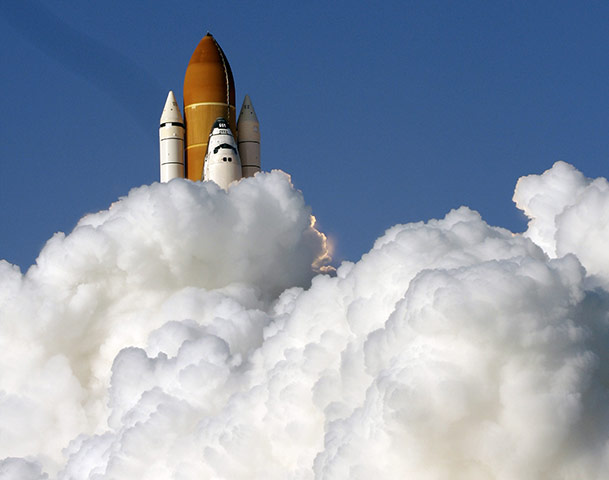
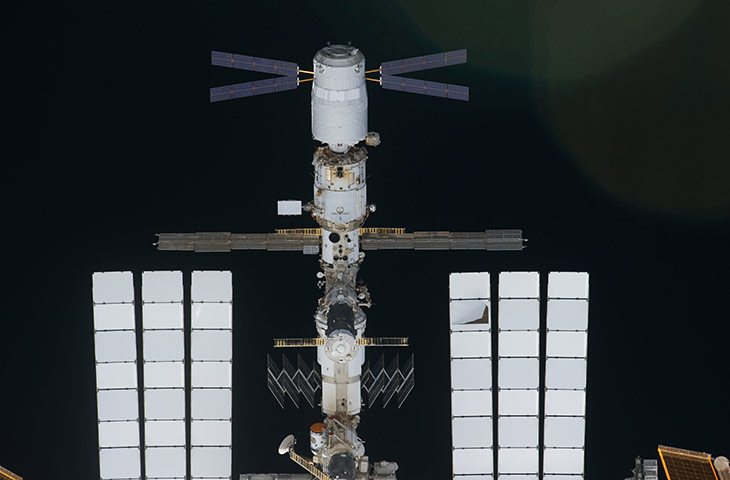
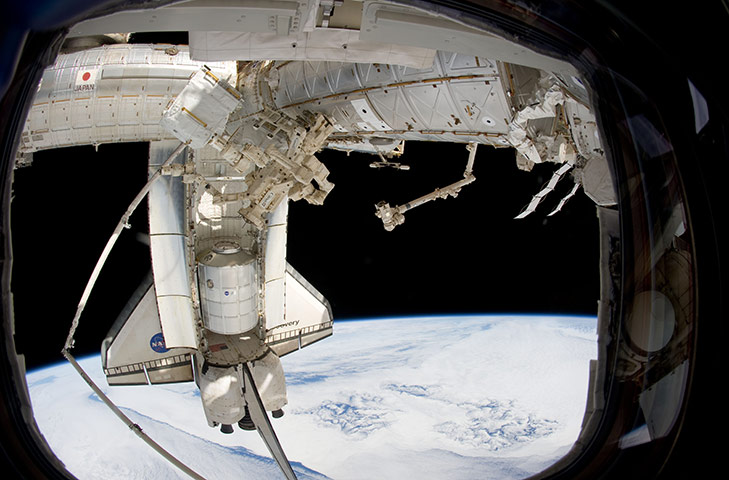
The world's most travelled spaceship, the space shuttle Discovery, thundered into orbit for the last time on 24 February bound for the International Space StationPhotograph: Wifredo Lee/APA Discovery crew member took this shot of the International Space Station as the shuttle docked on 26 February. The European Space Agency's ATV Johannes Kepler supply vehicle (top centre with cruciform solar arrays) docked with the ISS on 24 FebruaryPhotograph: ISS/NasaThe docked space shuttle and the spider's leg of the Special Purpose Dexterous Manipulator or Dextre (left). The storage module Leonardo can be seen in the shuttle's cargo bayPhotograph: ISS/Nasa
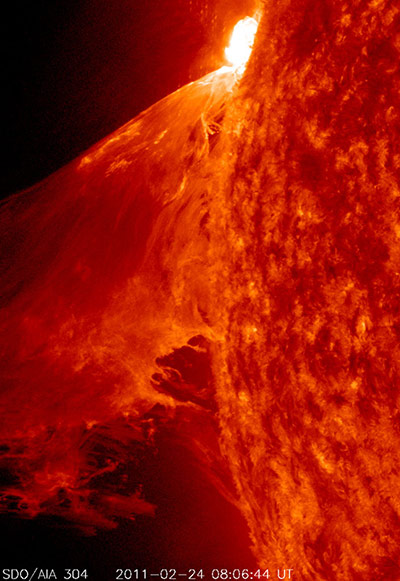
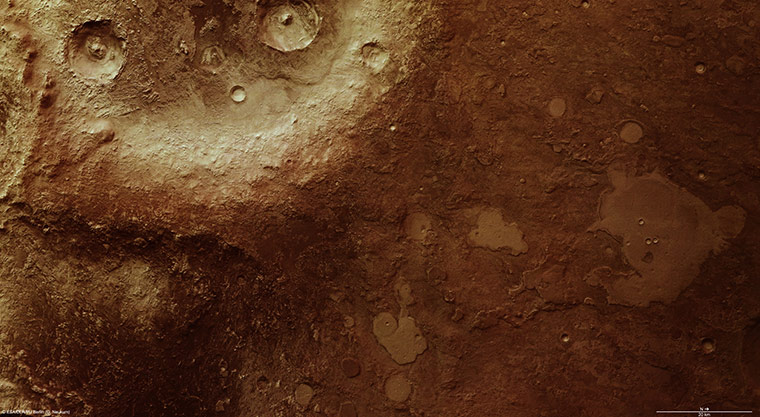
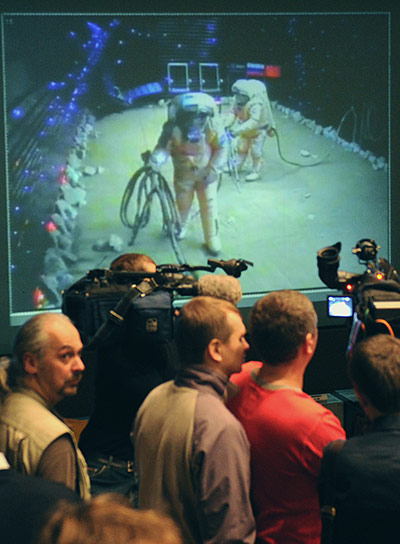
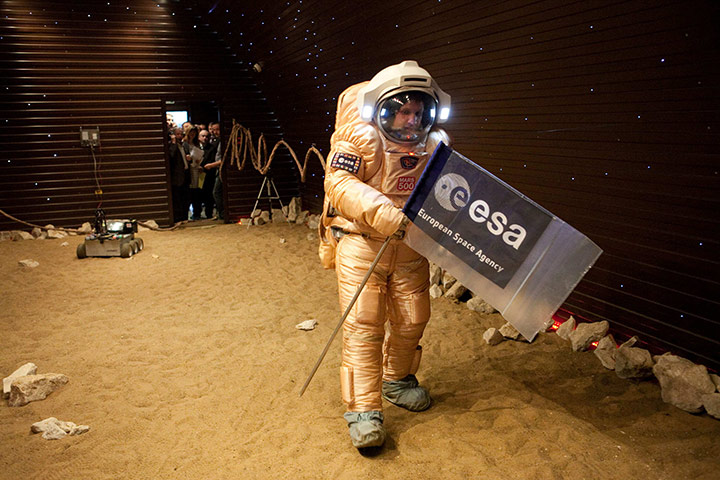
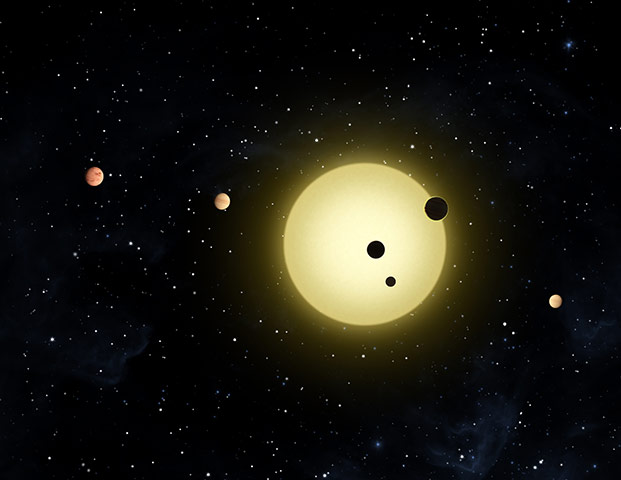
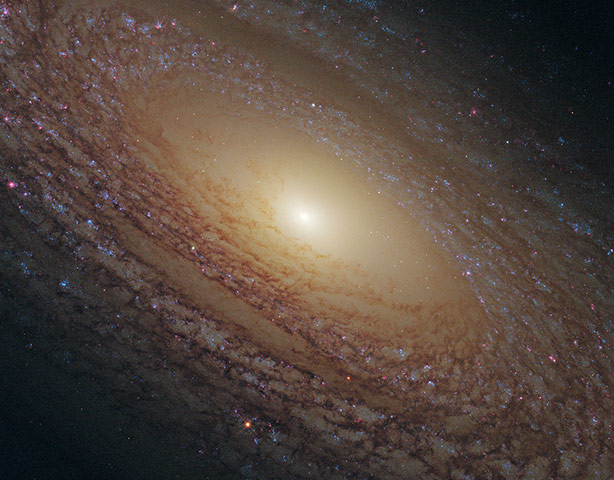
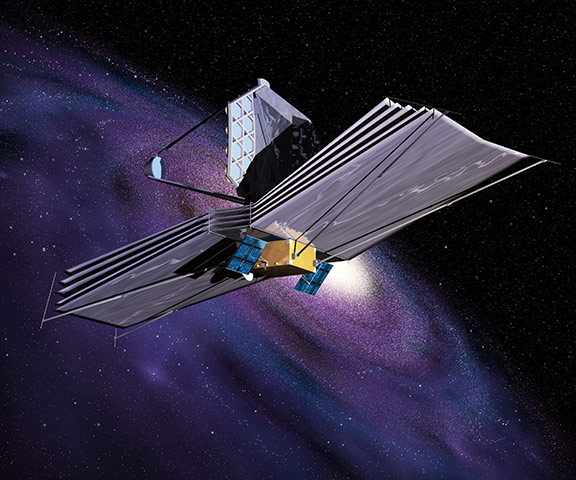
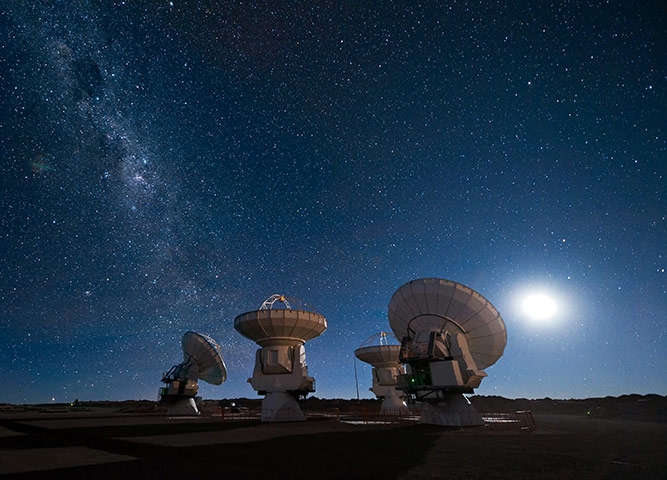
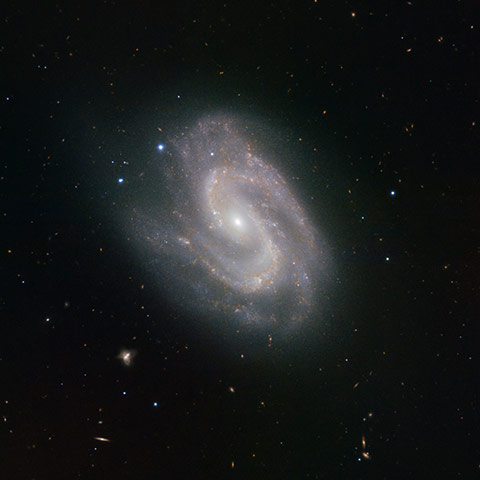
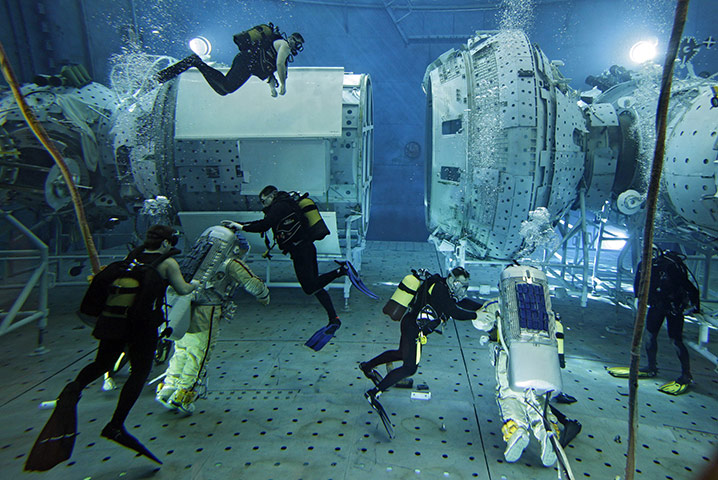
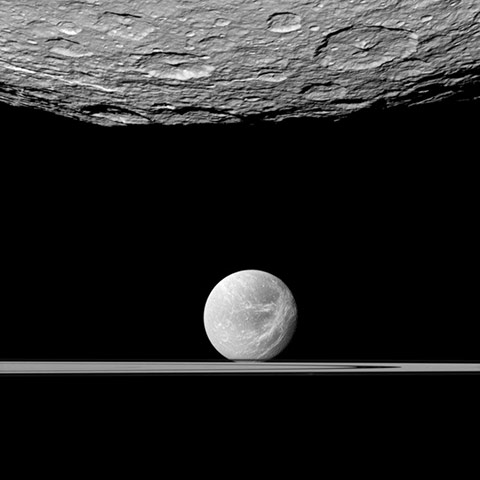
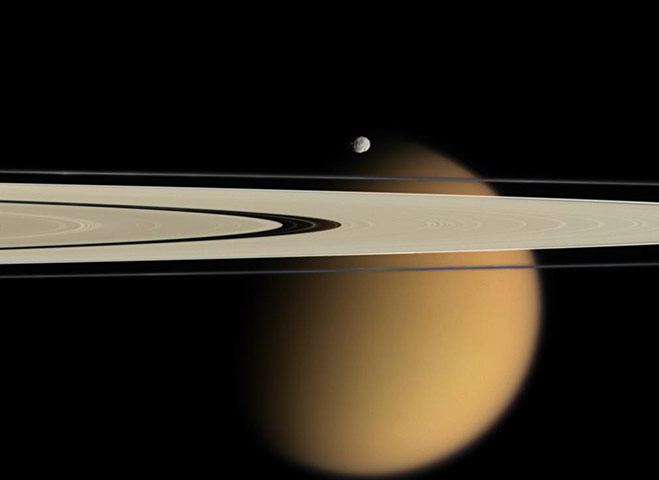
On 24 February the sun vomited an impressive gobbet of plasma into space. The scale of the 'monster prominence', as Nasa described it, dwarfed the Earth. The waving mass of erupting plasma, which swirled and twisted for 90 minutes, was captured in extreme ultraviolet light by Nasa's Solar Dynamics Observatory spacecraft. Watch a video of the eventPhotograph: SDO/GSFC/NASA'Pedestal craters', like this pair (top left) photographed on the Red Planet by the Mars Express orbiter, are created when an impact throws up pulverised rock, blanketing the surrounding terrain. The material makes a 'platform' or 'pedestal' around the central cratersPhotograph: Mars Express/ESAJournalists look slightly underwhelmed as pictures are relayed of astronauts working on the surface of Mars. A six-man crew volunteered to be locked up in a mock spacecraft for 520 days. After eight months in isolation simulating a journey to the Red Planet, Mars500 astronauts Diego Urbina of Italy and Alexander Smoleyevsky of Russia stepped out onto a mockup of the Martian surface at the Korolev Space Mission Control Center outside Moscow. The return journey to Earth began on 2 MarchPhotograph: Alexander Nemenov/AFPA crew member in June 2010 training for the marswalk. Mars500 is assessing the mental and physical strains of a return journey to the Red PlanetPhotograph: IPMB/ESAAstronomers detected six planets orbiting a Sun-like star, Kepler-11, more than 2,000 light years from Earth: the largest number of planets found so far around a single star. The discovery was made using data from the Kepler space telescope, which measures the periodic dimming of stars as orbiting planets pass in front of them. In this artist's impression, three planets are shown 'transiting' Kepler-11Photograph: Tim Pyle/NasaA disc of stars and dust lanes in the spiral galaxy NGC 2841, 46m light years away in the constellation of Ursa Major (the Great Bear). This image was taken by Hubble through four different filters on its Wide Field Camera 3, capturing wavelengths from ultraviolet through visible light to near-infrared Photograph: Esa/NasaNasa released an awesome online Webb Telescope Interactive Fly-by Tour. You can view the infrared telescope from any angle by dragging your cursor across the screen and use drop-down menus to locate its optics, instruments and systems. The James Webb Space Telescope is scheduled for launch in 2014 and will study the first galaxies to form after the big bangPhotograph: Nasa/EsaAn image of the Cigar Galaxy (Messier 82) captured by the William Herschel Telescope in Spain. M82 is known as a starburst galaxy in which intense star formation is taking place. The red glow is from a 'superwind' of ionised hydrogen blowing from the galactic centre – the combined winds of many individual starsPhotograph: Pablo Rodriguez-Gil y Pablo Bonet/IACFour blind telescopes: part of the Atacama Large Millimetre/submillimetre Array (ALMA), under construction at 5,000 metres above sea level on the Chajnantor plateau in Chile's Atacama Desert. The moon can be seen on the right and the billions of stars of the Milky Way are scattered across the sky on the left. The dryness of the desert and thin atmosphere at high altitude will be ideal for observing the universe at millimetre and submillimetre wavelengths when the array is completed in 2013 Photograph: José Francisco Salgado/ESOThe HAWK-I instrument on the European Southern Observatory's Very Large Telescope at the La Silla Paranal Observatory in Chile produced this distinctive image of the galaxy NGC 157. HAWK-I, which is tuned to detect infrared light from areas of dense star formation, stands for High-Acuity Wide-field K-band ImagerPhotograph: ESOThe many faces of the North America and Pelican nebulae with different combinations of visible (Digitised Sky Survey) and infrared (Spitzer Space Telescope) observations. The visible light view (top left) is reminiscent of the North American continent and a fat bird with a large bill – a resemblance that earned the nebulae their respective names; top right shows visible and infrared combined (see here for an infrared colour code); the bottom two are infrared only, from two Spitzer cameras that record light over different wavelength ranges. The striking differences between the upper and lower images are due in part to the fact interstellar dust blocks visible but not infraredPhotograph: Spitzer Space Telescope/NASATrainee astronauts in spacesuits, assisted by scuba divers, are put through their paces in a pool at the Russian Cosmonauts Training Centre in Star City near Moscow. Underwater training simulates the microgravity of low-Earth orbitPhotograph: Sergey Ponomarev/APThis image, snapped by the Cassini spacecraft, shows an odd juxtaposition of the cratered surface of Saturn's moon Rhea (top), the planet's rings seen side-on, and beyond them another of Saturn's moons, Dione Photograph: JLP/Space Institute/NASASmog-like clouds in the atmosphere of Titan produced this blurring effect. Small, battered Epimetheus, another of Saturn's 62 moons, appears just above the planet's ringsPhotograph: JPL/Space Science Institute/NASA
Sign up to read this article
Read news from 100's of titles, curated specifically for you.