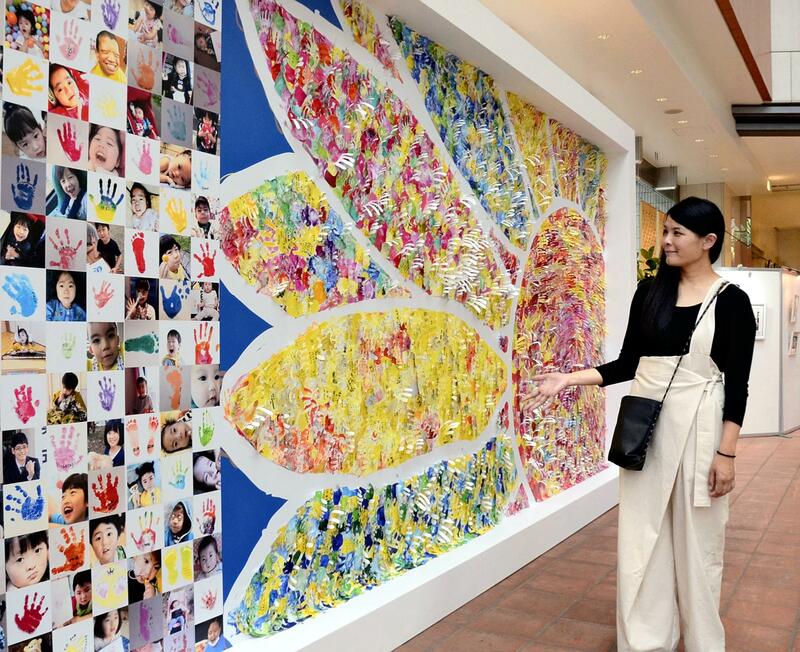
A mosaic made from the handprints of disabled children is now on display at the Tokyo Metropolitan Theatre in Toshima Ward, Tokyo. The mosaic was earlier meant to be displayed at a public viewing venue during the Tokyo Olympic and Paralympic Games. However, public viewings were canceled due to the spread of the novel coronavirus, and the mosaic was unveiled at the theatre near Ikebukuro Station instead.
The Hand Stamp Art Project, which aims to create the world's largest mosaic using the handprints of children with disabilities and intractable diseases, was launched in 2013 when Tokyo was chosen as the host city for the Olympic Games. The idea of using handprints was adopted so that bedridden children with serious disabilities could participate in the project.
A total of 140,000 handprints have been collected so far, from disabled children and their families in Japan and abroad, as well as from people who support the project. There are also footprints of children who could not provide handprints.
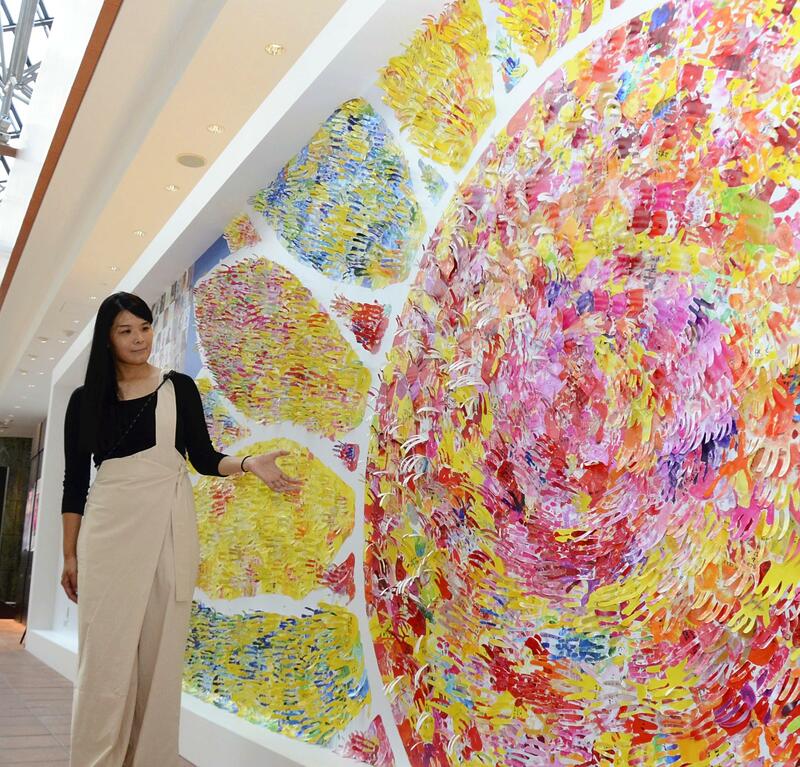
The mosaic is 2.5 meters high and 4 meters wide. The colorful handprints were cut out and combined to create a large sunflower. The image of a sunflower blooming toward the sun is said to represent the idea of looking up and living a cheerful life. It is also hoped that the exhibition will give people a chance to reflect on the fact that there are children with various disabilities and illnesses around them.
Due to the limited space for the exhibition, only about 6,000 handprints of disabled children were used to create the work. Photographs of the children are also on display. The remaining handprints are being considered for display at hospitals around the country later.
The project's representative, Mariko Yokoyama, 41, lost her eldest son, who had intractable epilepsy, in 2013 when he was 5 years old. She said: "With the participation of many people, we were able to collect small handprints and complete a huge mosaic. I hope that by letting people know about disabled children, we can create a society where it is easier for everyone to live."
The mosaic will be on display until Sept. 12 near the park entrance of the Tokyo Metropolitan Theatre. The theatre will be closed on Aug. 23-24.
Read more from The Japan News at https://japannews.yomiuri.co.jp/