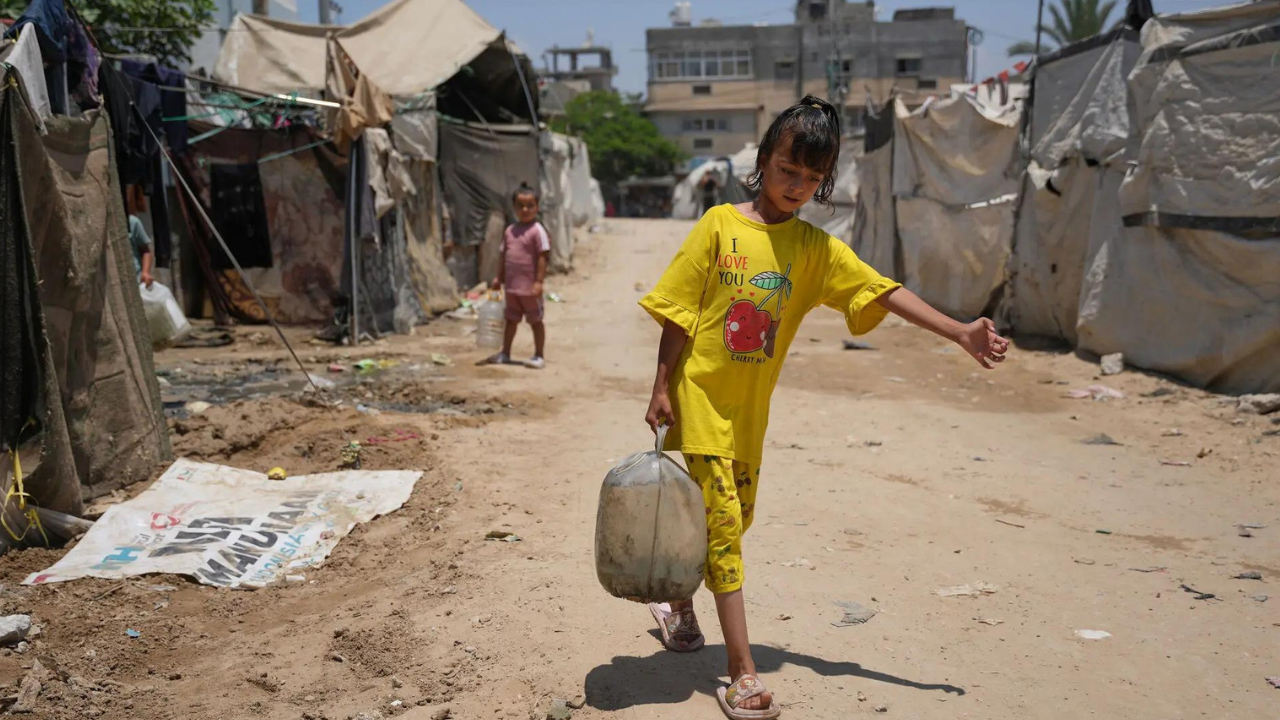
More than 1.9 million people, nearly Gaza's entire population, remain displaced, as efforts to implement the Israel-Hamas ceasefire agreement remain stalled.
Get breaking news anytime, anywhere. Download the TOI app now!
More than eight months after the two sides signed a two-phase deal, both continue to accuse each other of violating its terms, while UN officials warn that civilians are trapped in a "dangerous status quo."
Months into the truce, many displaced Gazans continue to live in poorly ventilated, makeshift tents, where rashes and other ectoparasitic skin infections caused by parasites burrowing into the skin are becoming increasingly common.
In a report released at the end of May, the United Nations said such infections had affected more than 80% of displacement sites across Gaza.
The UN also warned of worsening sanitation conditions, with rats, cockroaches and weasels infesting camps, tearing through tent fabric and biting children and newborns as they sleep. In some cases, the animals are "directly attacking people," according to Saleh, head of emergency operations in Gaza for the UK-based NGO Medical Aid for Palestinians (MAP).
He said elderly people and those with disabilities are particularly vulnerable, as they are less able to avoid rodents, especially at night.
“We have spoken to parents whose children have been bitten by rats, who are terrified that it will happen again,” Saleh was quoted as saying by CNN.
Elsewhere in Gaza, residents have resorted to digging makeshift cesspits as supplies for latrines run critically low, increasing the risk of soil and water contamination, according to Hosni Nadeem Mohanna, spokesperson for Gaza City's water municipality.
Rodents are also burrowing into aid parcels, contaminating scarce food supplies and forcing families to discard rice and flour. To protect what little food they have, some Palestinians have begun hanging containers from the ceilings of their tents to keep them out of reach.
The Israeli military's continued expansion of areas under its control in Gaza, along with the shifting of the so-called "yellow line," has triggered fresh displacement, Saleh said. She added that airstrikes and gunfire targeting densely populated areas have "intensified."
Families who relocate often find themselves settling on land surrounded by piles of solid waste and pools of sewage after Israel's military campaign left desalination plants, wastewater treatment facilities and sewage management systems inoperable or inaccessible. Combined with large volumes of uncleared rubble, the conditions have created a breeding ground for mosquitoes and rodents, according to Mohanna, spokesperson for Gaza City's water municipality, as cited by CNN,
Mohanna said an estimated 25 million tonnes of debris have accumulated in Gaza City alone. He added that severe restrictions on the entry of waste compactors and rubble-clearing machinery have limited authorities' ability to remove waste efficiently.
As a result, some relief workers have resorted to using donkeys and bulldozers to clear solid waste, according to Louise Wateridge, communications officer for the UN Children's Fund (UNICEF) in the Middle East and North Africa.
An average of one child has been killed every day in Gaza since October, according to a CNN analysis of figures from the territory's health ministry. In June, an independent UN commission accused Israel of continuing to commit genocide against Palestinians by deliberately targeting children in Gaza, a claim Israel rejected as "a political blood libel disguised as a UN document."
For many people living in Gaza, references by diplomats to "peace" stand in stark contrast to conditions on the ground, where they say the effects of the war continue to shape daily life.