BATHINDA: Punjab’s area under direct seeding of rice (DSR) has increased to 6.01 lakh hectares (12.02 lakh acres) or close to 20% of its total under the water-guzzler crop, yet fallen short of the target of 10 lakh hectares.
The only consolation for the farmers is that paddy transplanting by DSR has increased almost 20% from last year. Otherwise, total paddy (which includes parmal and basmati) was grown in 30.48 lakh hectares this year, a decline from last year’s 31.49 lakh hectares. Those 1 lakh hectares shifted to cotton, maize, and other crops, 53,000 hectares to cotton alone, which now covered 3.04 lakh hectares against last year’s 2.51 lakh hectares.
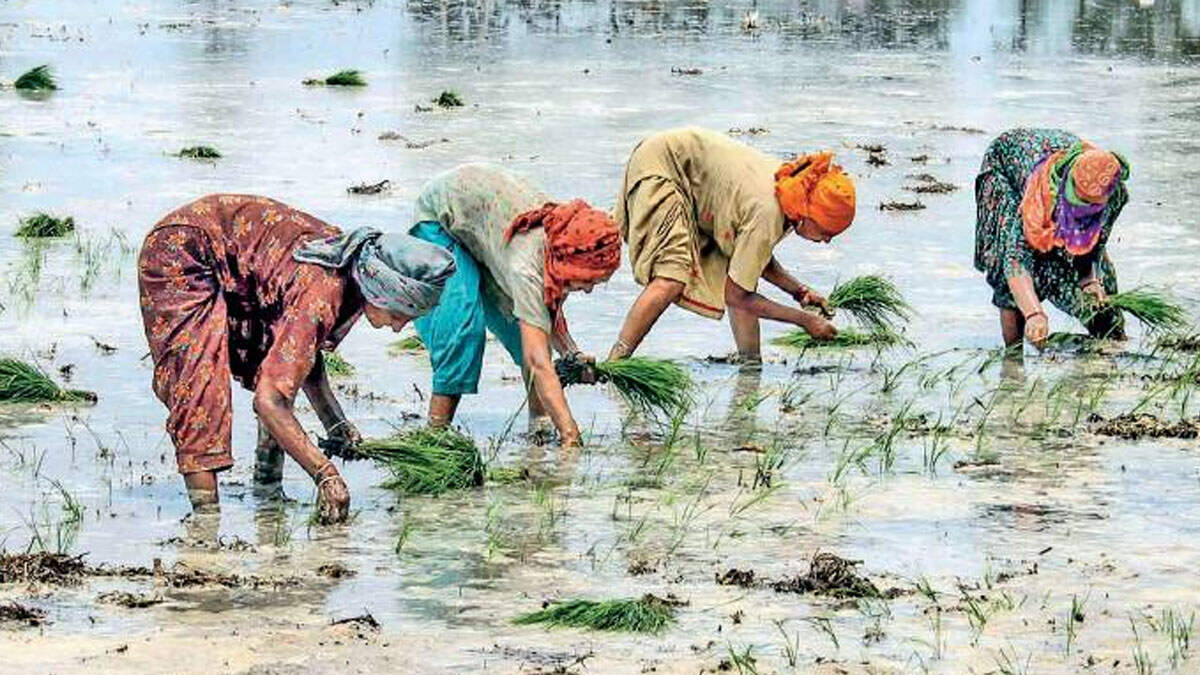
Given the availability of cheap labour and rain, the state agriculture department claimed that the goal of bringing 10 lakh hectares under DSR by weaning the farmers away from conventional method was always unrealistic. Transplantation done, the department on Wednesday released the figure of 6.01 lakh hectares under DSR (19.70%of the area under paddy and basmati), which is the highest ever that Punjab’s remote sensing centre has measured. This saved 15% water.
The Bathinda farmers are leaders in this with 52,760 hectares under the DSR, followed by Muktsar and Fazilka with 46,820 and 45,850 hectares, respectively. Director agriculture Sukhdev Singh Sidhu said: “Last year, we had about 5 lakh hectares under DSR and Muktsar was in lead with 46,510 hectares. This year, easy labour and enough rain came in the way of achieving the target.”
The DSR technique also reduced the cost of paddy cultivation. “The research at Punjab Agrcultural University (PAU) shows that the yield of paddy from DSR is on a par with the paddy grown by the conventional technique of transplanting,” said Sukhdev Singh.