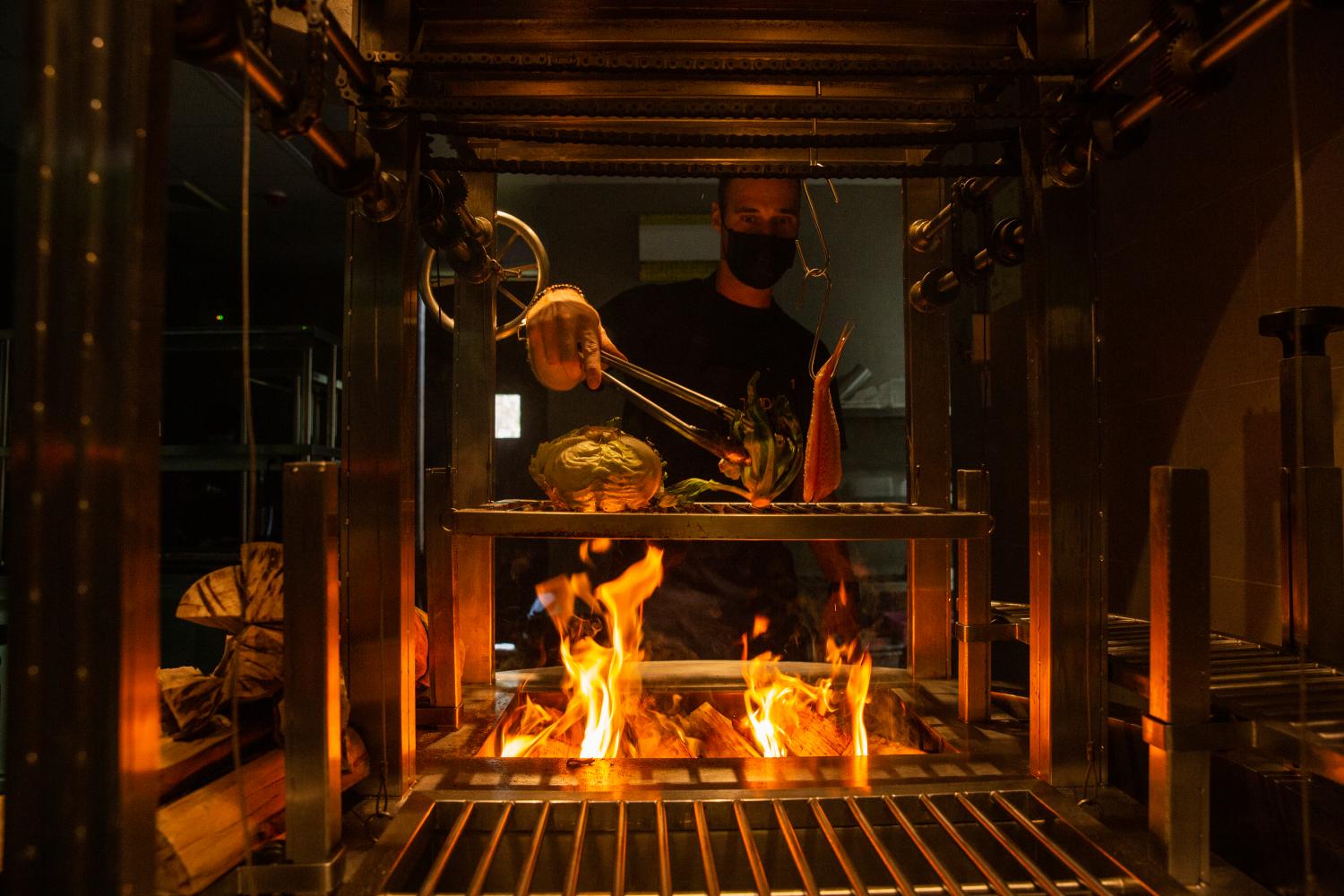
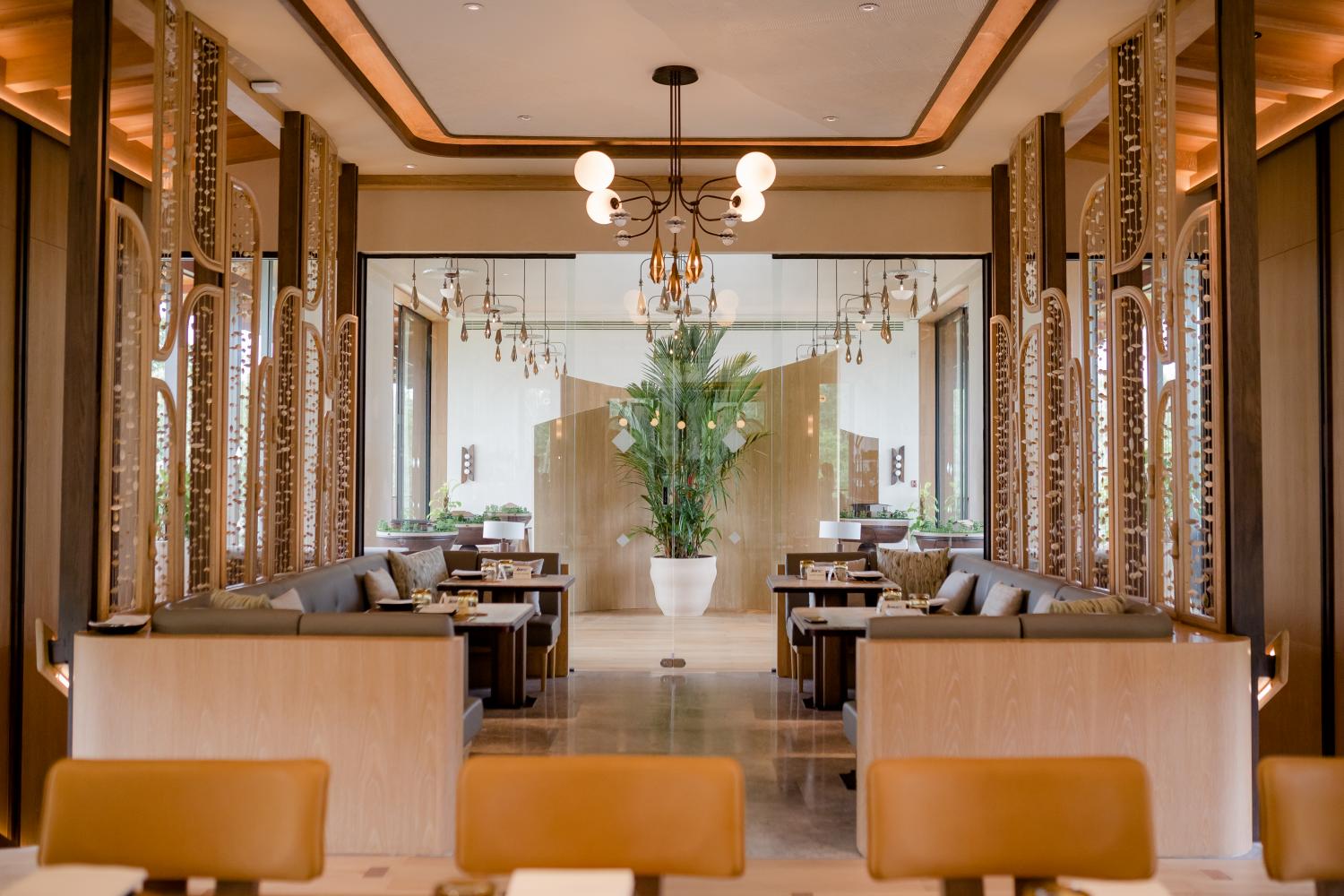
Local ingredients, live fire and a zero waste concept is the name of the game at Trisara Phuket's latest dining outlet, Jampa.
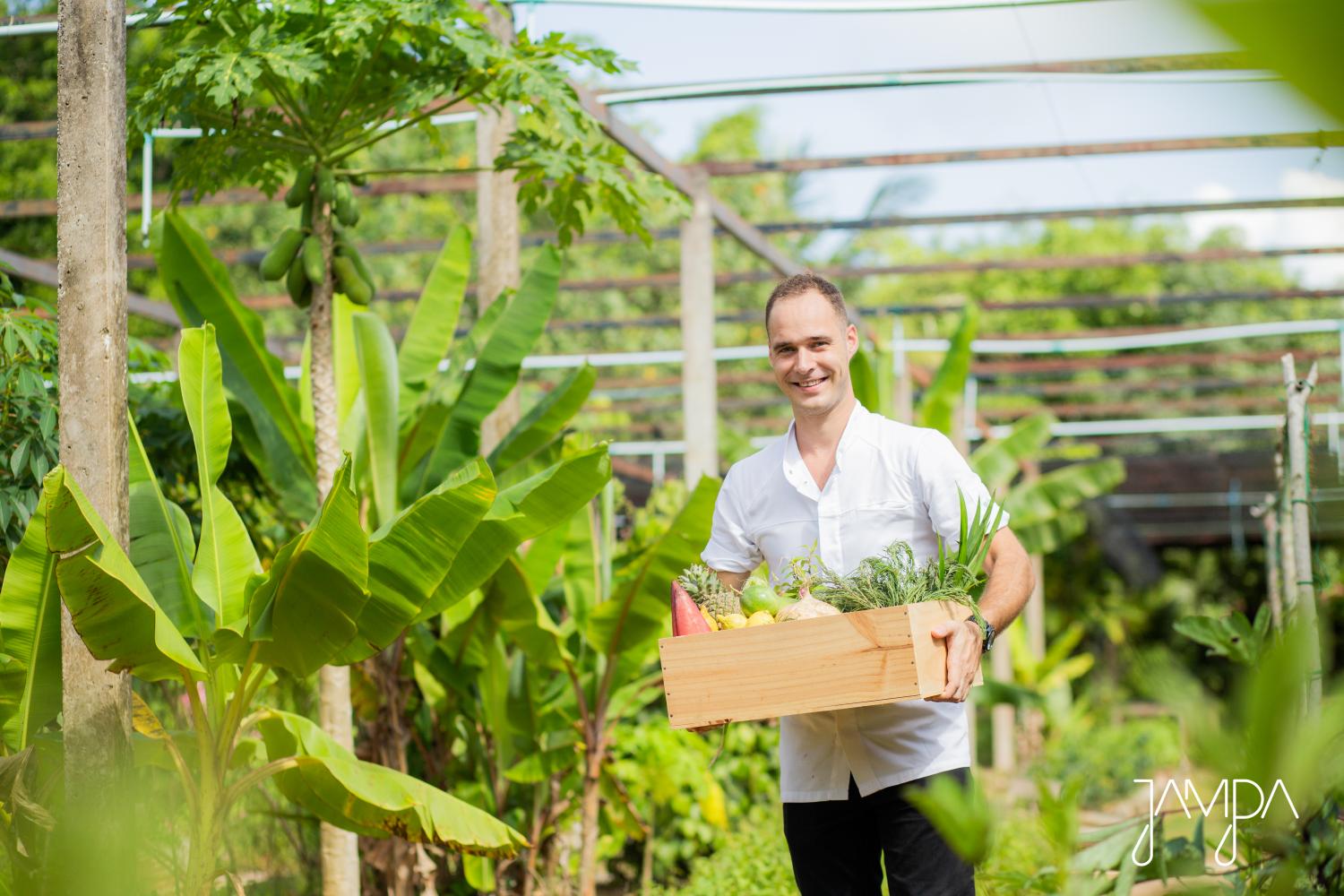
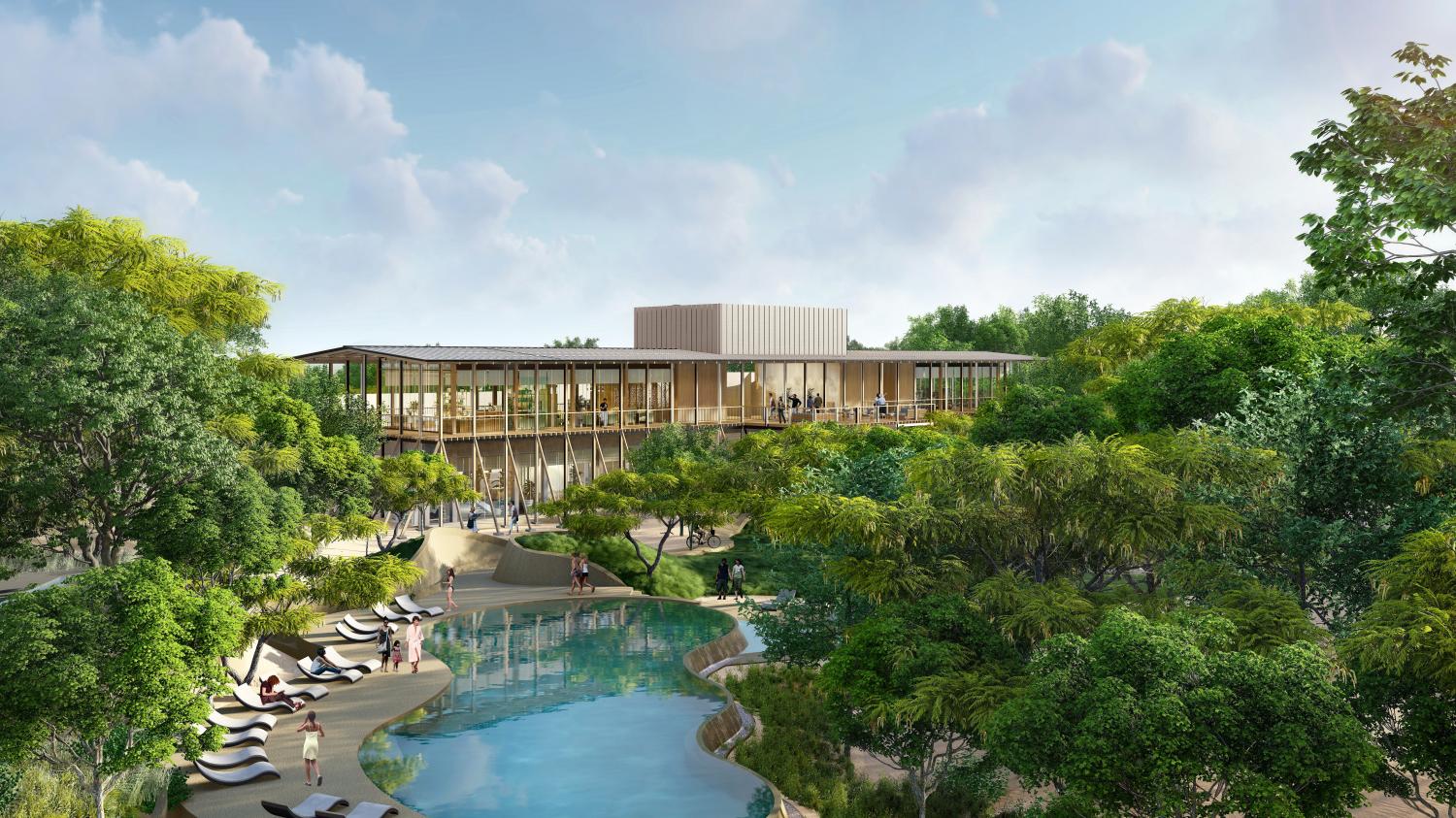
Named after the tropical flower Magnolia champaka, found in abundance in Phuket, the restaurant is part of the sprawling Tri Vananda wellness resort, part of the Montara Hospitality Group. The group's "Dine Good Do Good" philosophy embraces the need to rethink the sourcing of ingredients, using artisanal suppliers and being more ethically responsible. To achieve this, Jampa is a stone's throw from the group farm, where most of the ingredients are grown.
At Jampa's helm is executive chef Rick Dingen, who left the F&B scene in Bangkok for sun, sea, sand and island life.
"It is important to showcase the locally-sourced, seasonal ingredients in the best way possible," says Dingen, and at Jampa he does just that.
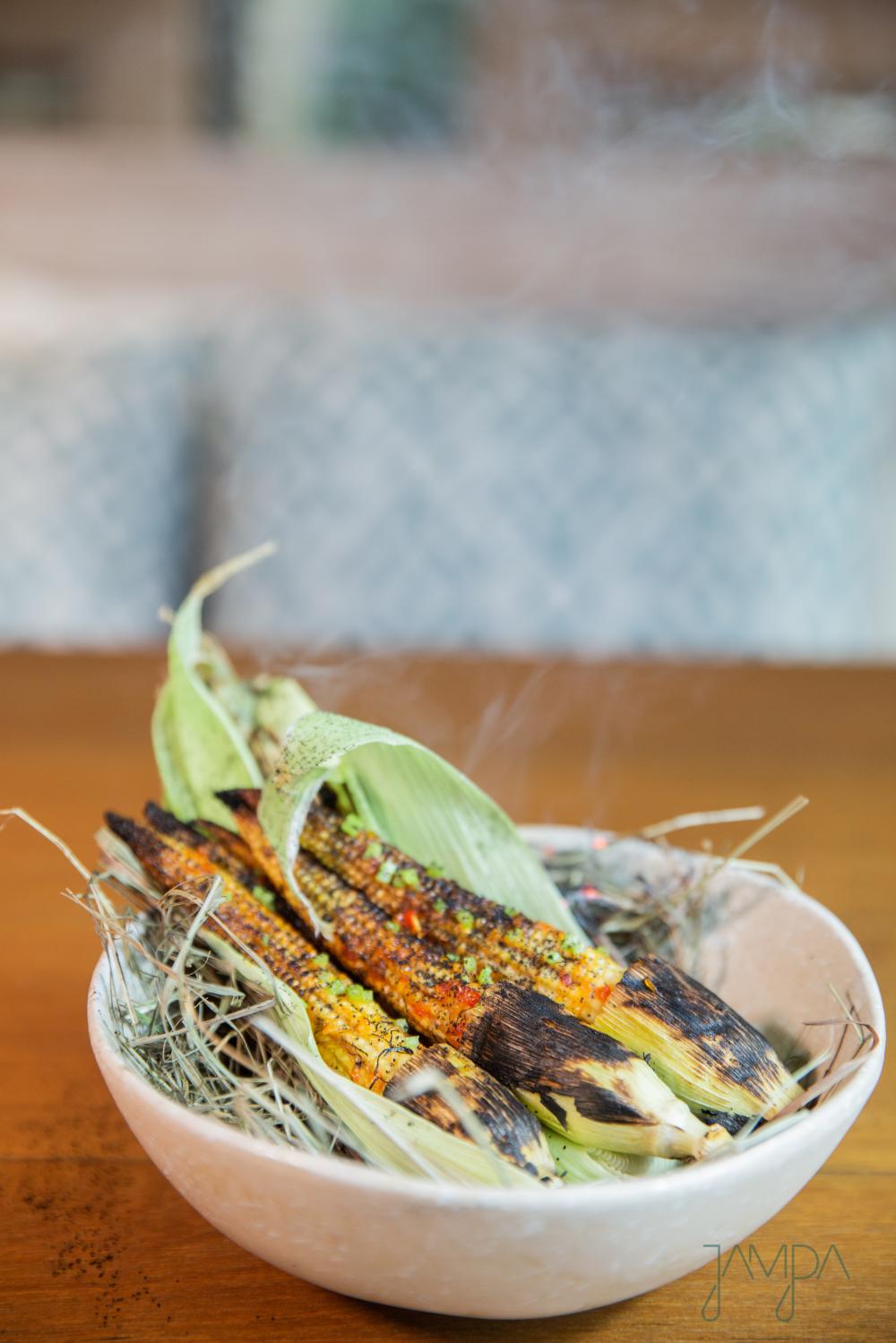
From the snack menu, the wood-fired baby corn (200 baht) served with sambal and coriander root called out to me simply because there is nothing like grilled corn. The corn is barbecued in its husk until the husk is burnt, almost black in colour. It is then dried and turned into a powder, and then this husk powder is put back on the corn. Sambal, made from a variety of chillies, onion, garlic and other spices like coriander seeds and root, is also slathered on the corn. A combination that guarantees a yum!
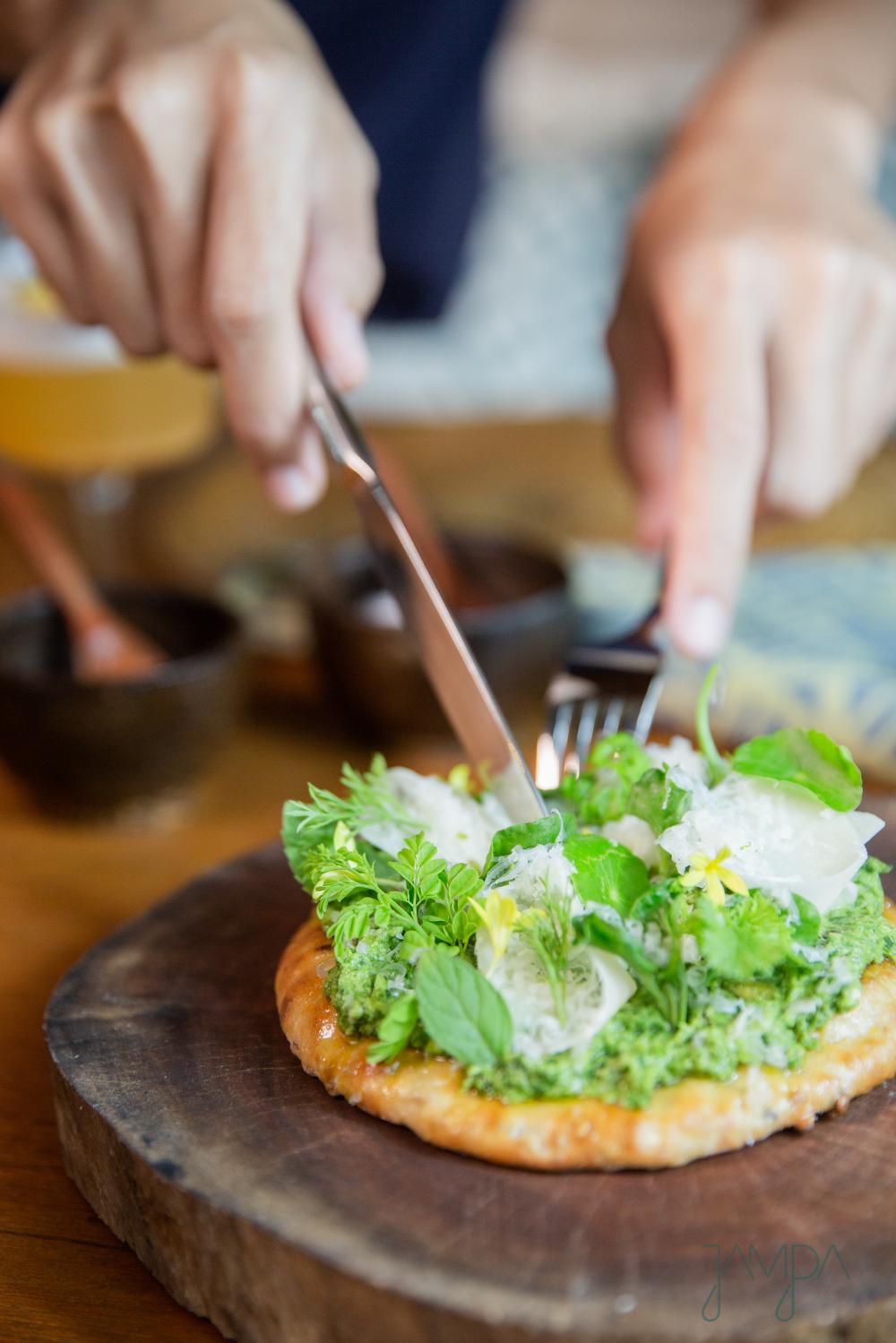
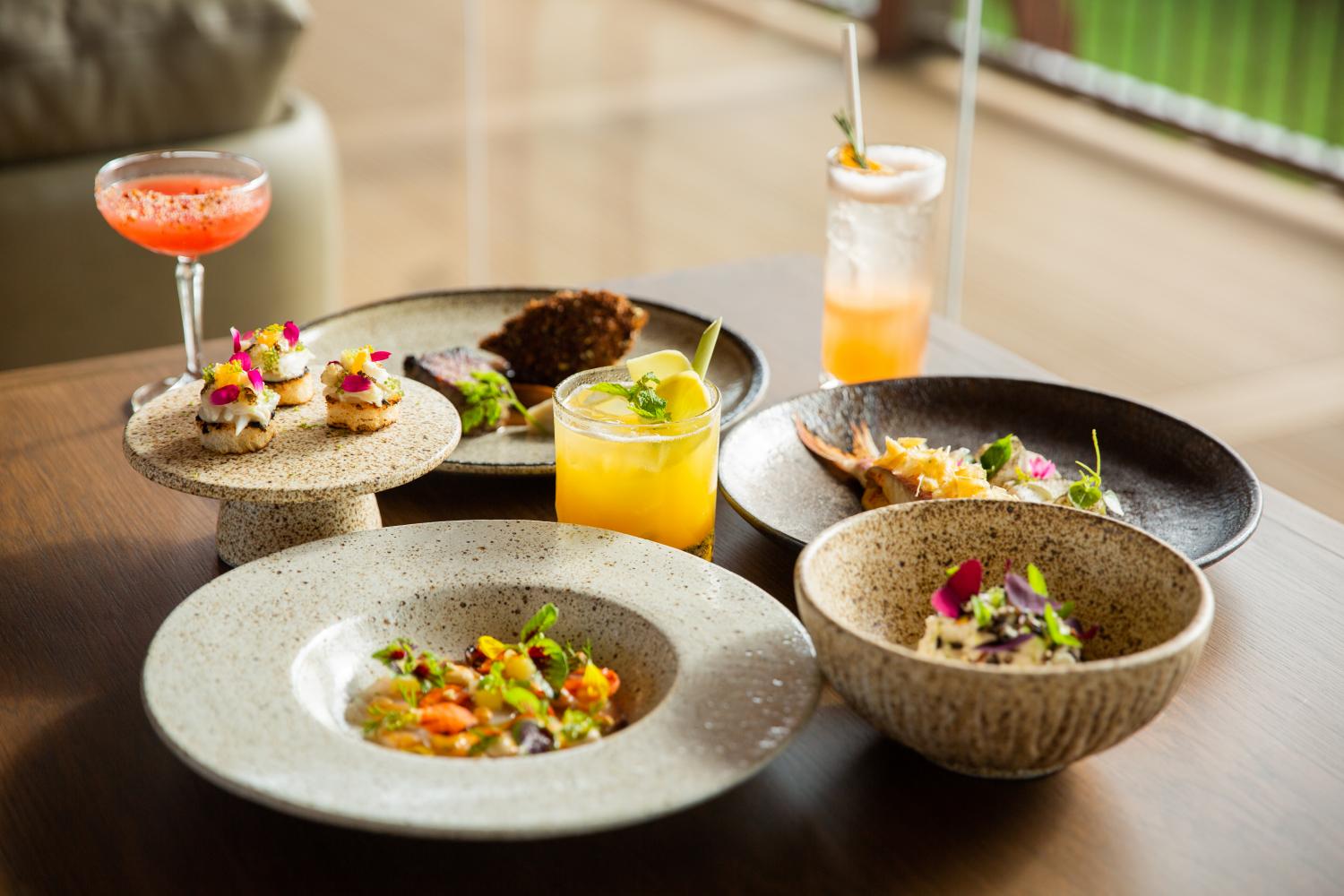
The fish paté (280 baht), served on a crostini, is made with fish off-cuts saved from other dishes and then smoked. The paté is topped with local sea grapes and dill from the farm. Flat bread seems to be on most casual menus these days, with a variety of toppings. At Jampa, Dingen serves it with coconut heart, tomme de chèvre and garden herbs (280 baht). The flatbread is baked in a wood-fired oven and served with a generous slathering of goat cheese pesto, made with pumpkin or sunflower seeds depending on what's available. It is then garnished with herbs like basil, Indian pennyworth, and spinach leaves from the farm.
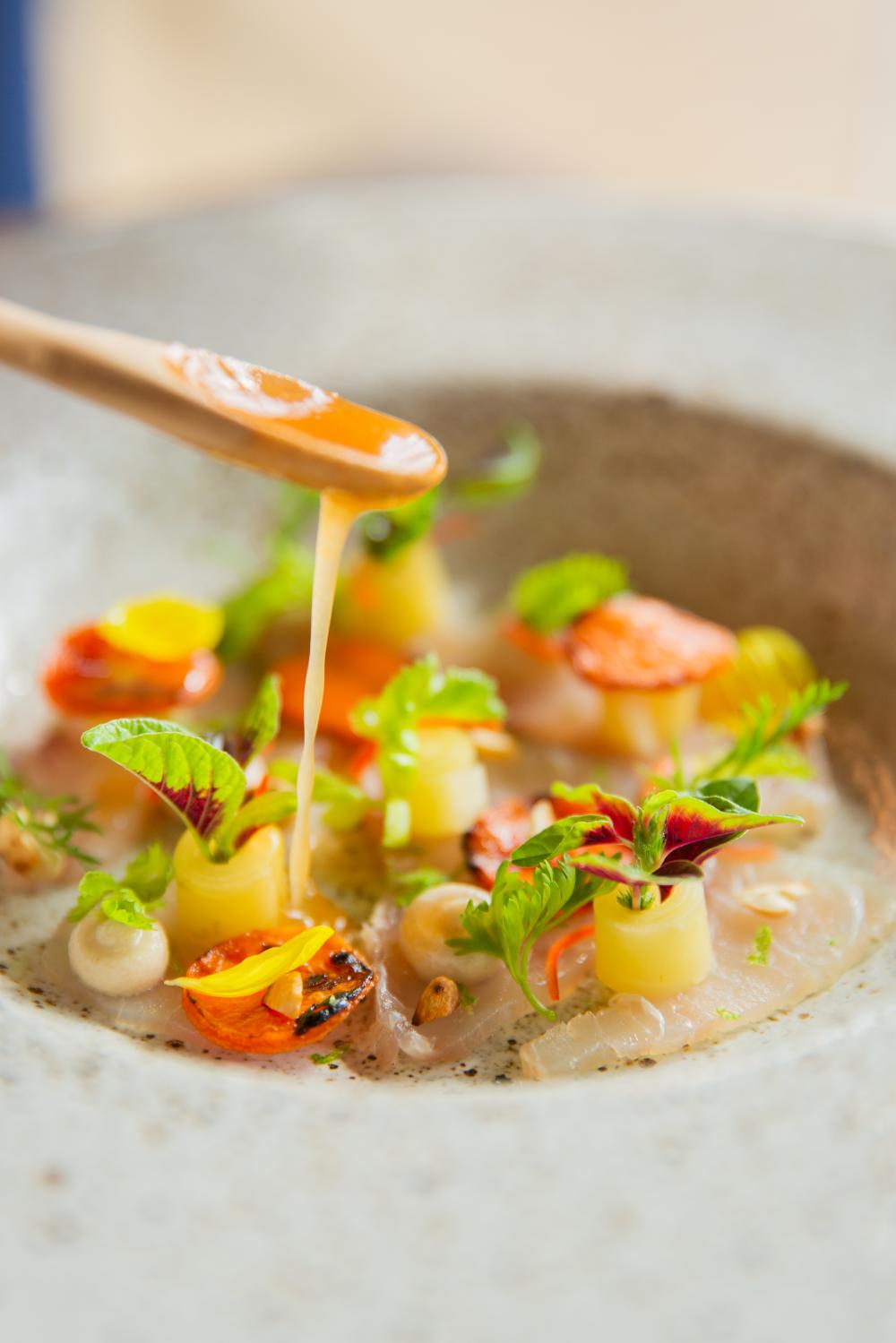
From the starters menu, the cured cobia (350 baht), a raw smoked fish dish, is cured with Thai spices like galangal and lemongrass. It is then smoked with the leafy part of the lemongrass stalks, acquired from the farm. The lemongrass stalk is used to cure the fish. Lemongrass is sun-dried for two days before being used to cold smoke the fish. The dish is dressed with a leche de tigre or tiger's milk, which is a citrus-based, spicy marinade used to cure Peruvian ceviche. However, at Jampa, a lychee dressing is used.
"I use off-cuts from ripe papaya to put into the dressing. The dish is served with a cashew nut puree and roasted cashew nuts. Generally the cashews come from Phuket, but lately the farmers have been moving to Phangnga because of the escalating land price in Phuket," says the Dutch chef.
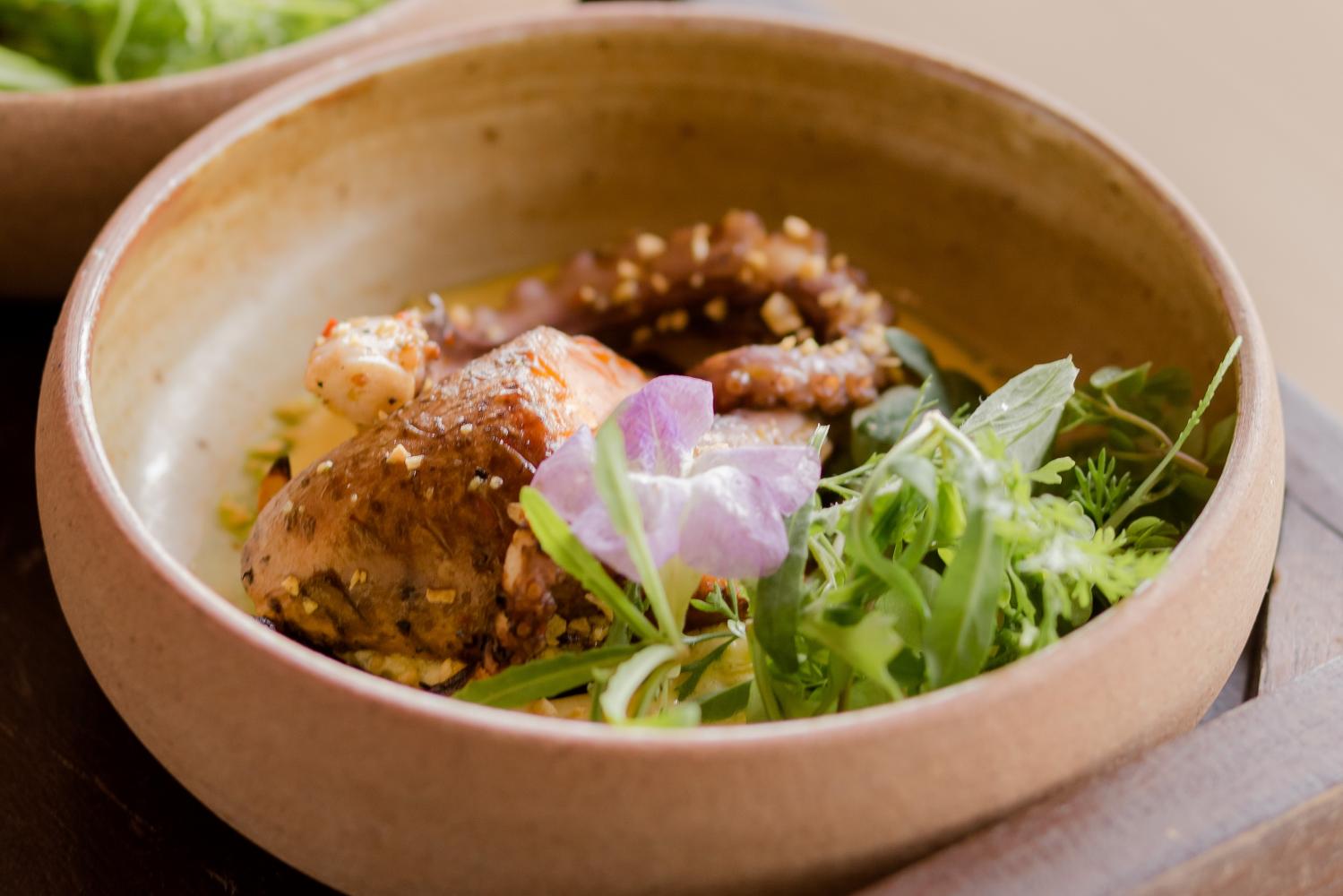
Octopus is among my favourite seafoods and at Jampa it is served hot from the coals. Served with sweet potato from the barbecue and a Hollandaise foam made with organic eggs collected fresh daily from the farm.
"All the young leaves from herbs and salads grown on the farm make up the salad, which changes daily depending on what leaves the farm supplies the kitchen with. Usually its young kale, baby spinach, some winged beans," adds the chef. The octopus is finished with a gremolata (350 baht).
For mains, the Spring chicken (750 baht) smells divine and taste good. Sourced from Khao Yai, the chicken is spatchcocked and brined in herbs, salt and water for a few hours. It is then dried overnight and smoked with pinewood. However, the pinewood is soaked in water overnight, dried, put atop a small piece of charcoal and that forms the smoke for the chicken. For an hour and 10 minutes, a watchful eye is kept on the chicken until done. It is served with a cos salad, green jalapeño and Jampa's signature barbecue sauce.
Other choices include pork collar (700 baht) or beetroot (350 baht) for the vegetarians. For fish lovers, the whole red mullet (650 baht) is served with young leek, green mango, pumpkin and a red mullet reduction.
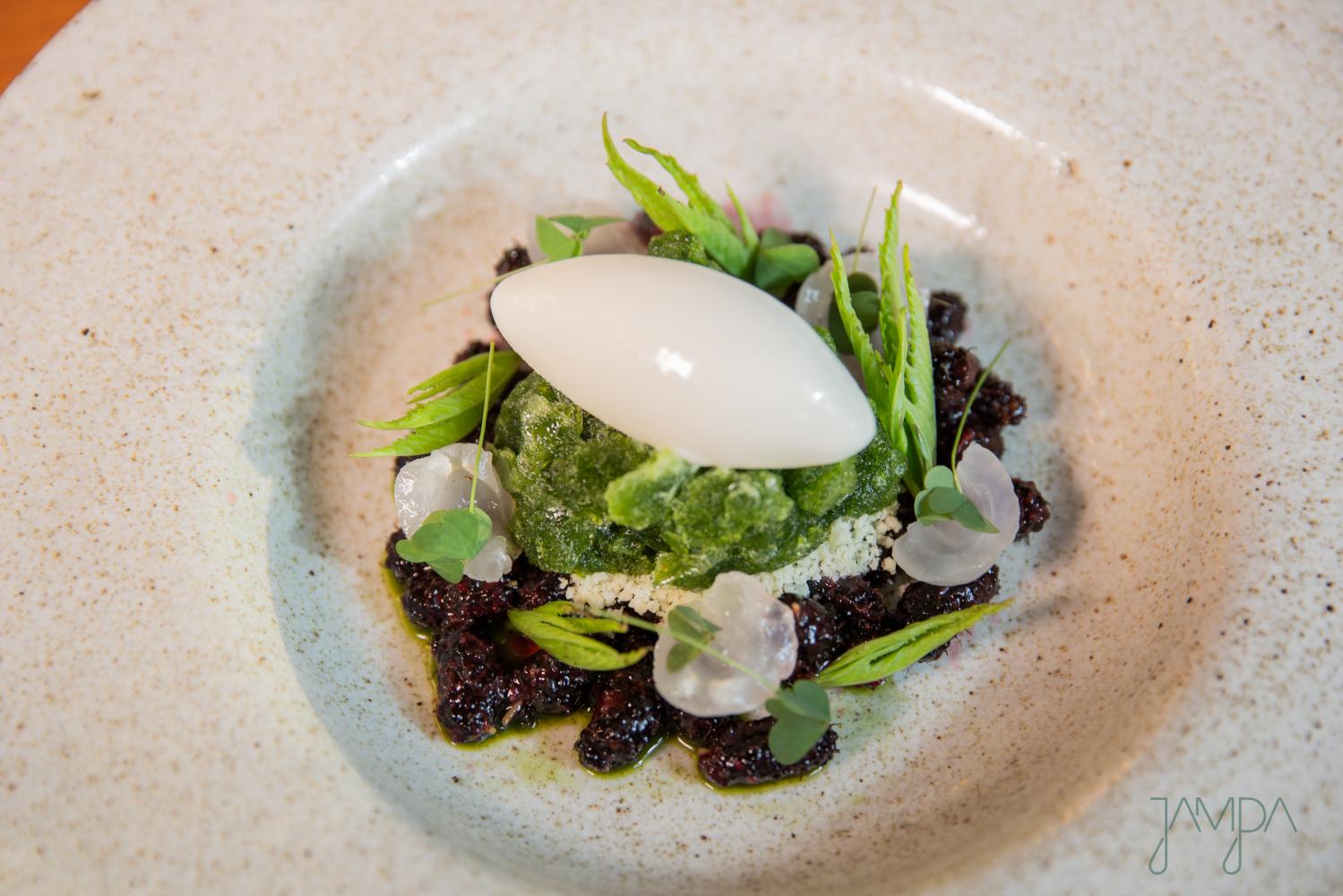
There are three desserts, all priced at 200 baht, to choose from. The farm mulberry served with barbecued longan, Thai basil, yoghurt sorbet and rosella leaf granita, is available when mulberries are in season on the farm. The barbecue Phuket pineapple comes with a hit of Chumpon 70% chocolate, ginger and Thai basil. Burnt coconut, purple rice, passion fruit and spearmint make up the mango dessert.
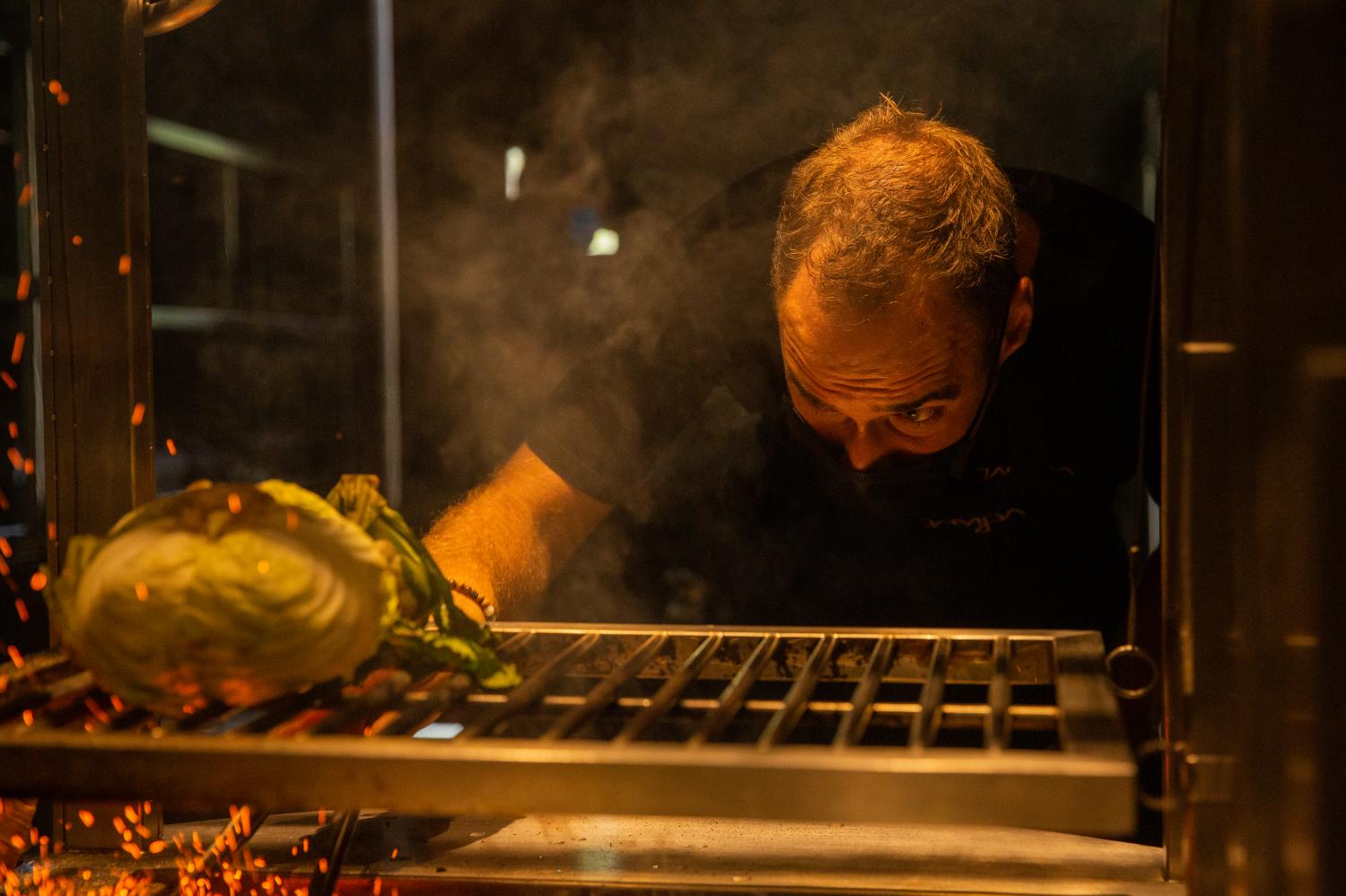
"Most dishes at Jampa are cooked over a wood fire, though a few go into the pizza oven or a barbecue. Apart from the farm, I also use ingredients from small farmers and producers because they are passionate about what they grow. I like to keep a tight rein on my suppliers so I know how the produce is grown and delivered, as that is important, too," Dingen emphasises.
If you're in Phuket for the weekend, do try Hideaway By Jampa, a weekend chef's table that is dedicated solely to open-fire cooking and creative ideas so there is no planned menu. Let your palate be indulged amid the flora of the farm, complete with a lakeside view.
To achieve zero waste to landfill cuisine, the waste at Jampa and Hideaway By Jampa is separated, with food remnants turned into animal feed or composted at the farm. Manure and compost are used as fertiliser to grow vegetables, thus completing the cycle of life.
- Jampa Restaurant
- The Community House, Tri Vananda, 46/6
- Moo 3, Thep Krasatti, Thalang, Phuket
- Hideaway By Jampa
- Pru Jampa Farm, 46/6 Moo 3, Thep Krasatti, Thalang, Phuket
- Call 076-342-122
- Visit jamparestaurant.com