Despite being the nation’s most popular method of watching TV, two years ago Freeview was in danger of drifting towards switchoff, overwhelmed by the mobile industry’s predictions of an all-online future, the ill-fated YouView, Sky’s expansion and the introduction of internet TV services such as Netflix.
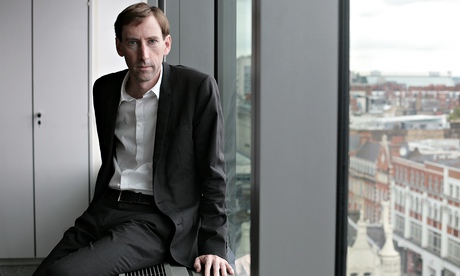
Instead it has survived and, for all the talk of new ways of watching, is still how the majority of the UK tunes in. It’s a point that can be easy for the capital-centric media sector to forget, says Jonathan Thompson, chief executive of the company that is tasked with overseeing Freeview’s business and operations, Digital UK.
“It’s a strength and weakness of the media sector that we all live in London, that we’re all early adopters of technology,” he says. “One has to think about the audience as a whole, all 60 million people in the UK. For many people broadcast TV is one of their main means of engagement with the outside world, and I think that will be the case for some time to come.”
Digital UK has the figures to back up his statement: over 90% of television is watched live on TV and 95% of the most-watched programmes are on Freeview. The service is in 10m homes – or 20m if you count second sets – giving it a larger reach than Sky. That doesn’t mean the platform doesn’t have to move with the times. Next month sees the launch of Freeview Play, which aims to secure the future of digital terrestrial television and take viewers into the connected, on-demand world in the same way the subscription-free Freeview helped them transfer from analogue to digital.
“We’ve deliberately tried to make it feel broadcast-centric and consistent with what a viewer would already know in a Freeview TV,” explains Thompson. “In the marketplace there’s huge amounts of innovation and a lot of people doing lots of different things but there’s a risk sometimes that’s led by a technology mindset rather than a consumer mindset.”
He says the ambition was to root it in Freeview’s history and its principle of making new technology “simple and easy”, to “help people make that journey from a digital broadcast world into a connected world”. Basic Freeview, launched in 2002, has around 60 channels and more than 25 radio stations. Soon six subscription-free packages will be available including Freeview Play Recorder, which is the top option – giving access to the usual channels, plus HD, catchup and on-demand TV and the ability to record shows.
Thompson calls Freeview Play a “natural evolution of telly”. It has an electronic programme guide that looks similar to the current one but has a clever, simple new feature that allows viewers to scroll backwards up to seven days to watch programmes from the public service broadcasters that they may have missed. Viewers can also enter apps such as iPlayer on Freeview Play rather than through the EPG if they want, but for consumers unsure of technology it will provide an easy introduction to catchup and on-demand.
Digital UK was set up to manage switchover from analogue, but after it was completed its shareholders (the BBC, ITV Channel 4 and Arqiva) wanted to have the company as an entity that could play a strategic role, co-ordinating the operations of the digital terrestrial platform in the UK.
The top strategic minds of chair Caroline Thomson, formerly BBC chief operating officer, and Thompson were brought in. Working for Lord Rothermere “who loves technology” at Daily Mail & General Trust before he joined Digital UK gave Thompson an insight into how another media industry is diversifying. “In some ways it’s a far more innovative and forward-thinking company than many people realise,” he says of DMGT but he wanted to return to broadcasting as “it’s my first love”.
His time hasn’t just been spent on developing fun new services and consumer improvements, however, as there are also major technical and political challenges. In just under five years’ time around 15m homes will be affected by the government’s decision to auction off a chunk of Freeview’s airwaves to mobile phone companies. Up to 100,000 households could need new aerials but nobody knows who will pick up the bill for them or which homes will be affected.
Freeview will lose around one third of its current share of the airwaves, posing a headache for the technicians and running the risk of channels being dropped. As the government, regulator Ofcom and Digital UK know from digital switchover, consumers do not like losing TV programmes.
On the thorny issue of who is going to pay for the aerials that might be needed when those airwaves used by Freeview are auctioned off to mobile companies, Thompson says: “We want to ensure as it is implemented there is no disruption to the viewers of our platform. We’re hopeful and confident we can get there, but there’s a lot of work and planning to make sure viewers are supported through the process – communications are a large part of that.”
The government has ringfenced around £600m from the Treasury for the overall programme but has yet to give details about how that will be allocated. Digital UK only has an annual budget of around £5m (excluding Freeview Play development costs) so is hardly awash with cash to help out.
“Around 100,000 people may need a new aerial as part of realigning the spectrum bands so it means some people effectively end up with their aerial pointing in the wrong direction,” says Thompson. “From a broadcasting point of view … we have made it clear that’s not a cost the broadcasters should bear. I don’t think that has actually been decided yet but the principle for us is it’s not a cost either the broadcaster or the consumer should bear as neither of those benefit.”
Unsurprisingly Thompson is already planning for what the industry snappily calls a “spectrum clearance event”, and has been in effect lobbying and explaining that to policy makers. He is aware that the word spectrum can make people switch off mentally but explains its importance.
“One of the challenges when I arrived was [the issue of] use of spectrum. We are a significant user of spectrum that has other potential uses. There was a lively debate about the rapacious demand of the mobile sector for more spectrum to launch more services. Is that going to mean ultimately broadcast TV has to squeeze down into less and less to allow mobile to grow?”
He thinks that broadcasters have previously “perhaps let the mobile sector lead the debate”, by not being proactive enough in arguing their case. “Yes we are spending more time on tablets but a lot of the time that’s at home using Wi-Fi and that doesn’t need any more spectrum.”
Thomson is keen to redress the imbalance, because as he argues “huge amounts of people benefit from” Freeview’s availability as “it drives not only economic value but also social value – it’s at the heart of public service broadcasting”.
Curriculum vitae
Age 43
Education King Edward’s school, Birmingham, University of Manchester (psychology)
Career 1995 media sector consultant, Hydra Associates 1998 director of strategy and research, Channel 4 2008 director of strategy, Ofcom 2012 Office of the Chairman, DMGT 2013 chief executive, Digital UK