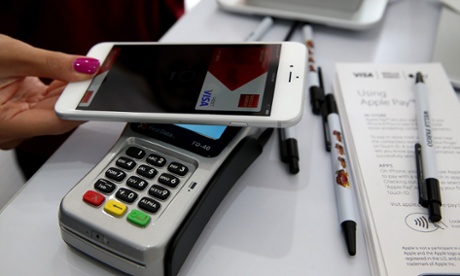
Tap, click, tap-tap, click. That’s about the amount of finger actions it now takes to transfer cash instantaneously via a mobile banking app. From coins to cheques to debit cards to contactless payments, the movement of money has come a long way. And for those with an eye on the industry, it’s clear that digital is the future of banking.
It is a future ripe with opportunities. Some 66% of Brits will be using internet banking by 2020, while the numbers banking via mobile apps is projected to nearly double, according to research by The Digital Banking Club, an online news network focused on digital financial services.
That is not to say there are not challenges, too. Chief among these are exacting consumer demands, meaning banks need to offer faster, smoother and more intuitive services, all while keeping chase with the competition.
“Everything comes down to the fact that customer expectations have changed,” says Roy Vella, an independent digital consultant who has advised banks such as Lloyds and Coutts. “People expect accessibility, usability, immediacy and transparency. The idea that I should have to do my banking when my branch is open belongs to an old paradigm. Today people want to be served when they want to be served, not when the banks want to serve them.”
Room for the middleman?
The stats back this picture up. Banking at physical branches has fallen by 30% over the last three years, according to the British Bankers Association, while Lloyds Banking Group announced last year it would be closing around 150 brick-and-mortar branches so as to focus its sights on digital and mobile.
Smartphones put dozens of business’s services in our pockets, which means that banking apps are being judged against a new raft of challengers. Pressure is coming from a wave of mobile-first operations, such as the hotly-anticipated Atom, a bank which – when it opens later this year – won’t have any physical branches and will deliver all services via an app. Meanwhile, outside the sector there’s a plethora of other companies that want to help you move your money, such as Apple Pay, M-Pesa, Google Wallet, and of course the trailblazing PayPal.
For Charles Kerrigan, a partner and head of the international finance practice at the tech, media and telecoms law firm Olswang, the situation could amount to an “existential threat”.
“Banks are essentially the global middlemen of the commercial world,” he explains. “They use advanced technology to pass information around the system. And they’ve been so successful for so long because sophisticated technology is very expensive, and the banks are very well-capitalised. What’s happened now is that the biggest companies in the world aren’t just banks – they’re technology companies. These companies have the money to jump in, and they’re really good at innovating.”
And while banks may have previously cornered the market, the banking crisis has meant that unconditional loyalty is faltering. “What this competition for customers becomes is actually a battle of the brands. And in a battle between Apple and, say, RBS, we know who’s probably going to win.”
Putting data to work
Against this shifting backdrop, banks need to be helping customers help themselves, says David Webber, managing director of Intelligent Environments, the technology company that runs The Digital Banking Club in partnership with Timetric.
“People serve themselves on places like Amazon, eBay, Apple, Google. Yet when they engage with the financial services industry they enter a world immersed in the practices of 10 or 20 years ago,” he says.
“If you’ve ever had the misfortune of going through a mortgage application, for instance, you’ll find there are periods where you have no idea what’s going on. If you want to find out, you have to ring up the mortgage desk. Which is ludicrous. Instead, the bank could send push notifications to an app on your phone every time there is an update or change.”
If rapid innovation is an area where banks struggle, what they do have on their side is a wealth of information about their customers’ incomings and outgoings. Many see this cache of knowledge as an opportunity to help customers manage their finances more simply, and to push targeted offers.
Think of the banks of the future as a bit like a “lifestyle partner”, says Alistair Crane. He’s the chief sales officer at Monitise, which develops digital-money technology platforms for banks and payment companies. In the past two years we’ve seen a shift toward personal finance apps that help customers monitor their spending, he says, citing Santander’s SmartBank, an app aimed primarily at students, which reworks your bank statement as easy-to-digest infographics.
“There is a logic to this shift,” he explains. “First is that it’s a positive thing for consumers to see where their money is going. Second, it’s a proactive tool for the bank to extend product offerings. It can say, ‘you’re eligible for a credit card, a mortgage or an overdraft. Would you like to find out more?”
Privacy pitfalls
From a legal perspective, could issues around privacy and data protection hold back progress in this area? Banks will certainly have to tread more cautiously than other companies thanks to the oversight of their regulators, says Kerrigan. “Banks could be in an unfortunate position where they find that they are more conservative with their use of data than tech companies.” He references the recent court ruling against Google, which was accused of bypassing user’s privacy setting to access their browsing history on Safari.” Bank regulators take the longstanding rule of the bankers “duty of confidence” seriously indeed.
If handled appropriately, however, putting customer data to work actually harks a return to “the very oldest model of banking, where customers would have a personal connection with their banker that was all about unique identity.”
Another issue on many customers’ minds is one of security – just how safe is it to move all our monetary transactions online? According to Kerrigan, making digital payments should be no more unsafe than using credit or debit cards. “Of course there is a risk around NFC [contactless payments], but the biometric industry has good solutions for this that are becoming more affordable. In the same way that banks supported debit and credits, they’ll support digital payments because they already have a history of balancing the benefits of innovation against the cost of dealing with fraud.”
Perhaps counterintuitively, Vella says that mobile will actually make banking “more secure”, because it allows for “out-of-band authentication” – ie identity authentication through two separate channels. “If my bank sees I’m making a transaction in Bulgaria, then it can send a text to my phone to verify that I’m there. In the past they would have simply denied me access to my cash if my card was being used in an unfamiliar place. No more going to your bank branch to give them a travel notification.”
Ultimately, it seems the greatest decider of success will not be how far, but how fast. The rate of change in the sector can be “glacial”, says Vella, and Kerrigan agrees. “Banks innovate slowly. They play it safe. As we are currently seeing their mistakes can have a long tail. Tech companies by culture and in practice are quicker to move on,” he says. “There is definitely a place for banks at the moment, but they’re fighting new entrants for the profitable bits of their customers’ business.”
Charlotte Simmonds is an editorial manager at Slack Communications
This advertisement feature is provided by Olswang, sponsors of the Guardian Media Network’s Changing business hub