Diesel vehicles are making a comeback in the domestic car market.
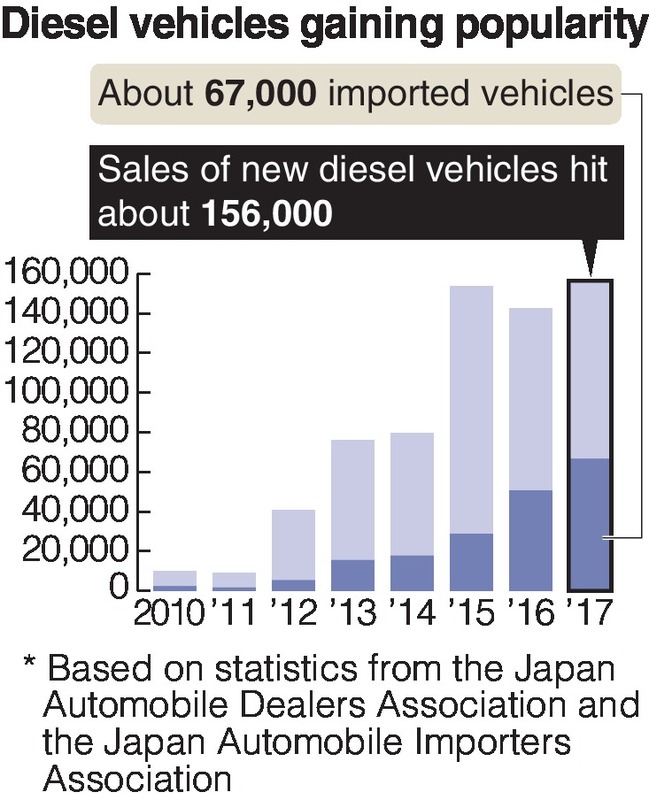
Sales of diesel cars fell in 2016 in the wake of the emissions scandal involving the German automaker Volkswagen, but they rebounded by about 10 percent year-on-year to about 156,000 units in 2017. Competition is intensifying as automakers have been adding to their lineups.
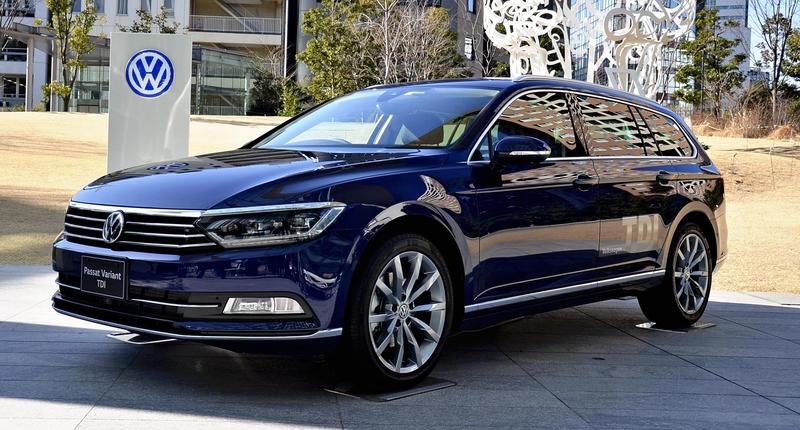
VW began sales of the diesel-engine-powered passenger car Passat this month. There was concern about a lingering bad reputation, but the launch went ahead in response to the rise in popularity of diesel cars. This is the first time in 20 years that Volkswagen has marketed a diesel car model in Japan.
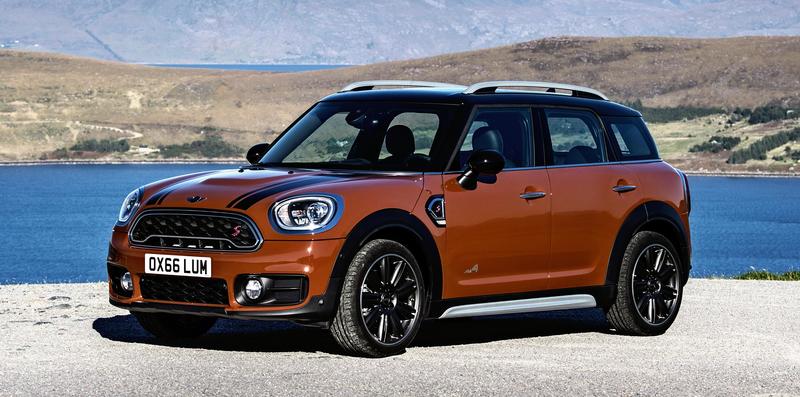
The Mini small car series of German carmaker BMW saw the highest sales among imported vehicles last year. One factor behind this was the brisk sales of the diesel-engine model of the Mini Crossover sports utility vehicle, which underwent a full-model change last February.
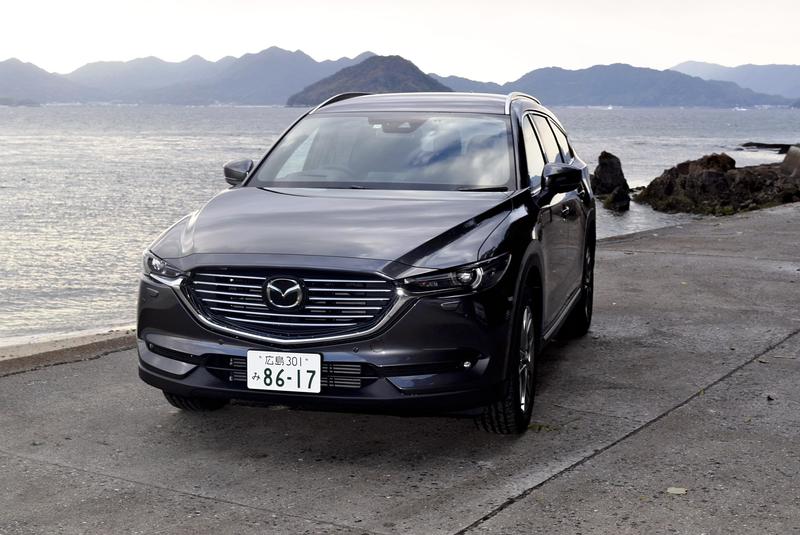
Mazda Motor Corp.'s CX-8 SUV model went on sale in December. It is a diesel-engine type, but 12,000 orders were received in its first month, 10 times the monthly sales target.
Low fuel costs
Diesel vehicles' high traveling performance and low fuel costs are driving the trend. Diesel cars, in general, also have greater acceleration power than gasoline vehicles at low and medium speeds.
Moreover, diesel engines' fuel economy performance is higher than that of gasoline cars because their fuel efficiency is better. The per-liter price of light oil, which is the fuel for diesel cars, is at least 20 yen lower than regular gasoline and at least 30 yen lower than high-octane gasoline. With gasoline prices going up, diesel vehicles look attractive to consumers.
Sales of new diesel vehicles came to about 156,000 in 2017, or 16 times the level in 2010, when about 9,700 units were sold, according to the Japan Automobile Dealers Association.
Import sales brisk
Sales of imported diesel cars are especially robust. About 67,000 units were sold last year, up about 31 percent from the previous year and marking the first time that imported diesel cars accounted for more than 20 percent of all imported car sales, according to the Japan Automobile Importers Association.
Spurred by this momentum, the types of imported diesel cars have risen to 64 last year from three in 2010.
"In Japan, where hybrid autos are the mainstream of fuel-efficient vehicles, the individual characteristics of imported cars stand out well," said automobile journalist Yoshio Tsukuda.
In Europe, the home of diesel cars, more adverse winds are blowing. The proportion of diesel vehicles in new car sales declined from a peak of about 56 percent in 2011 to around 46 percent in the January-September period of 2017, according to the European Automobile Manufacturers' Association.
The percentage of diesel car sales is still high, but their reputation continues to suffer due to the VW emissions scandal. Another factor behind their decline is different governments' moves to strengthen controls on diesel cars.
Read more from The Japan News at https://japannews.yomiuri.co.jp/