The Japanese manga series "Dien Bien Phu," characterized by its unique portrayal of the Vietnam War in which cute characters kill each other, recently concluded. The series is published by Futabasha Publishers Ltd.
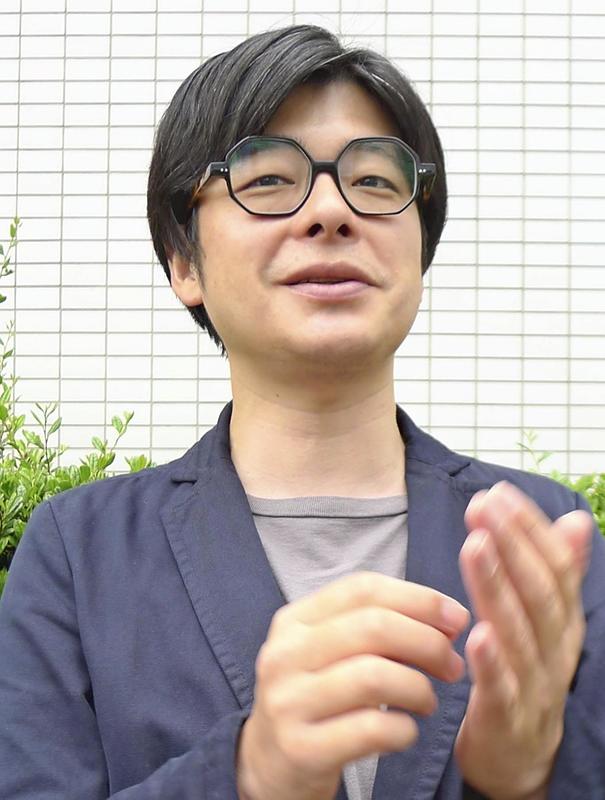
Through the series, author Daisuke Nishijima, 44, tenaciously aimed to depict the true nature of war in manga form.
"It's obvious that war is evil. At the same time, it's also true that war somehow excites people, just like they're children mimicking battles," Nishijima said. "To express this paradox, I came up with the idea of depicting war in a funny and frivolous way."
Those who imagine the series to be an ordinary war manga would be left speechless. Nishijima's characters are all cute, like those from anime. However, these cute characters kill each other as if playing a game.
The story doesn't have a scene that conveys the cruelty of war in an easy-to-understand manner. In this world depicted through manga, everything is crazy, and its portrayal of war may raise a few eyebrows.
The story is set in Saigon, a city in what was then South Vietnam, in 1965. Hikaru Minami, a Japanese-American photographer with the U.S. military, meets a young girl who fights as a guerrilla in the National Liberation Front for South Vietnam, known as the Viet Cong.
Hikaru is immediately smitten. The main parts of the plot revolve around the love story between Hikaru and the girl, who is called Princesse.
The series borrows its title from the site of a famously fierce battle in the First Indochina War that is not directly related to the Vietnam War. "I only chose the title because it sounds cool," Nishijima said.
The story mostly follows actual developments and historical facts, concluding with the withdrawal of U.S. forces in 1973.
However, the series is filled with chronological interruptions and aberrations.
In 2001, Nishijima released a six-page manga, which became a prototype for the series. The work was reproduced into a longer version and the first paperback version was published by what was at the time Kadokawa Shoten in 2005.
But the magazine carrying the series ceased publication, prompting the paperback to stop publishing after one edition. In 2006, the series was carried in monthly magazine Gekkan IKKI of Shogakukan Inc., and Nishijima began anew.
Twelve paperback editions for the series were released before the magazine also ended publication.
"I thought I'd never finish the work," Nishijima said, recalling that period.
The author made another fresh start in 2017 and began releasing episodes of "Dien Bien Phu True End" in Gekkan Action, a monthly magazine published by Futabasha. The work served as a sequel to draw the series to a close.
The third paperback for the series was released this September and concluded the series.
"I shortened some parts of the story and drew an ending that I found convincing," Nishijima said.
Influenced by American works
Nishijima has worked as an illustrator since the 1990s. In 2004, he debuted as a manga artist with the science fiction fantasy work "Ohson Senso," published by a Hayakawa Bunko label.
"I've been thinking about how to depict war in manga," he said.
Nishijima was influenced by "Apocalypse Now," a 1979 movie directed by Francis Ford Coppola. He also drew inspiration from a quote in the novel "The Things They Carried" by Tim O'Brien, an American writer who served in the Vietnam War: "In many cases a true war story cannot be believed ... Often the crazy stuff is true and the normal stuff isn't ..."
"If this is the case, I thought that maybe I could get closer to the 'truth' of war, which drives people mad, by using manga-based fiction to depict the Vietnam War, which occurred far away from Japan," the author said.
Nishijima was born in Tokyo but spent his childhood in Hiroshima, returning to live in the city in 2011. In "Dien Bien Phu," he inserted images from the Pacific War and the atomic bombing as he wanted to connect the story of Vietnam's past with present-day Japan.
"When people face war, they stick to the idea that they must say the correct things. Manga should enjoy freedom of expression. This series is my way at hitting back at [conventional] manga that depict war," Nishijima said.
Read more from The Japan News at https://japannews.yomiuri.co.jp/