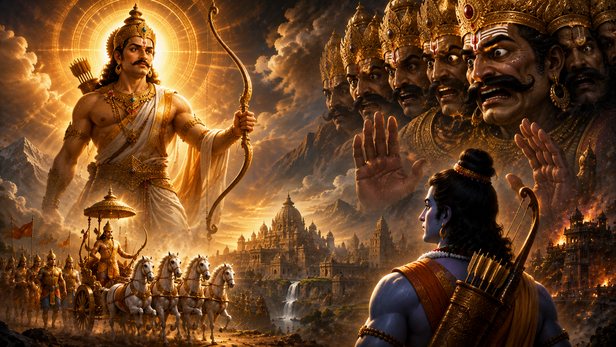
Kaikeyi has always been viewed as the queen who banished Lord Rama. The character symbolizes treachery, ambition, and heartache. However, what if the conventional tale was not true? What if the queen accused of causing sorrow in the land of Ayodhya became the one who set the whole world free from evil. Scriptures from time eternal present an alternate view of Kaikeyi which upsets everything people know about her. Sometimes, it is the so-called villain who plays the most important part in the story.
The Choice That Modified Destiny
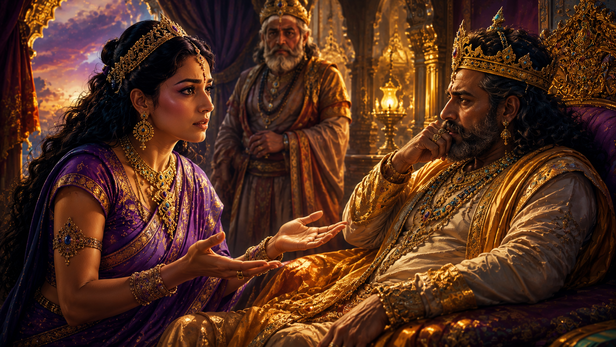
Kaikeyi invokes the two promises made by King Dasharatha, changing the course of the Ramayana forever.
Ramayana is marked by Kaikeyi remembering that King Dasharatha had promised her two wishes. Therefore, Kaikeyi asked that Bharata should be made king and Rama should go into it for fourteen years. The people of Ayodhya regarded this as an act of betrayal. However, this one choice turned out to be the beginning of the greater plan of the divine. It marked the transition of Rama from royal quarters to the forest.
The Forest Was Never ideally as a Punishment
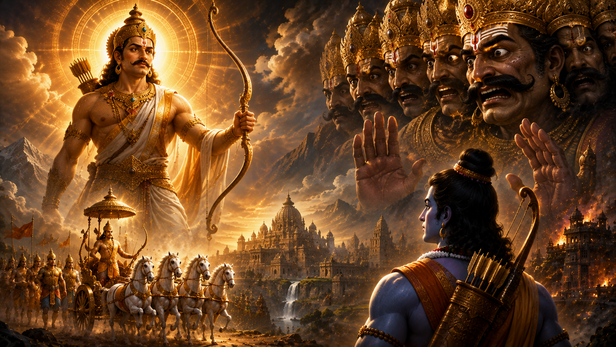
Rama's journey into the forest became the path that fulfilled his divine mission.
The initial reaction to the exile of Rama is that it is a heart-wrenching punishment. Yet a number of religious explanations have stated that it was the way that destiny had planned for him all along.In the fourteen years that followed, Rama met many wise men, protected the forest from demons, became lifelong friends with Lakshmana, Sita and Hanuman, and reached Lanka.If Rama hadn’t left the kingdom of Ayodhya for some other place to rule, none of this would have occurred.
Will Ravana Have Fallen Without Kaikeyi?
One of the main questions posed by academics is very simple yet very significant indeed. Would Rama have gone into exile in the forest had Kaikeyi not asked for her wishes? The kidnapping of Sita would never have occurred had Rama not been sent into exile. Consequently, there would never have been an agreement with the Vanara forces, an ocean crossing, and a war in Lanka. The fall of Ravana was associated with all those actions, initiated by the decisions of Kaikeyi.
A Mother Remembered Just for a Single Decision
Kaikeyi was very fond of Rama prior to being swayed by Manthara’s words.In most stories, she is seen crying due to the consequences of her actions despite having banished Rama from her kingdom. Kaikeyi’s story can be taken as an illustration of how humans can make hard choices in their life without being aware of the fact that they have become pawns in a bigger game.
The Teaching hidden within Kaikeyi's Tale
Ramayana shows that not every painful experience has no meaning. While Kaikeyi’s choice resulted in pain for Dasharatha, Rama, and Ayodhya, it was also the means by which evil was defeated and dharma reestablished. This tale is meant to tell us that there is more than what meets the eye, and that our greatest struggles may just be the start of something even bigger.
Unlock insightful tips and inspiration on personal growth, productivity, and well-being. Stay motivated and updated with the latest at My Life XP.
Frequently Asked Questions (FAQs)
1. Why does Kaikeyi get portrayed as the villain in the Ramayana?The reason behind depicting Kaikeyi as a villain is her demand to excommunicate Lord Rama to exile for 14 years and make Bharata the King of Ayodhya. This caused a lot of sorrow in Ayodhya and diverted the whole Ramayana.
2. Was Kaikeyi aware of the divine mission of Lord Rama?
In the Valmiki Ramayana, it has not been mentioned whether Kaikeyi knew about the divine mission of Lord Rama. But some spiritual gurus claim that the acts of Kaikeyi unknowingly become the parts of a divine scheme.
3. What would have happened had Kaikeyi not sent Rama to exile?
According to many traditional opinions, he would not have met Hanuman, made an alliance with Sugriva, and fought with Ravana. Most people think that the exile was essential for the fulfillment of the divine mission of restoring dharma.
4. Did Bharata agree with the decisions of his mother?
No. Bharata did not like what his mother had done. He himself refused to be a King and kept the sandals of Rama as a symbol of the King.