
Apple's iPhones are pretty resistant devices. All the same, a lot of us prefer to take no chances and keep them in a case since they can still quite easily be scratched, grazed or otherwise marred by contact with various objects and surfaces.
But the Cupertino tech giant has just been granted a patent for a new kind of housing that sounds like it could change this situation. It describes an abrasion-resistant back panel that could be used on devices such as the iPhone, iPad and MacBooks (see our pick of the best iPhone 14 deals for Apple's current phones).
As is often the case, the latest Apple patent granted by the US Patent and Trademark Office initially doesn't appear to give a huge amount away. Naming Apple's senior director for materials engineering and product design, Chris Prest, as lead inventor, Patent 11678445 is titled simply 'spatial composites'.
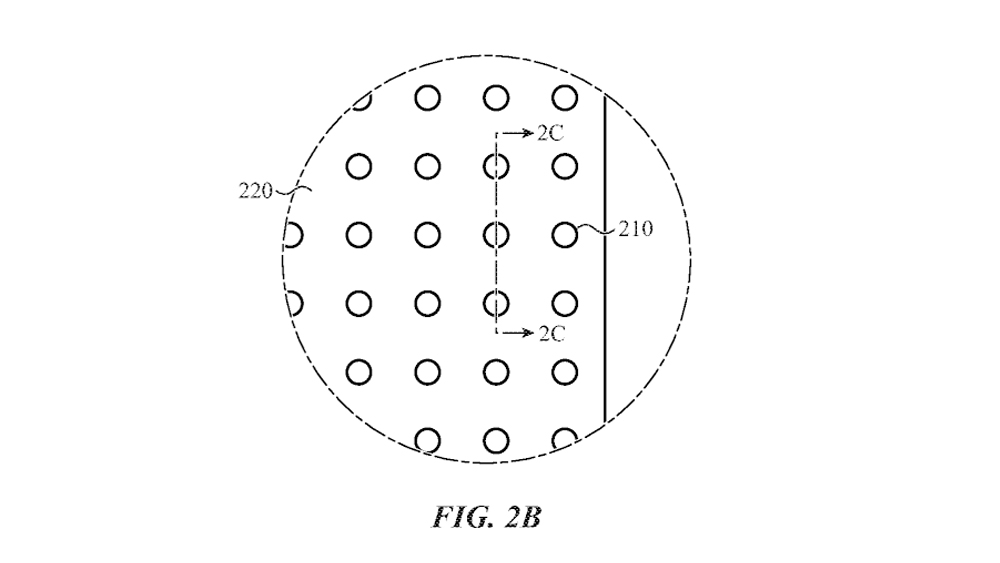
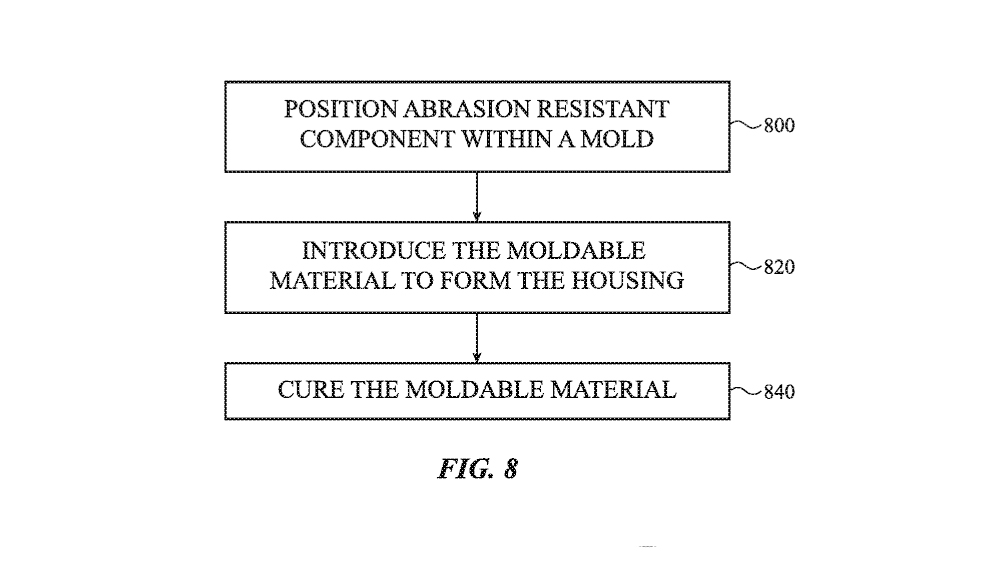
But dig into the detail, and we find it describes a method for producing an abrasion-resistant housing for electronic devices. The spatial composite method involves disposing abrasion-resistant components with interlocking structures in a mould cavity. 'Abrasion-resistant members' made from metal or ceramic would be harder than a moldable matrix substrate. Spaced between about 10 and 100 microns apart, these may have faceted surfaces and may be configured to reflect light at an angle. It's not clear what kind of texture feel they would give to the device.
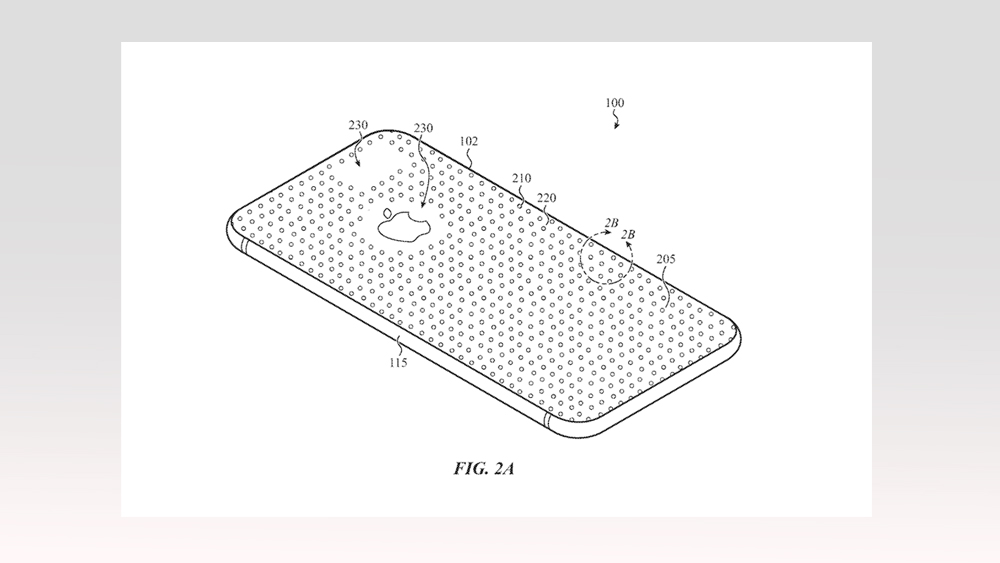
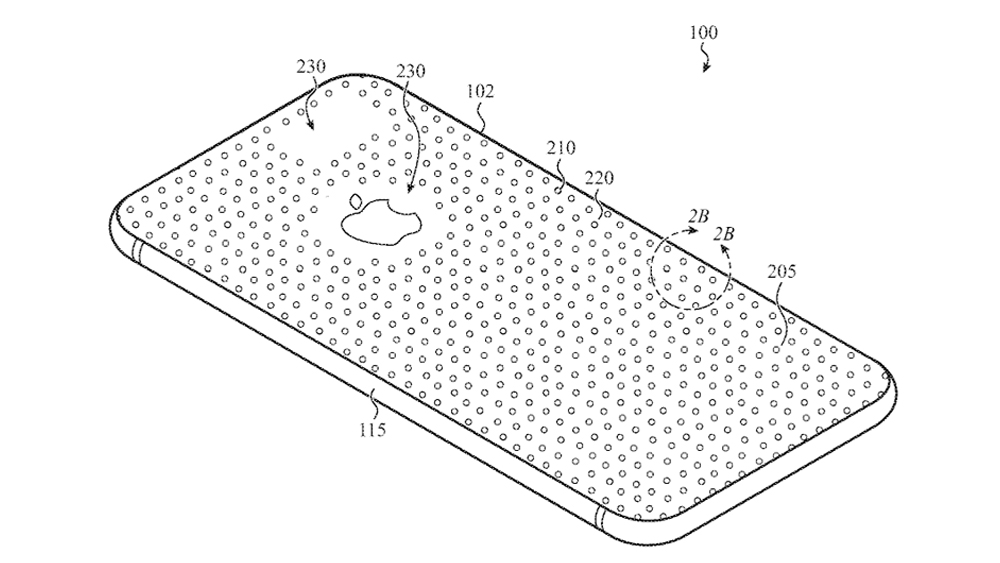
Figure 2A above illustrates the back glass panel of an iPhone featuring Spatial Composites with embedded abrasion-resistant members. Figure 2C below shows a cross-sectional view of a housing with example embedded abrasion-resistant members, while figure 8 illustrates an example process for forming the housing. Other illustrations in the patent documentation show different shaped structures for the abrasion-resistant structure and substrate surface.
It's often hard to deduce exactly what a company has in mind with patent applications. That's often intentional to prevent rivals from getting a heads-up on what the company is working on, but companies also file patents merely to sit on them to prevent a rival from using an idea that they don't actually intend to use (we're still waiting for the various foldable iPhones that Apple has patented over the years).
But in this case, it seems we have quite an explicit use case: a new kind of housing for devices that would better protect against abrasion. The background notes mention that the surfaces of portable electronic devices can be marred by contact with various surfaces, and current solutions have drawbacks. Some metal housing materials may be strong but create undesirable electromagnetic shielding, while plastic is less scratch or abrasion-resistant. This new type of abrasion-resistant housing would be a potential solution.
The immediate speculation is as to whether it's too late for this to make the iPhone 15, or if it may be a feature planned for the rumoured iPhone Ultra, which has been rumoured to have a titanium chassis.