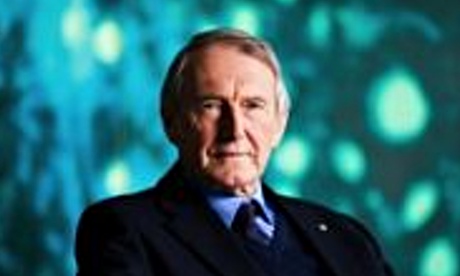
My friend and colleague, Dick Cotton, who has died aged 74, was a medical researcher who was internationally prominent in the field of human genetics. He had a long and distinguished career as both an innovative researcher and as a persuasive activist promoting the prevention and treatment of genetic disorders and birth defects.
Dick grew up on the family farm in Wangaratta, Victoria, the only child of Esther and Graham Cotton. His father, an orange farmer, died when Dick was three years old. Dick went as a boarder to Melbourne grammar school, and graduated from the School of Agricultural Science at the University of Melbourne in 1963.
He went on to do a PhD in microbial genetics and then took postdoctoral positions at the John Curtin School of Medical Research, at Australian National University, the Scripps Research Institute, La Jolla, California, and then the Laboratory of Molecular Biology at the University of Cambridge. There he laid the foundation for the work on monoclonal antibodies that would eventually result in César Milstein being awarded the Nobel prize. He returned to Australia and founded what is now the Murdoch Childrens Research Institute in 1986 with a clinical colleague, David Danks.
Dick was a visionary in the field of the collection and sharing of human genetic variants. He was one of the first to realise that DNA sequencing would change the world and that genetic diagnostics would be based on sharing information on genes, and the consequences of DNA sequence variants on disease outcomes. In 1991 he initiated the scientific journal Human Mutation to facilitate the dissemination of information about disease-causing mutations in human genes, methods for their discovery and computer-based methods for their analysis and storage in publicly accessible databases.
Dick championed measures such as the Human Genome Variation Society recommendations to describe DNA variants that have become an international reporting standard in healthcare, and in 2006 was instrumental in establishing the Human Variome Project (HVP).
He was an enthusiastic motivator who mobilised many volunteers to spread the word, do some work and make a difference. Dick also realised that to be successful in this endeavour, we should involve the whole world. He supported the participation of scientists from developing countries in all these initiatives. He worked for, and in the end achieved, the involvement of inter-governmental organisations such as Unesco and the World Health Organisation, which have become fundamental partners in the HVP’s goals.
He was made a member of the Order of Australia in 2005 for service to science through genetic research.
He is survived by his wife, Libby, and children, George, Isabel and Olivia.