This is the second installment of a series.
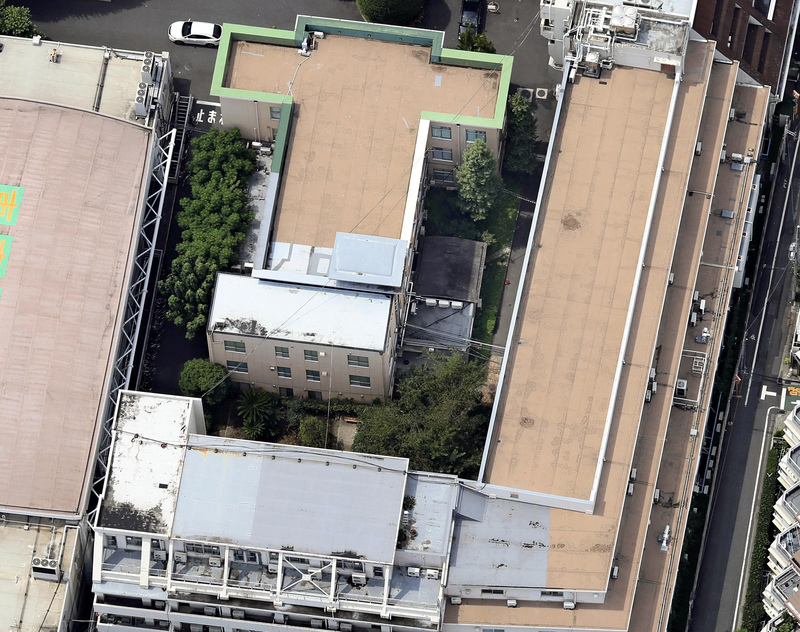
A three-story building stands unobtrusively amid school buildings. Surrounded by trees, the building is at the corner of Tokyo Medical University in Shinjuku Ward, Tokyo, and cannot be seen from the outside.
On the first floor is a small room of about 6 square meters, known as the "computer room." Up through this spring, it was used by the Educational Administration Section, School of Medicine, for scoring entrance examinations.
Multiple choice answer sheets for this year's general entrance exam were brought to the room on Feb. 3. Of three computers, one was used exclusively for reading the sheets. It took roughly three hours to scan the exams of the about 2,600 students who participated in the first stage.
Later on, a senior official who knew the password for the scoring computer appeared in the small room. The official had a note from the head of the Educational Administration Section, School of Medicine, instructing that certain examinees' scores be raised.
The official logged into the computer and adjusted the scores according to the instructions in the note. Among the students whose scores were increased was the son of Futoshi Sano, 59, a former bureau chief of the Education, Culture, Sports, Science and Technology Ministry who has been indicted for taking bribes.
"After the scores had been read by the computer, you could easily tamper with them," said another official who knew about the existence of the small room.
According to the university's internal inquiry commission, such tampering began around 1996, when former Chairman of the Board of Regents Masahiko Usui, 77, became involved in the scoring process.
"Don't tell anyone," Usui purportedly said to the head of the Educational Administration Section. This malfeasance remained completely unknown outside the university until Sano was arrested by the special investigative squad of the Tokyo District Public Prosecutors Office on suspicion of taking bribes in relation to his son's tampered results.
"Pressure from alumni may have been a contributing factor," stated a report released by the inquiry commission on Aug. 7, giving this as a potential cause of the backdoor admission scandal.
A total of 19 students' scores were found to have been fraudulently increased in the first stage of the School of Medicine's general entrance exam this year and the previous year. Most were children of alumni.
The university was founded in 1916 as Tokyo Medical Teaching Establishment. Central to its establishment was a group of about 450 medical students who had left Nippon Igaku Senmon Gakkou (now Nippon Medical School) to start their own ideal medical school. It's widely believed that the university's unique history led to the formation of strong bonds among its alumni.
"The students built the university for themselves, and the alumni have supported it," one of the university's "old boys" proudly said.
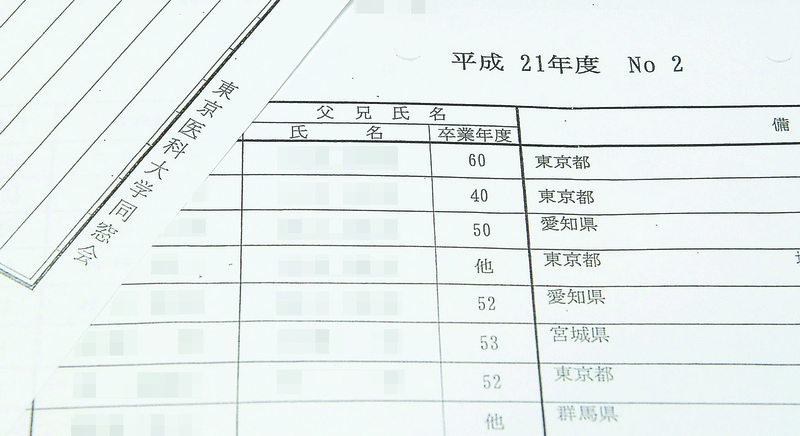
This man's name was in the "introducer" column on several lists of backdoor admissions obtained by The Yomiuri Shimbun. He told the Yomiuri that he asked Usui to pass five or six children of alumni, saying: "Private schools receive little support from the government, so the school has survived on donations. If bureaucrats' sons are given a fraudulent pass, we should do the same for children of alumni who support the university with donations."
"Tokyo Medical College plate" is the name of a test sheet that was widely used to measure the severity of color blindness. It was created by the Department of Ophthalmology about 60 years ago.
The Department of Ophthalmology has produced many skilled professionals, drawing much attention from both inside and outside the university. Usui also worked in that department. He rose to director of the university hospital, president of the university and finally chairman of the board of regents, the head of the educational corporation that operates the university.
Usui resigned as hospital director to take responsibility for a medical incident in 2005, and became university president in 2008 amid opposition from the board, which is responsible for deciding all the matters of the university.
According to a former head of the university, he was made president because the professors association wouldn't accept anyone other than Usui.
A former senior official well acquainted with Usui described him as "a very energetic person with the power to draw others toward him."
"He's more like a corporate executive than a scholar," said the former official.
For the university's 100th anniversary celebration in 2016, Usui led a fundraising campaign that raked in 3 billion yen (27 million dollars) in donations. He was then serving as the chairman of the board, a post he assumed in 2013. Usui reportedly visited local alumni and businesses personally to ask for donations.
"Soon I noticed that the board was made up entirely of Usui supporters," said the former official. "Usui had overwhelming power at the university. No one could oppose him."
An emergency board meeting was held on Aug. 6, the day before the results of the inquiry were to be announced. An attorney from the inquiry commission talked about the backdoor admissions and discrimination against female students, actions that were led by Usui. However, the board members hardly mention Usui's responsibility.
One member told the Yomiuri: "The board was assembled under Usui's administration. Nobody's going to go after him."
Read more from The Japan News at https://japannews.yomiuri.co.jp/