The only way the whole of the UK will thrive economically is if there is devolution of transport to all parts of the country, a senior Liberal Democrat MP warned this week.
John Pugh, MP for Southport and a member of the communities and local government select committee, said that true devolution – both of funding and of decision making – was the Rubicon that the Department of Transport dared not cross. But he argued the step would have to be taken if cities across UK were to benefit from economic growth and cope with a rising population.
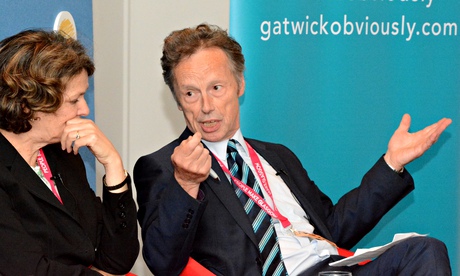
Pugh was speaking at a Guardian fringe meeting at the Liberal Democrat conference in Glasgow, joined by key transport figures from around the country. There was universal agreement that London had benefited from significant investment in transport in recent years, but the UK remained unbalanced with London’s sheer weight and size skewing the country’s economy towards the southeast. “The key task is to see how transport development is related to the task of rebalancing the economy,” Pugh said.
The Liberal Democrat MP said he believed London had received a “very enviable deal” in recent years and, having sat on the committee for the Crossrail project, said he was aware of how much even the legal fees for that initiative had cost the taxpayer. “Small change on the tea money from the Crossrail scheme would probably satisfy a lot of people in my neck of the woods,” he said.
Pugh stressed that a new high-speed rail line north of the London, High Speed 2, was not the answer to the country’s transport problems; it was wrong to declare that the North’s transport problems could be solved with better access to London.
“The bad way of doing it is the old way of doing it, where we all go cap in hand individually to the Department of Transport and they say, what is your business case? And they look at it and say it’s not nearly as good as the business case for something similar around London, and they don’t do it,” he said.
“The right way to do it – and the way it has to be done – is proper devolution: proper devolution to the north as a whole, not just to Manchester. That is the Rubicon that the Department of Transport has not, so far, crossed but they must do that if they are to succeed in the task of rebalancing the economy. Yes, we need to be better funded but we need a degree of autonomy similar to what they have in Scotland and Wales.”
Jon Lamonte, chief executive of Transport for Greater Manchester, said devolution could make a vast difference to the north of England. “If you drew a 40-mile circle around Manchester, there would be more people in there than in London or Tokyo. The economic potential is amazing, but the transport is awful,” he said.
Lamonte said that the northern transport authorities had the vision, they had the financial clout and they knew where the money needed to be invested – all they need is the autonomy to make their vision happen.
Two of the transport experts on the panel were more focused on the needs of London: Michele Dix, managing director of planning for Transport for London, and Stewart Wingate, chief executive of London Gatwick Airport. Yet even Wingate said that, although his primary purpose was to get a new runway for Gatwick, he believed his airport could act as a force to serve an area much bigger than London and employ people from all over the southeast. And Dix agreed that it was important to invest in cities across the country, not just London. She said she backed devolution of decision making and funding from Whitehall out, in the same way as London had benefited from being able to take transport decisions on its own.
Neil Ridley, chief business development officer of the Transport Systems Catapult, stressed the need to harness new technology, to make journey times more efficient and to coordinate different forms of transport. He said all decision makers had to realise the mounting problems the country would face with limited space, an ageing population and a transport infrastructure under pressure.
Ridley urged all in transport to get used to the idea of “intelligent mobility”, moving people and goods in the most effective way possible.
This conference fringe debate was designed and produced by the Guardian to a brief agreed by partners Gatwick Airport, Transport for London, Transport for Greater Manchester and the Transport Systems Catapult. All content is editorially independent.
Read more from the Guardian Big Ideas at the 2014 party conferences.