The European Union is one of the world's biggest donors of humanitarian aid.
Since its creation 20 years ago the European Community Humanitarian Office has helped millions of crisis victims in more than 100 countries hit by natural disasters and man-made crises. It has provided emergency assistance and relief to the most vulnerable people in the most dangerous conflicts and disaster-prone regions.
The consequences of disasters are devastating and varied: lives are lost, housing, crops and livelihoods destroyed. Humanitarian aid is provided in a variety of forms depending on the nature of the crisis. It can range from food, clothes, healthcare, shelter, water and sanitation to emergency repairs to infrastructure, demining actions, psychological support and education.
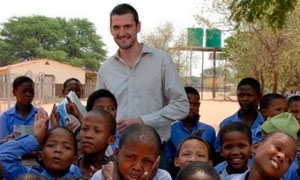
It's not all about disasters though – for instance Ed Roberts is passionate about education. He found the perfect role combining education and development at the commission. One of his projects required him to travel through Namibia with delegation staff and a UN worker:
"The conditions some of the children and teachers endured to make their education possible was incredible and the memories will stay with me forever."
Read all about here.
My EU career: Edward Roberts
Employers: DG Development and Co-operation (DEVCO) European Commission, Foreign and Commonwealth Office UK
Current occupation: EU Bill Team, Europe Department, FCO
Studied: Politics and philosophy, Leeds University
After my degree, I started on the UK government's Fast Stream programme in the Department for Education. I had always been interested the work of the European Civil Service, and I managed to get onto the National Experts in Professional Training programme, which involved a five month secondment to DG DEVCO, the development department of the European Commission.
I had never been to Brussels before and so packed my bags unsure of what to expect, but after arriving I grew to love the city and quickly settled in. It is a much more manageable size than London, but has a huge amount of culture and a great multinational night life. My new team in DEVCO were immediately very welcoming. It was comprised of six people of five nationalities, and much to my relief, the predominant language was English.
The team I was in provided support to Commission funded education programmes across the world, working with delegations, partner governments, other donors and international organisations. It was very interesting work and was an eye-opening experience working with the influence of different member states' approaches to education and to development. It was great to have such a variety of perspectives and quickly found out the number of different ways you can approach the same problem.
After my five months were up I was keen to stay on as I felt I had only just got my feet under the table of such a stimulating post and begun learning the complexities of working in the Commission. I returned to the Department for Education in the UK for a short time, before returning to the education team in DEVCO for a further year in a more senior role, as a seconded national expert. Here I had a lot more responsibility, my main role being to provide technical and policy support to education programmes in seven countries in southern and eastern Africa. I worked closely with EU delegations and travelled to Kenya, Tanzania and Namibia.
Part of my work in Namibia was to attend a conference, participate in an annual education review and carry out a project looking at the challenges to the education sector in Namibia. This last project required travelling throughout the country with delegation staff and a UN worker, speaking to government officials, local authorities and head teachers, in towns and some incredibly rural, isolated areas. The conditions some of the children and teachers endured to make their education possible were incredible and the memories of this will stay with me forever.
I would thoroughly recommend working in the European Institutions. My job was fascinating because it married two of the policy areas I am most interested in, education and development. There is such a variety of different jobs that there is sure to be something to suit nearly anyone's interests. You can get a lot of responsibility early on if you want it and my colleagues were among the smartest people I have ever met.
There are challenging aspects too. The Commission is huge and can feel bureaucratic, but it is changing fast. The multi-national working environment can lead to heated arguments, but brings with it a rich array of different approaches that makes the work (and the meetings!) so much more interesting.
The EU has massive influence (for example, it is the largest aid donor in the world) and is well respected internationally. The working conditions are good and Brussels is a great city to live in, so I would not hesitate to recommend an EU career to anyone. I am currently working on EU policy for the UK Foreign Office. I am very interested in the way the EU will develop and I am always keeping eye out for opportunities to return to Brussels.
Content produced by EU Careers.