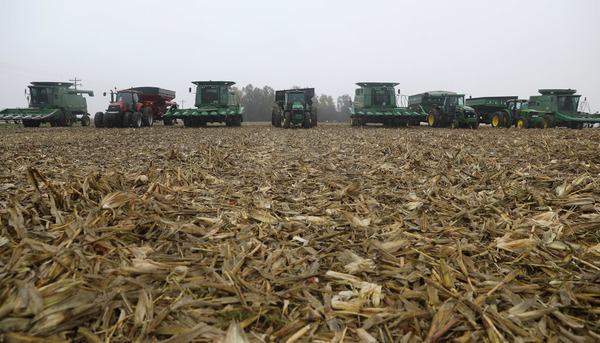
CHICAGO _ Sue Hanson was still in bed when she heard the familiar sound of the John Deeres maneuvering onto the Hemp family farm in Ashkum, a small community about 80 miles southwest of Chicago. Bright headlights guided each of the tractors and combines into 8-foot-high stalks of corn ready for harvest.
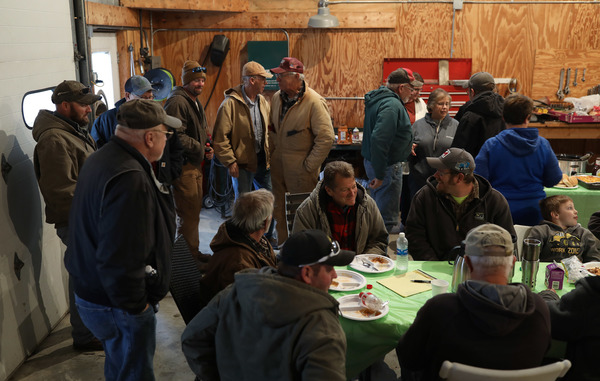
"They're early," Hanson remembers thinking, knowing she'd have to finish fixing the three-bean bake, cheesy potatoes, pulled pork and Italian beef before noon for the farmers who were trying to reap the corn before the rain came. With six combines running at once, the guys would no doubt be done and hungry in a couple of hours.
In a way, Hanson was grateful for the distraction. Better to be mixing casseroles, firing up the extra slow cooker and setting up rectangular tables than to focus on what was really happening.
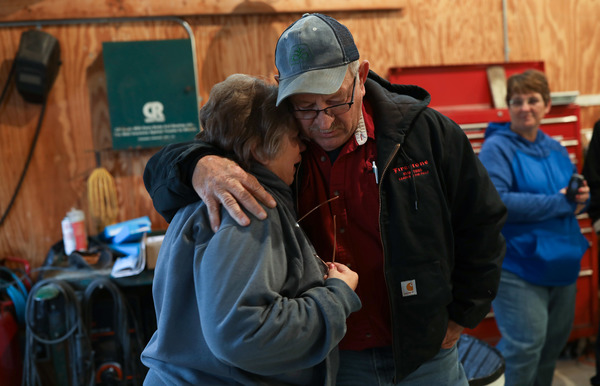
Steve Hemp, the love of her life, a third-generation family farmer and the neighbor you could always count on for a shot of Southern Comfort and a practical joke, went into cardiac arrest in September on his way to his ailing mother's bedside. Within the same week, both he and his mother died, just as this year's crop was ready to harvest. Hemp, who was 64, was the last in a line of family members who chose to keep the fields running.
Everyone in town knew that Hemp's death signaled the end of a legacy.
Times are tough for farmers in Illinois. In the past four years, farm income across the state has dropped from a record high of $123.7 billion in 2013 to a projected $63.4 billion for 2017, according to the Illinois Farm Bureau. With nothing to drive demand for corn and soybeans, commodity prices are down, leaving most farmers to expect to break even at best.
Many family farmers have been forced to take on other full-time jobs to support their families, while still trying to plant and harvest their small fields. Others rent farmland out, which helps the budget but strains the fabric of rural communities, where everyone used to know their neighbors.
Still others, especially younger generations, leave farming all together, opting instead for higher-paying jobs without the dirt under their fingernails.
Mother Nature didn't help this year, either. Hemp had to plant his corn twice after heavy spring rains washed out a portion of the first planting.
Acknowledging how delays in planting and harvesting further cut into farmers' profits, Gov. Bruce Rauner last week issued an emergency declaration allowing farmers to exceed weight limits when transporting their harvest. The measure was aimed at helping farmers to get their products to grain elevators more quickly, so they can return and ready the farms for spring planting.
Yet Hemp's friends, who know these stresses well, did not mention the hardships when they took precious time away from their fields to attend his and his mother's funerals. They came in their Sunday best, hugged Hanson, Hemp's sisters and his two adult daughters, and told them not to worry one bit about harvesting his crop. Many things have changed about farm life in Illinois, but when a family from the community needs help, farmers still pull together.
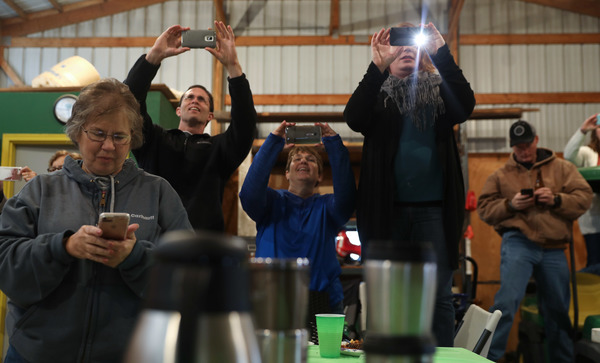
And so the tractors, combines and semis rolled up on a sunny day in October to pull out Hemp's soybeans. And on the first Saturday of November, another group of farmers from across Iroquois County was back to harvest his corn, using time each farmer probably didn't have to spare from his own farm to gather the Hemp family's final crop.
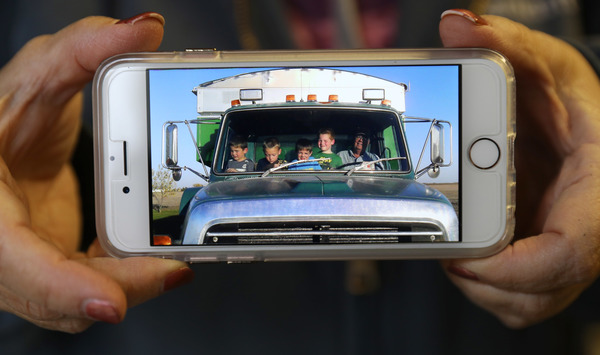
"You don't always really know who your friends and neighbors really are until something happens, because they come forward," Hanson said. "But I was also thinking, 'I know this is it. This is the last time.'"