Designs on delivery: Post Office posters from 1930 to 1960
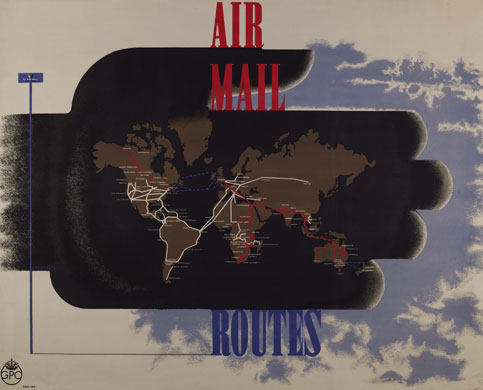
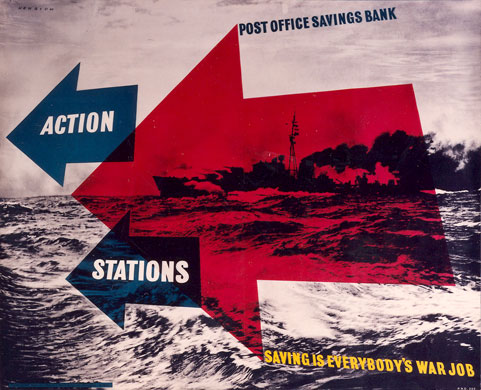
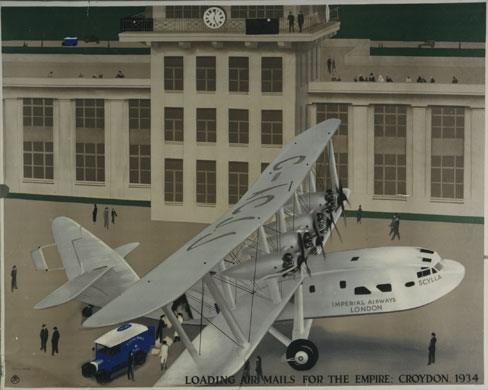
Air-mail routes (1937) designed by Edward McKnight Kauffer. One of the most influential graphic designers during the 1930s, McKnight Kauffer painted the Post Office as a pioneer of technological progress Photograph: The British Postal Museum & ArchiveAction Stations: Saving Is Everyone's War Job (1944) by FHK Henrion, a German-born designer who came to Britain in 1936. He designed a number of posters promoting the Post Office Savings Bank during the war years, used to allay public fears that savings would be safer in banksPhotograph: The British Postal Museum & ArchiveLoading Air Mails for the Empire: Croydon (1934) by HS Williamson. This poster promoted the Post Office's new air-mail service, which by the end of 1934 offered regular deliveries between London and Australia. It was part of a series of posters designed for schoolchildren, illustrating how the postal service developed with different modes of transportPhotograph: The British Postal Museum & Archive
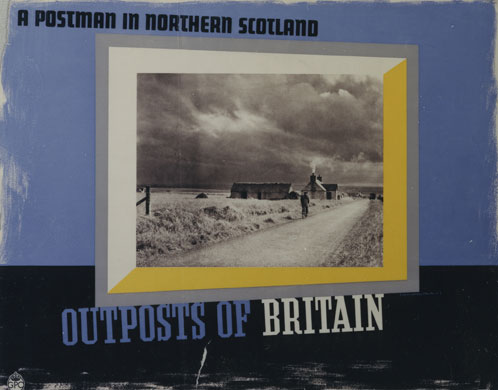
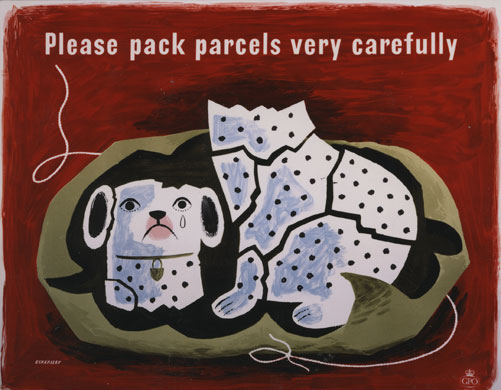
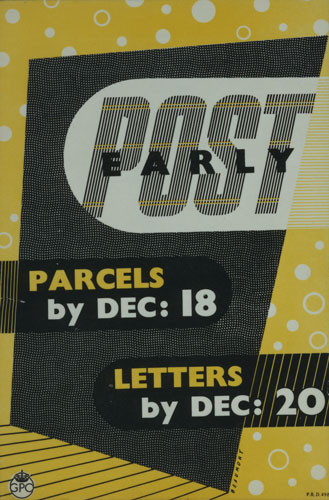
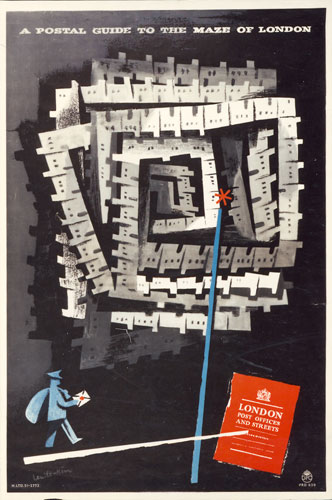
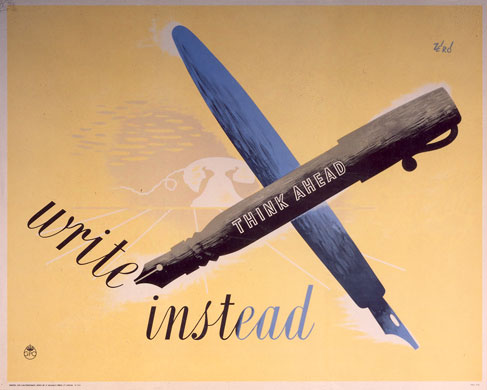
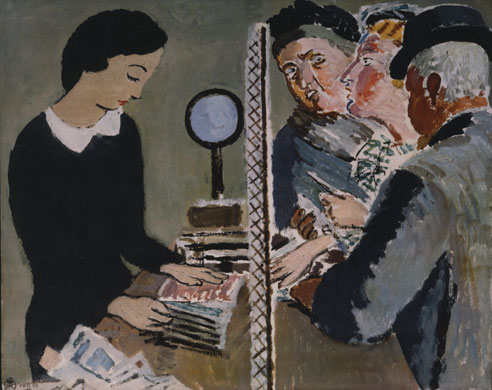
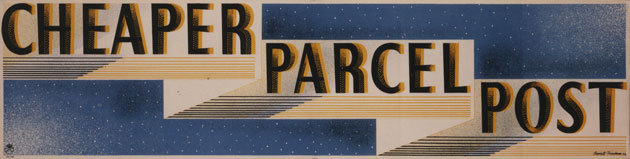
Outposts of Britain: A Postman in Northern Scotland (1937) by Edward McKnight Kauffer. It was one of the first posters to use photography in its designPhotograph: The British Postal Museum & ArchivePlease Pack Parcels Very Carefully (1957) by Tom Eckersley. As well as this Staffordshire dog, Eckersley produced posters featuring a broken cat and pig – each with a teardrop under one eyePhotograph: The British Postal Museum & ArchivePost Early Parcels by Dec 18. Letters by Dec 20 (1947) by Leonard Beaumont. A public information poster promoted in attempt to reduce last-minute posting before ChristmasPhotograph: The British Postal Museum & ArchiveA Postal Guide to the Maze of London (1950) by Polish designers Jan Le Witt and George Him. The fantastical nature of their designs tempers the functionality of this poster, which details Post Offices addresses and opening hoursPhotograph: The British Postal Museum & ArchiveThink Ahead Write Instead (1945) by Hans Schleger, a popular designer at the Post Office in the war years. With pressures on telephone services due to the mobilisation of staff, this poster encourages the public to send a letter, rather than congest the phone linesPhotograph: The British Postal Museum & ArchiveThe Last Minute (1935) by Vanessa Bell. The Post Office commissioned the Bloomsbury artist to design this poster, which was intended to change the public habit of posting at the end of the dayPhotograph: The British Postal Museum & ArchiveCheaper Parcel Post (1935) by Barnett Freedman. The Post Office began promoting its services on vehicles in 1934. The simplicity and clarity of this design helped to communicate its message in a quick glancePhotograph: The British Postal Museum & Archive
Sign up to read this article
Read news from 100’s of titles, curated specifically for you.