From electric flatbread machines to sustainable lighting sources for street vendors, Harish Hande’s Selco brings efficient, credit-worthy solutions to India’s micro-entrepreneurs
Inequality haunts modern India – and where it bites deepest, and hurts most, is over access to sources of energy.
That was the conclusion Harish Hande reached during his early adulthood. Raised in Orissa, in east India, in a middle-class family, he had many advantages. “I went to prestigious universities, including in the US – but I became more and more aware of the fact that it was the poor who were paying the price for my education. And I began to think, what am I going to do to help create a level playing field for the next generation?”

His answer, in 1995, was to co-found an organisation called Selco, with a central mission of enabling economically disadvantaged people to access energy – specifically clean energy, such as solar power. “Access to energy underpins everything: it’s essential for health, for education, for livelihoods,” Hande says. “The irony about energy in a country like India is that the poorest pay a great deal more than the rich for it – they spend a far higher proportion of their income on kerosene, because they don’t have the capital or credit to buy solar-powered machines and lighting that would make their livelihoods more efficient and pull them out of poverty.”

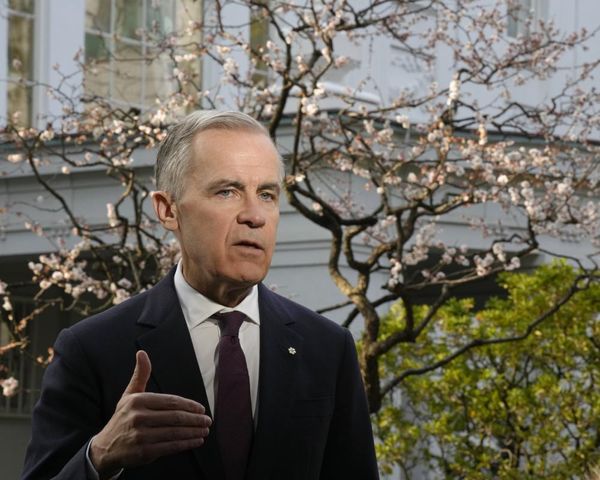
- Selco branch in Dharwad, India; Government Model Primary School, in Jaraganahalli on the outskirts of Bangalore, where digital classrooms are powered by Selco solar energy (lead image). (Lead image and image of Harish Hande by Atul Loke/Panos for the Guardian, all other images courtesy of Selco)
Selco set out to change that, by working with communities and individuals to ascertain the technological improvements they needed – and then help them find workable financial products to pay for it.
“The best financial lesson I ever learned was from a street vendor who said to me: 300 rupees (£3.30) a month is beyond me, but 10 rupees a day I can manage,” Hande says. “We have to meet people where they are and provide finance that is affordable.” At the end of the day, he says, innovation is possible for small-scale entrepreneurs if credit is provided on the same basis as for those in developed countries. “If you’re spending $4 (£2.80) a month on kerosene, that’s $50 a year and $250 across five years. And for $200 you can buy an effective, efficient, ecologically sound solar-powered machine. So it’s entirely possible, but it’s all about the way it’s financed.” Selco lets people pay in installments, rather than with an upfront lump sum that would be impossible for most to afford.


- Solar panels at a school (top); roti flat bread production using solar powered machinery designed by Selco (bottom left and right)
Hande says affordable technological solutions bring revolutions, in real terms, for real lives. “It’s hard to overestimate what a difference the change can make. Take a blacksmith, whose life has been the same for centuries, using a furnace and a blower. Clean energy means he can increase productivity, and cut down fumes: so he is now healthier and wealthier. It’s all about linking poverty, sustainability and inclusivity to create a world that is socially and economically sustainable, and the benefits are boundless.”

- Exchanging money to charge a battery pack used for mobile phone charging
Selco’s energy interventions have already brought electricity to millions of people across India – currently Hande estimates a reach of 7.5 million. Houses that never had lights now have them. Children who studied by candlelight now turn the pages of their textbooks under bright lights. Solar energy, using panels that harvest energy from sunlight, is proving to be one of the most powerful weapons in the war to end world poverty.


- Solar powered mobile phone charging station
India, Hande points out, is a paradox – it has great wealth and desperate poverty. “That gives us an incredibly important opportunity, which is to become a superpower of solutions,” he says. What he hopes to see, is the model that Selco has pioneered in India being exported to other countries, across Africa and Asia, to improve the lives of millions of people. “India has a critical role to play in ending world poverty, because it has well-educated people, it has resources, and it also has the people who need help the most.”


- A school in India run by Selco solar power (top and left); a traditional hand powered wheel used to power a blacksmith blower – an example of the technology that Selco is replacing with solar power (right)
Once people experience the difference that energy makes in their lives, says Hande, there is real change. He tells a story from the early days, when he did a lot of the installations himself, to illustrate the point. A farmer whose home Hande had worked on called him to say that his daughter had got engaged. “But [the farmer] said: ‘We have a problem.’ She was refusing to get married because her fiance’s house had no electricity. She said to her parents: ‘Do you expect me to raise children in a house without energy?’ So the man asked if I would get her fiance’s home sorted out with solar energy, so that the marriage could take place.” And that, Hande realised, represents real and lasting change. “That young woman was determined to provide her children with the lives they deserved, and that meant a life with affordable and plentiful energy. There is no going back.”
What are the Skoll Awards for Social Entrepreneurship?
The Skoll Foundation was set up in 1999 with the aim of driving large-scale change through investing in, connecting and celebrating social entrepreneurs, with the awards taking place annually since 2005. The awards are about “shining a light on what is working in the world” according to president and chief executive Sally Osberg. “We wanted to invest in solutions to the world’s most pressing problems. The Skoll Awards are a way for us to do that,” she says. “We see entrepreneurs as agents of opportunity, of creative disruption.”
Organisations are nominated by Skoll’s network of partners, for qualities such as impact potential, collaboration and innovation, and must be led by visionary social entrepreneurs. Each winner gets a $1.25m three-year core support investment to scale work and increase impact. This year, five of the six awards have been presented to women, something Osberg thinks is significant. “There is a perception that women entrepreneurs either don’t exist or don’t prevail,” she says. “We wanted to see if we could prove that wrong, and I believe we’ve done that.”

- This content is paid for and supplied by the advertiser. Find out more with our commercial content explainer