As a 3D kitchen designer, I’ve seen it all, but the most rewarding projects are often the most challenging: the small kitchens. In city apartments, historic homes, and cozy bungalows, the compact kitchen is a common reality. It’s a space that can easily become a source of daily frustration—a battleground of cluttered countertops, cramped workflows, and a constant, frustrating dance around family members just to make a cup of coffee.
But here’s the secret I’ve learned over years of transforming these spaces: the problem is never the size. It’s the design. A small kitchen isn’t a life sentence of inefficiency; it’s a design puzzle waiting for a clever solution. The transformation from a space that works against you to one that flows in perfect harmony with your life is entirely possible.
It requires a shift in perspective, a deep understanding of space and light, and the right tools to bring a thoughtful vision to life. This guide is your roadmap to unlocking the hidden potential of your small kitchen, turning a source of frustration into a functional, beautiful, and surprisingly spacious hub of your home.
The Psychology of Space: Visual Tricks to Make Small Feel Grand
Before we move a single virtual cabinet, we must start with the art of illusion. Making a small kitchen feel larger is a psychological game played with light, color, and reflection. These foundational choices create an airy canvas upon which we can build a functional masterpiece.
Harnessing Light and Color
The single most powerful tool in our arsenal is light. Light colors on walls, cabinetry, and countertops—think soft whites, gentle grays, and warm pastels—act as mirrors, reflecting light around the room to create an immediate sense of openness.
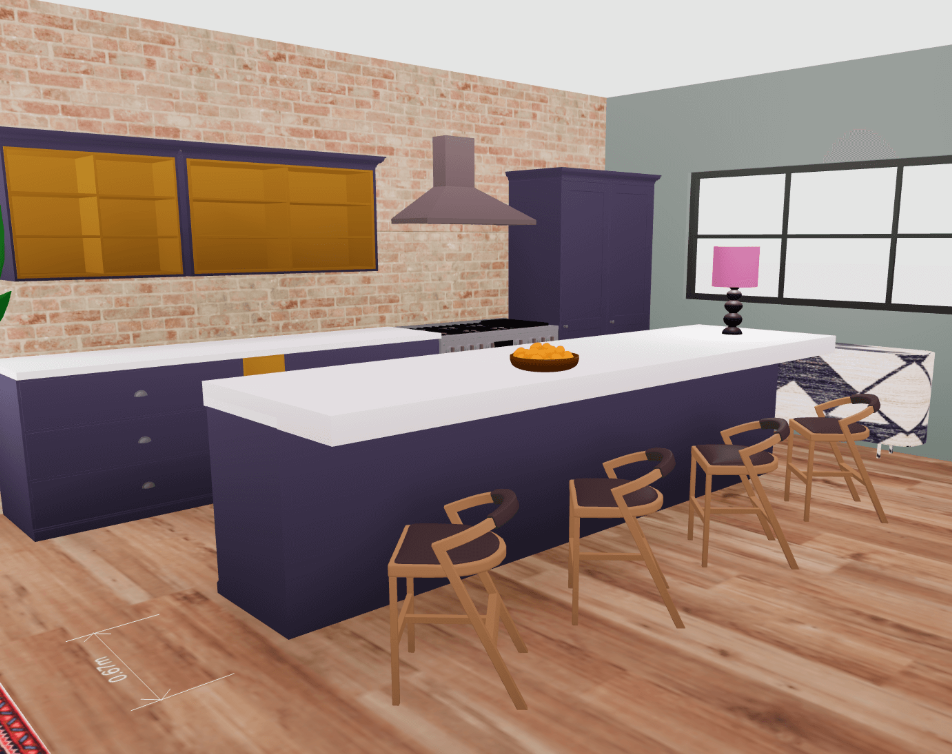
This doesn’t mean your kitchen must be a sterile white box. A popular and effective strategy is a two-tone design, using a darker color for the base cabinets to ground the space and a lighter shade for the uppers to maintain an airy feel.
A monochromatic palette, using varying shades of the same color, can also create a cohesive and seamless look that tricks the eye into seeing a larger, more unified space.
The Magic of Reflective Surfaces
To amplify the effect of your color choices, incorporate reflective surfaces. A glossy tile backsplash, polished stone countertops, or shiny stainless steel appliances bounce light, both natural and artificial, across the room, creating depth and movement.
Even a strategically placed mirror can work wonders. This simple trick prevents the space from feeling static and closed-in.
Streamlined and Seamless Design
Visual clutter is the enemy of a small kitchen. Opt for minimalist, flat-panel cabinet doors to create clean, uninterrupted lines. Handleless cabinets or those with recessed, flush pulls are excellent choices as they don’t protrude into your workspace, saving precious centimeters and preventing snagged clothing.
Furthermore, consider integrated, panel-ready appliances. When your refrigerator and dishwasher are concealed behind panels that match your cabinetry, they blend in seamlessly. This creates a clean, uncluttered look that prevents the space from feeling crowded with bulky machinery and visually expands the room.
The Blueprint for Efficiency: Smart Layouts and Clever Storage
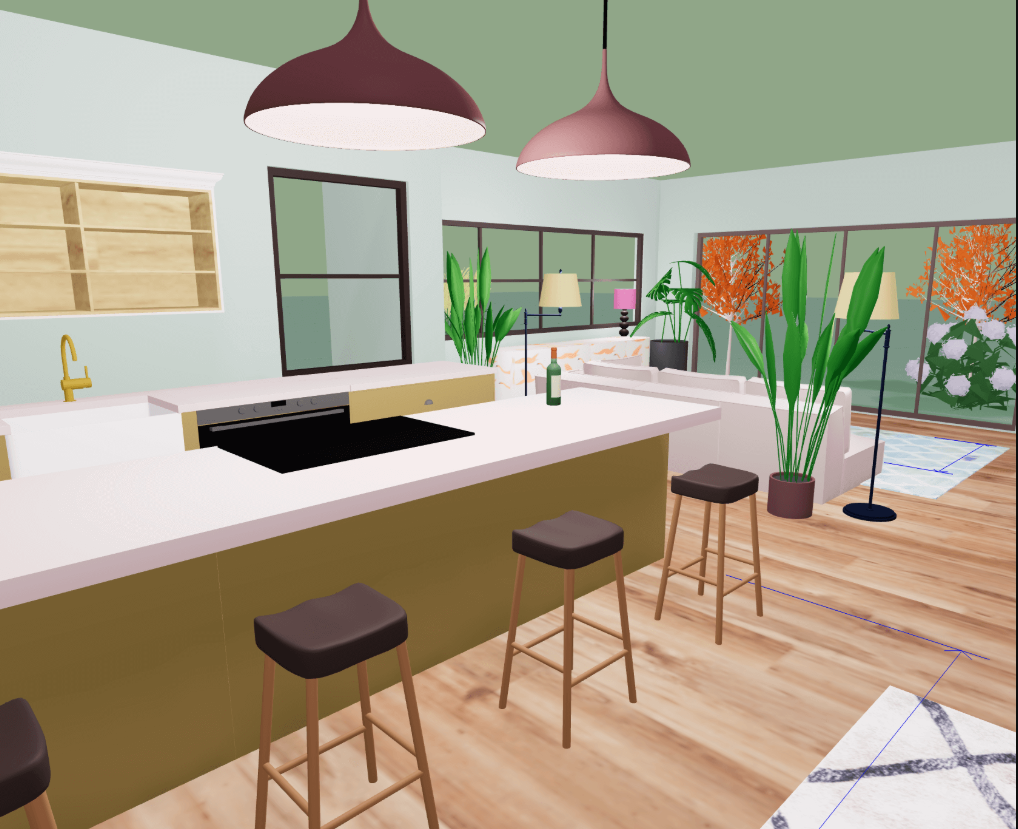
With our visual strategy in place, we can now focus on the mechanics of the kitchen: the layout and storage. This is where thoughtful planning transforms a beautiful space into a highly functional one.
Honoring the Work Triangle
Even in the smallest kitchens, the classic "work triangle" is a vital principle. This concept connects the three primary work areas—the sink, the stove, and the refrigerator—in an efficient triangular path. To maintain an easy flow, each leg of the triangle should be between 4 and 9 feet, and the total perimeter should not exceed 26 feet.
Adhering to this rule minimizes wasted steps and is especially critical for optimizing workflow in a compact area. The most effective layouts for small kitchens are designed to respect this principle:
- The Galley Layout: With two parallel walls, this is a highly efficient layout often used in professional kitchens. It creates a natural and effective work triangle.
- The L-Shaped Layout: Using two perpendicular walls, this layout is versatile and works well in corner spaces, often opening up the room to an adjacent area.
- The One-Wall Layout: While not a true triangle, placing all elements on a single wall can be incredibly space-efficient, especially in open-plan living. The key is to maintain a logical sequence of work zones (e.g., fridge, sink/prep area, stove).
Storage Solutions That Create Space
Inefficient storage is the number one culprit behind cluttered countertops. In a small kitchen, every inch must work hard.
- Think Vertically: Take your cabinets all the way to the ceiling. This eliminates the dusty, unused space on top and provides storage for less frequently used items, while also drawing the eye upward to create an illusion of height.
- Embrace Open Shelving: In place of some bulky upper cabinets, consider open shelves. They create a sense of airiness, prevent the walls from feeling heavy, and offer a chance to display your favorite dishes or glassware.
- Work Your Corners: Don’t let corners become "dead zones." Install a Lazy Susan or a specialized pull-out corner system to make every item easily accessible.
- Maximize Wall Space: Use wall-mounted pot racks, magnetic knife strips, or a pegboard system to free up valuable drawer and counter space.
- Choose Smart Furniture: If space allows, a narrow, rolling kitchen cart can provide extra prep space and storage, and can be moved out of the way when not in use.
Bringing Your Vision to Life with Arcadium 3D
All these tips and principles are fantastic in theory, but the biggest hurdle for any homeowner is the fear of making a costly mistake. How can you be sure that the L-shaped layout will feel better than the galley?
Will that slimline refrigerator really leave enough walkway space? This is where the transformation becomes real, moving from abstract ideas to a concrete, testable plan.
This is precisely why, as a designer, I rely on virtual planning. The process of designing a kitchen has been completely democratized by powerful, intuitive platforms that allow you to build and experience your space before committing a single dollar.
With a free kitchen design tool, you can eliminate the guesswork and design with absolute confidence. The process is straightforward and empowering:
Create a Digital Twin: You begin by mapping out your exact room dimensions—walls, windows, doors, and all. Tools with precise parametric controls ensure your digital model is a millimeter-perfect replica of your physical space.
Experiment Without Risk: This is the fun part. Using a vast library of scalable 3D models, you can drag and drop different layouts into your room. Test a galley layout. See how an L-shape feels. Experiment with different cabinet styles and appliance placements. This risk-free iteration is where you discover the perfect flow for your unique needs.
Take a Virtual Walkthrough: This is the game-changer. Once you have a layout you like, you can enter a first-person 3D view and virtually walk through your new kitchen. Does the workflow feel natural? Is the clearance around the island comfortable? You can spot potential flaws that are invisible on a 2D floor plan, saving you from real-world frustration and expense.
Finalize and Collaborate: When your design is perfect, you can share it via a simple link with your partner, contractor, or friends. They can take their own virtual tour and provide feedback, ensuring everyone is aligned on the vision before any work begins.
This ability to meticulously plan, visualize, and validate your ideas is what makes a tool like Arcadium 3D so indispensable. It transforms you from a homeowner with a problem into a confident project leader with a clear, buildable blueprint.
It’s praised by professional architects for its speed and by DIY renovators for its incredible ease of use, often compared to playing a game.
Your Dream Kitchen Is Not a Compromise
Designing a small kitchen is an exercise in creativity and precision. By combining visual tricks that expand the sense of space with smart layouts and ingenious storage solutions, you can craft a kitchen that is not just functional, but a genuine joy to be in.
The days of guessing and hoping for the best are over. The transformation from a cramped, cluttered kitchen to a spacious, efficient, and beautiful hub is within your reach. The knowledge is here, the tools are accessible, and the first step toward designing the small kitchen of your dreams is yours to take.