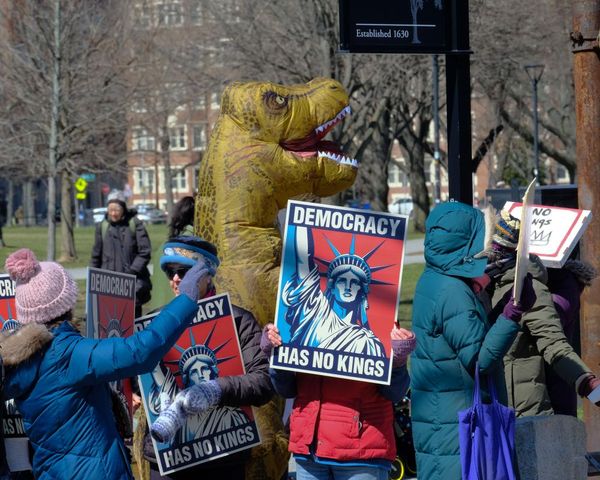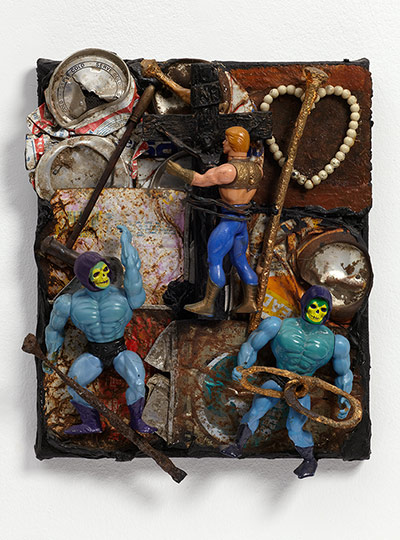
The sticky layers of Derek Jarman’s Black Paintings journey downwards, into life’s big and most frightening mysteries: loss, the fear of death, childhood trauma. Mostly created after the film-maker had been diagnosed with HIV, they become darker. Pitch smothers gold leaf, broken mirrors, glass, brushes, junkshop finds and the trash that swept up on the beach by his home in Dungeness. In one key work, Action Man embraces a blackened Christ while He-Man’s nemesis, Skeletor, dances and cracks the whip (pictured). The rusted ends of beer cans read “serve cold”. Complimenting the emotional excavations, is Waiting For Waiting For Godot, his short Super 8 silent film of 1982, which bounces off Beckett’s most famous play to explore the tension between theatre and cinema.
Wilkinson Gallery, E2, to 1 Dec
SS Photograph: PR
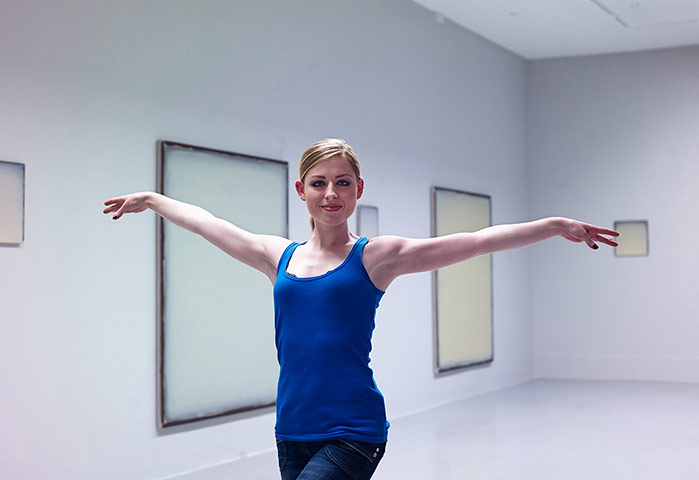
Almut Linde creates performances and situations that subtly rupture social systems; be that the nine-to-five grind or the quiet church-like atmosphere cultivated in galleries. Some are playful, like the series of photographs in this survey of her 20-year output, which document circus performers holding acrobatic poses (pictured), not in a raucous big top, but the pristine spaces of a museum. Others make more pointed statements, like the sound installation featuring prostitutes from the German-Czech border who the artist recorded singing, while waiting for passing trade.
Chapter, to 24 Nov
SS Photograph: PR
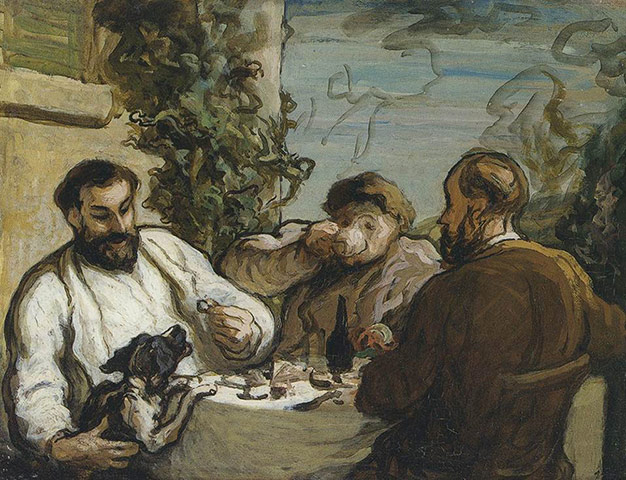
Honoré Daumier – who’s getting his first big British show in more than 50 years – was very much a man of the moment. Eschewing hoary classicism, he set out to give his 19th-century public a new vision of itself, depicting Parisian laundresses, street clowns or bent lawyers in place of mythical gods. Though he created paintings and sculpture, mostly his works were lithographs, which he etched directly on to a plate before they were printed in the next day’s newspapers. His Paris is one snatched at ground level, immediate and fleeting. A Republican through and through Honoré poked fun at the habits of bourgeois society. His street scenes say as much about art’s range and purpose as they do 19th-century life.
Royal Academy Of Arts, W1, Sat 26 Oct to 26 Jan
SS Photograph: PR
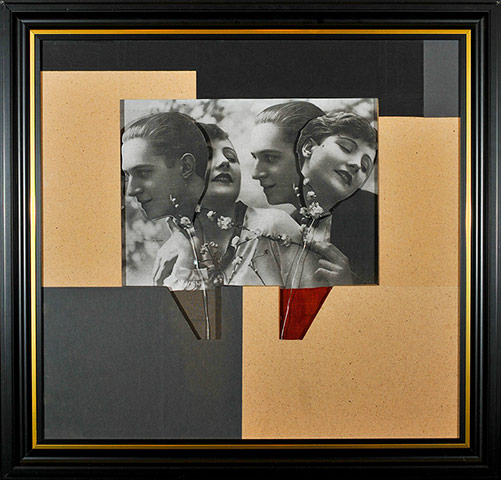
Just who was Dogu Bankov the Bulgarian (or was he Macedonian) artist? Most facts of his life remain open to question, but after the establishment of a Communist government in Bulgaria, he may have taken refuge in L’Ane Rouge artists’ cafe in Paris. And who is Goran Ohldieck, the artist who appears to have curated this exhibition of the rarely seen work of Bankov? Could Bankov in fact be a fiction of Ohldieck’s imagination? Whatever the truth is, these cultural uncertainties set the scene for a set of autobiographical collages.
Bonington Gallery, to 8 Nov
RC Photograph: PR
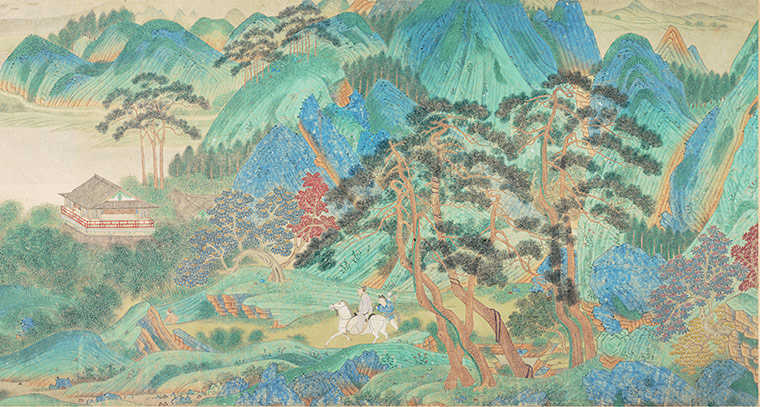
This ambitious collection of Chinese art moves through paintings on silk, scrolls and banners, initially by reclusive monks and scholars then commercial artists capturing scenes of cultivated life. The earliest offerings from 700 to 900 include ornate depictions of meditating Buddhists and an exquisite scroll of astrological deities with animal heads. The works from the Middle Ages are astonishing in their exacting attention to detail but the vivaciously hued 16th-century landscapes are most ravishing with lush greens, turquoises and yellows bringing egg-shaped mountains and trees to life.
V&A, SW7, Sat 26 Oct to 19 Jan
SS Photograph: John Lamberton

Lucy Skaer presents an installation based on personal memory and archaeological prehistory. For her 2009 Tate Britain Turner Prize nomination show, Skaer exhibited a full-size sperm whale skull. Here she goes in for much more modest-sized assemblages of this and that. There are sculptural memories of the worn stone steps from the house where she grew up and a series of carvings of “sinker” mahogany, highly valued wood salvaged from trees felled in the 19th-century Belize forests that originally sank as it floated down river.
Tramway, to 15 Dec
RC Photograph: PR
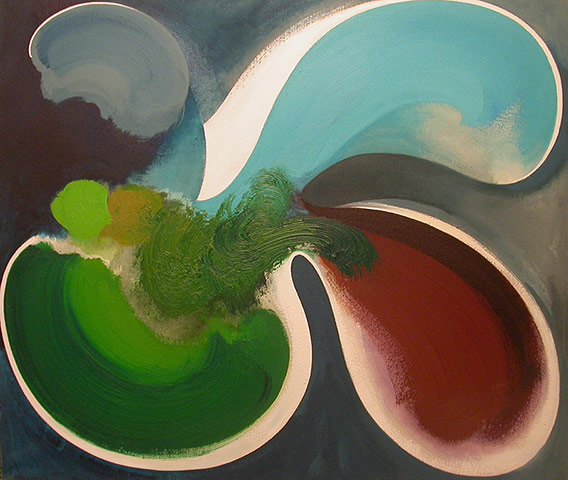
The internationally acclaimed painter returns to the town where he was born 75 years ago for a long overdue local retrospective. While Tillyer’s paintings might be far too immediate to seem dated, the body of work seems to come from a different cultural age. Ranging from small-scale watercolours to towering canvases, the images appear to be improvised in accord with the natural landscape. While Tillyer’s methods might involve largely seeing what happens when he pushes the paint around, the final outcome is always orchestrated to be fully in tune with his very lyrical passion for the North Yorkshire countryside in which he has lived and worked for more than 30 years.
MIMA, to 9 Feb
RC Photograph: PR
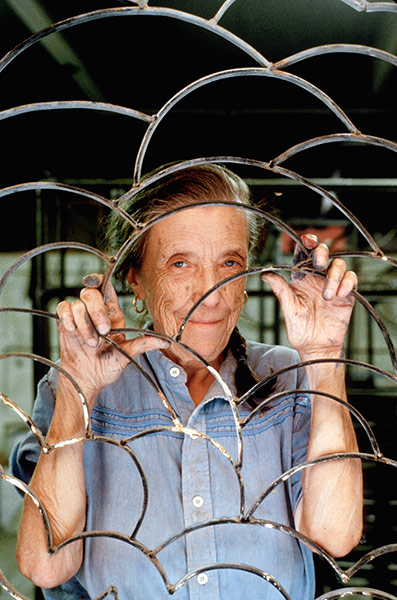
To complement a parallel Louise Bourgeois show at the Scottish National Gallery of Modern Art (to 18 May), this exhibition of her drawings gets to the painfully tender heart of her life’s work. When she died at the age of 99 three years ago, Bourgeois (pictured) was arguably the artist most admired and loved by her peers. She embodied what being an artist is all about: the self-defining imaginative struggle, the public vulnerability, and the irresistible fun to be had in playing against art-world expectations. The focus of this wonderful show are Bourgeois’s Insominia Drawings, in which the artist dredges poignant insights from half sleeping states of psychological suspense.
Fruitmarket Gallery, Sat 26 Oct to 23 Feb
RC Photograph: +/Allan Finkelman