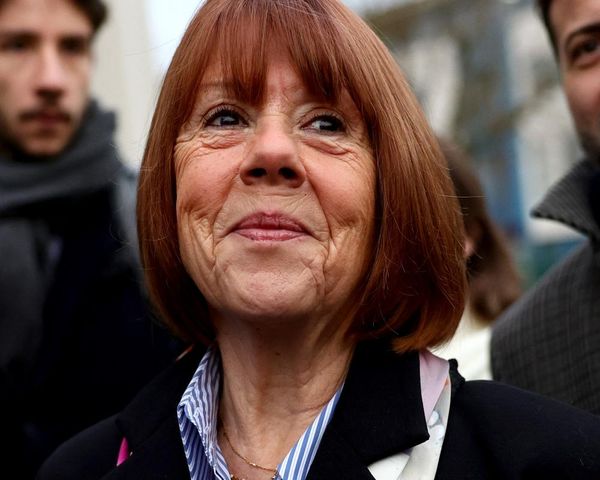

Born in 1974 to a Muslim Syrian father and Christian Finnish mother, Sherin Khankan, Denmark's first female imam, came into the world in a meeting of different cultures.
In 2016, along with a group of Muslim academics, she founded the Mariam Mosque in Copenhagen - one of the first in Europe to be led by women.
"Everything starts with a human voice," she told Al Jazeera. "The fact it was a Black slave who was the first to call Muslims to prayer, this is miraculous considering the treatment of Black people then - and now."
Reform, she says, is not new in Islam, but rather integral to it.
"[We] reread the Quran with a focus on gender equality. Religious institutions are patriarchal, so we try and challenge the structure from within."
The mosque has three central missions: Advocating for a woman's right to be an imam; promoting a right to interfaith marriage and supporting the right to divorce.
Since opening, of the 50 marriages that have been conducted at the mosque, more than half have been interfaith unions.
"We realised very quickly that one of the most acute dilemmas of our times among the Muslim youth is the question concerning interfaith marriages," said Khankan.
Before the coronavirus pandemic shuttered the mosque, an interfaith couple from Paris had a Muslim ceremony featuring speeches by the bride, groom and Khankan. In Muslim weddings, the imam usually gives a short speech on marriage.
The couple had had a civil ceremony three years earlier.
"The Mariam Mosque ideas fit the current globalisation trend in this world. People travel around the world and meet people from different backgrounds," said the wife, who requested anonymity.
"We can't force these people to believe what we believe. Mariam Mosque, to a certain extent, facilitates this new generation of people including myself who want to continue believing and practicing Islam but [are] living in a non-Islamic country."
Four years after opening its doors, the mosque received a request for a same-sex marriage. Although the mosque leaders had no personal objections, they did not go ahead with officiating the ceremony.
"We all believe in love. But there's a difference between favouring something and conducting it … Right now, it's not happening, but I won't be able to say about the future."
When the mosque launched in 2016, the Western media was transfixed on Khankan.
A year earlier, film director Marie Skovgaard had been shooting Khankan as part of a documentary, The Reformist.
While trying to pitch the film to broadcasters, Skovgaard said she faced rejection.
Khankan's appearance, Skovgaard says, did not match their expectations.
"The context of that was: 'Oh, she doesn't conform to our stereotype of what a Muslim woman should look like'."
Khankan said she is aware of the role race plays, and attempts to reflect the diversity of Islam at the mosque.
"We want to change that, and we already [have] started to change that," she said.
Two other females imams at the mosque are from Malaysian and Somali backgrounds, while some wear Hijab and others do not.
Unlike some headlines would suggest, the mosque takes a cautious, incremental approach to change.
"If you have too many battles on your shoulders, you won't gain any legitimacy or we would lose our unity," Khankan said.
"If you want to create change, you have to do it wisely and carefully … you cannot burn all the bridges behind you."
As with all religions, there are differences between how the world's almost two billion Muslims view worship.
Unlike priests in Christianity, who are ordained by the Church, the role of imam is not a licensed profession; imams can be appointed or organically rise to the role within a community.
British Imam Sabah Ahmedi told Al Jazeera: "Leading prayers is a responsibility given to men [for] various reasons.
"Women do not pray on certain days and periods which means they would not be able to fulfil the role [of imam]."
For Ahmedi, being an imam requires you to lead the five daily prayers within a mosque.
"Certain roles have been ascribed by Islam to each sex and we believe upholding these roles."
However, Islam has a long history of female empowerment, he said.
"It established rights for women at a time when they were seen as second-class citizens. Islam gave them the right to divorce, inheritance and established the crucial importance of women being educated.
"Islam is a perfected religion and it caters for all times."
But Khankan claims that examples of women's mosque can be found elsewhere in Muslim communities, for example, in China in the late 17th century.
Today, women have led prayers in countries including the United Kingdom, the United States, France, South Africa and India.
Looking ahead, Khankan said the mosque will continue "reflecting reality as it is".
Al Jazeera interviewed Khankan and Skovgaard at the Faroe Islands International Minority film festival in late 2019.