Thailand's population is ageing. Three decades ago a million children were being born every year, but the figure has plummeted to 700,000 and is still dropping, forcing schools to compete or perish over access to a dwindling pool of new students.
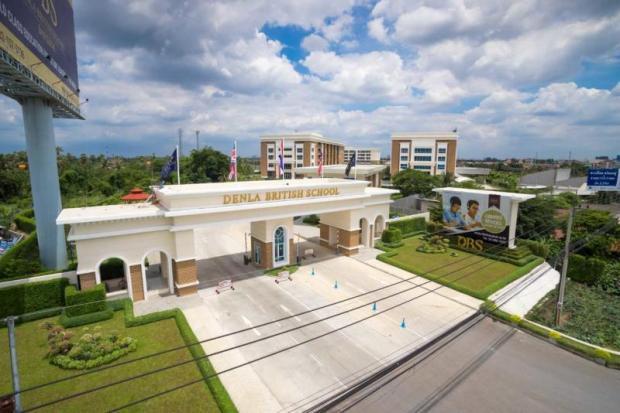
Denla British School in Nonthaburi believes that its innovative approach to education will set it apart from upmarket competitors, most notably by preparing students for a future in which workers must rapidly learn new skills and change career paths.
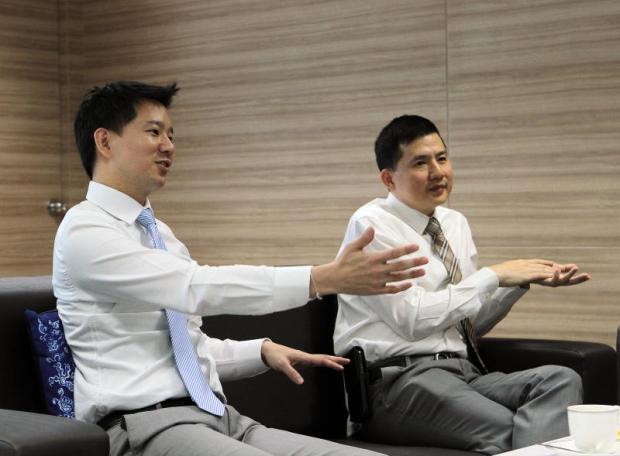
"There is an oversupply of schools in terms of quantity, but not in quality," said Toryos Pandejpong, a board member at Denla British School. "You see many Thai families sending their children abroad to India, Singapore, Britain or the US."
"This worries us, but competition is good for consumers and it pushes us to provide better services," said his brother Temyos Pandejpong, also a board member at the school.
In the future, workers must not only change jobs, but entire career paths multiple times in their lives due to automation, as new technology makes old careers obsolete and creates new ones.
"Education has to shift to support the capacity to learn and relearn," Mr Temyos said. "The liberal arts paradigm is going to be more important. It's not just going to be about learning a specific trade, but learning how to learn."
Denla sees this as an opportunity to teach students to adopt a mindset of adaptability. Unlike many schools that have students pick a musical instrument and stick with it, Denla offers a schedule where students change instruments every 2-4 years, until they eventually settle on one at around Year 9.
The same goes for athletics, with young students playing a variety of interchanging sports until they settle on 2-3 in their teen years.
The curriculum also allows students who excel in one area to progress through the curriculum faster, while moving slower in other areas. For instance, a student excelling in maths but not in art could be in Year 7 maths and Year 4 art. Similar to the structure for sports and music, students start by learning a diverse array of subjects, then narrow them down as they get older.
"The curriculum is too rigid in many Asian countries," Mr Toryos said. "When I was a child I had the choice of arts or science, and then I was stuck on that path for the rest of my schooling. We want to give our students flexibility."
The British system combines content-based learning, popular in countries like China and Singapore, with skill-based learning touted by Scandinavian countries.
The school is only two years old and has 320 students, but it has the capacity for 900.
A second phase of construction will boost the capacity to 1,500, due to be completed in 2021. Denla has a longer school day (8am-5pm) and a half day on Saturday, compared with 8pm-2pm at most day schools. The day is packed with music and art activities, as well as two snack breaks and an hour-long lunch.
The Denla School Group owns two other schools in Bangkok that focus on very young children, so Denla British School is the first foray into older ages. The new school will eventually be open to children ages 2-18, but the oldest students are age 12.