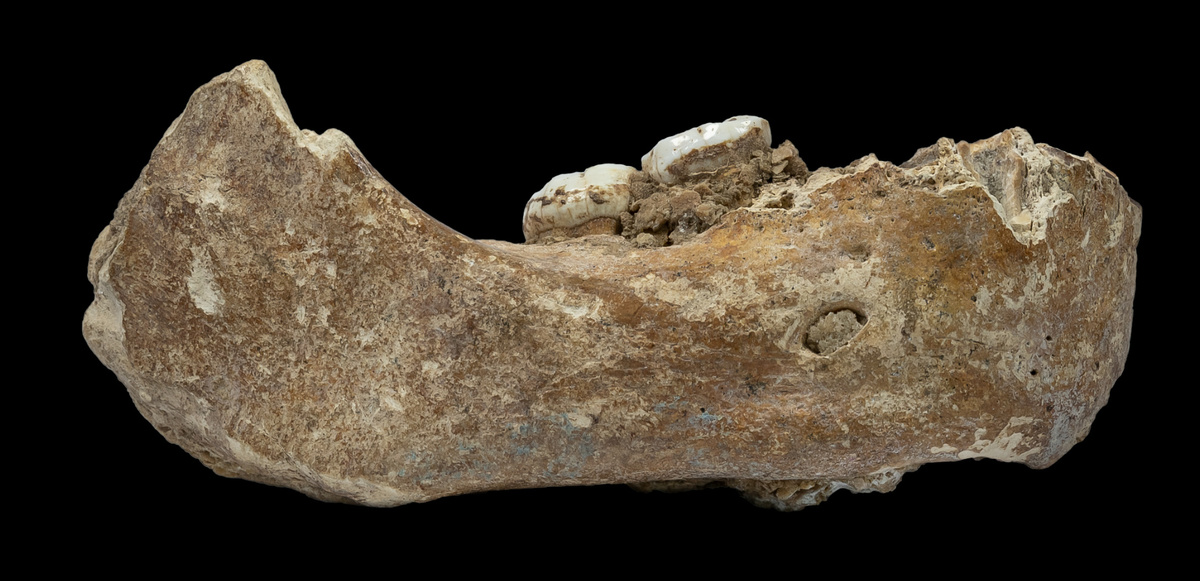
WASHINGTON (Reuters) - A jawbone found in a cave on the Tibetan Plateau in China is providing surprising insights into Denisovans, the enigmatic extinct cousins to Neanderthals and our own species, including that they were pioneers at enduring high-altitude environments.
Scientists on Wednesday described the pivotal new fossil: the right half of the lower jaw of an adolescent, including two teeth, dating from 160,000 years ago.
The only previously known Denisovan fossils were three teeth and some bone fragments unearthed 1,500 miles (2,400 km) away in Siberia at a site called Denisova cave.
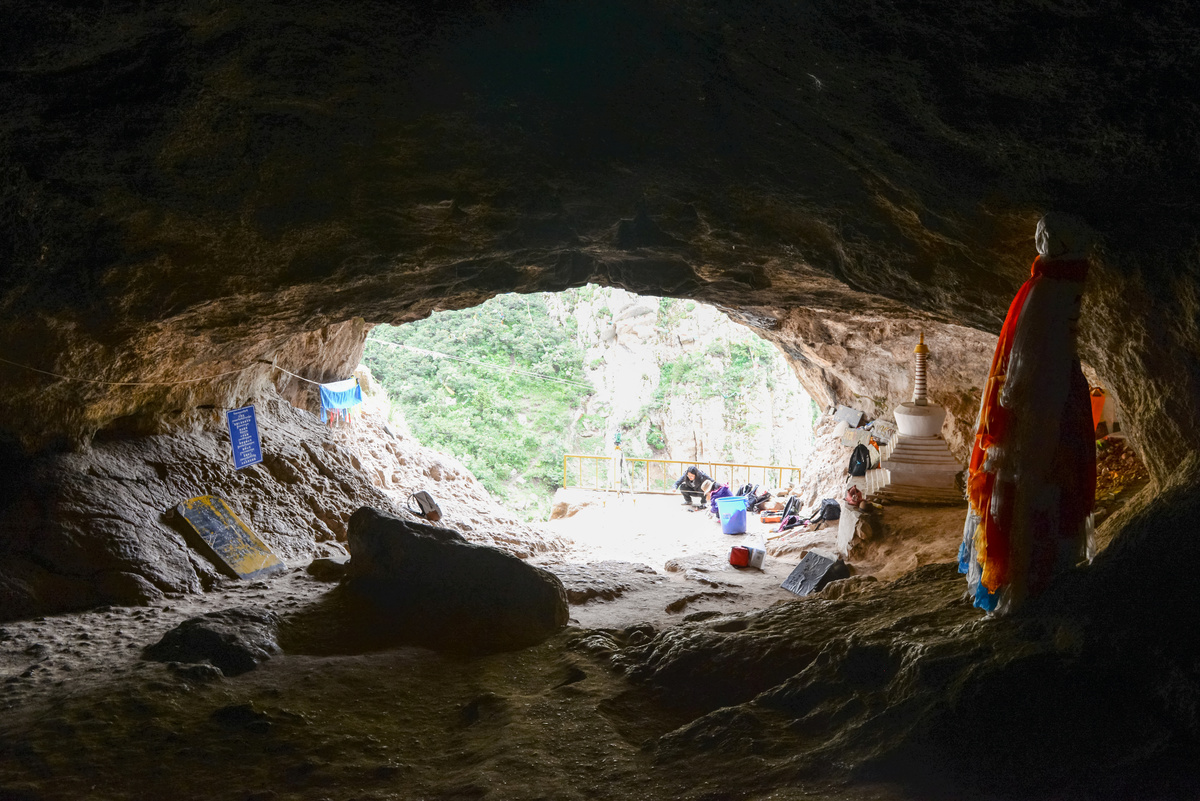
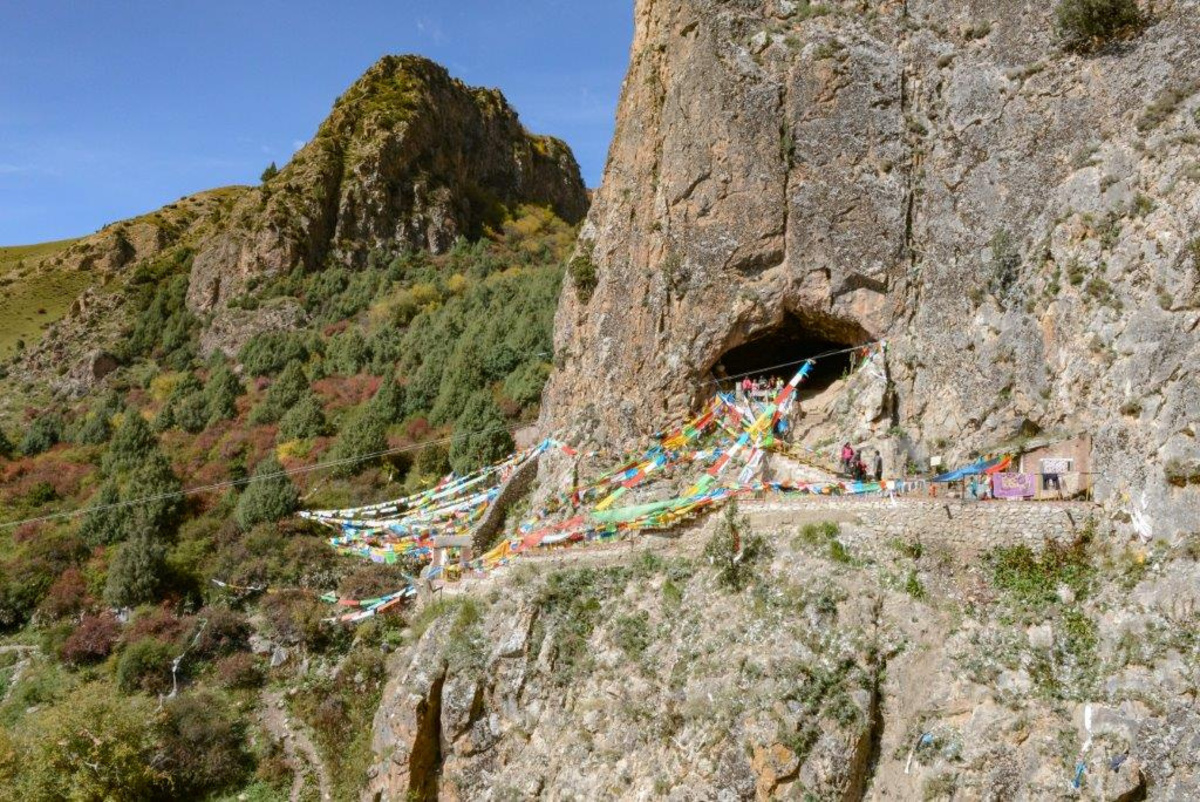
The Chinese fossil, found by a Buddhist monk in 1980 in China's Xiahe county and later turned over to scientists, revealed intriguing details about the geographic spread of Denisovans, their physical appearance and their unexpected ability to conquer extreme environments.
The fossil from Baishiya Karst cave, situated 10,760 feet (3,280 meters) above sea level, showed not only that Denisovans once were widely distributed in eastern Eurasia but also that they inhabited an inhospitable high-altitude, low-oxygen setting.
"It must have been really tough to live there as a hunter-gatherer, and still they managed to be there," said University of Copenhagen molecular anthropologist Frido Welker, one of the researchers in the study published in the journal Nature.
Our species, Homo sapiens, did not populate that area until about 40,000 years ago, having first appeared in Africa a bit more than 300,000 years ago.
"Denisovans might have adapted to a wide range of different environments," archaeologist Dongju Zhang of China's Lanzhou University said.
The researchers were unable to extract DNA from the fossil, but extracted proteins from one of the molars to determine its Denisovan identity.
"Proteins can survive about 10 times longer than DNA in fossils," paleoanthropologist Jean-Jacques Hublin of the Max Planck Institute for Evolutionary Anthropology in Germany said.
The proteins came from collagen, a component of connective tissue in body parts including dentin, a part of teeth.
The existence of Denisovans was unknown until researchers in 2010 announced the discovery of the Siberian remains, with DNA tests showing them to be a sister group to Neanderthals, the stoutly built extinct human species that resided in parts of Eurasia. Both experienced significant interactions with Homo sapiens, including interbreeding, before vanishing for reasons not fully understood.
The new fossil offers clues about what Denisovans looked like. "The chin area is strongly receding and the preserved teeth were exceptionally large," Hublin said.
Some far-flung modern Asian populations, particularly in Papua New Guinea, possess small but significant amounts of DNA derived from Denisovans, suggesting they had a broad geographical presence.
(Reporting by Will Dunham; Editing by Sandra Maler)