There has been discord in the security system that has supported the post-Cold War international order. It is worth noting that Japan and the United States are both continuing their efforts to enhance the effectiveness of their alliance.
The two governments recently convened the Japan-U.S. Security Consultative Committee, also known as two-plus-two security talks, for the first time in a year and eight months. The security talks, comprising their foreign and defense chiefs, compiled a joint statement with deepening defense cooperation as its pillar.
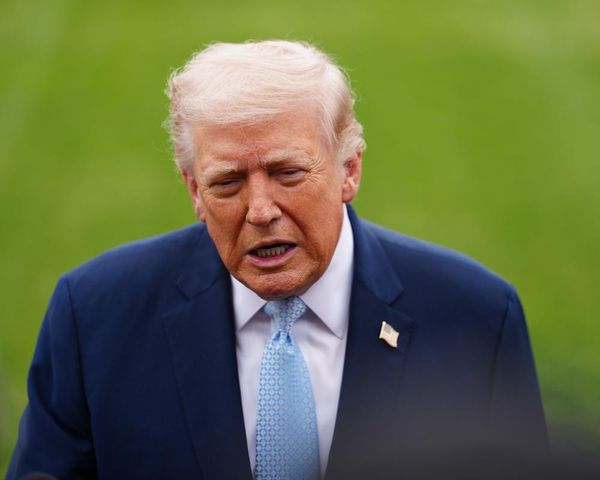
Due to U.S. President Donald Trump's "America First" policy, the rift between the United States and European nations has expanded, and the solidarity of the North Atlantic Treaty Organization is being shaken. It is significant that Japan and the United States took this opportunity to convey to the international community the message that the bilateral alliance is functioning steadily.
Prime Minister Shinzo Abe will visit the United States shortly and attend a Japan-U.S. summit meeting. It is important for Abe to reaffirm the alliance's firm relationship based on the agreements reached at the recent security talks.
The main goal of the latest security talks is to strengthen cooperation in such new domains as space, cyberspace and the electromagnetic spectrum.
China and Russia have been enhancing their cyber-attack capabilities in recent years. If operators of crucial infrastructure, such as government bodies, power utilities and railway firms, become targets of such offensives, serious damage will be unavoidable. Measures to address the situation must be urgently devised.
The joint statement stipulated that cyber-attacks are within the scope of Article 5 of the Japan-U.S. Security Treaty, which obliges the United States to defend Japan. This is highly significant in terms of improving deterrence capabilities.
Japan and the United States also agreed to install U.S.-provided space situational awareness payloads in Japan's satellite system to reinforce their countering abilities in outer space. They must steadily press ahead with the plan.
Work with relevant nations
The talks between Defense Minister Takeshi Iwaya and Acting U.S. Secretary of Defense Patrick Shanahan covered the recent crash of a state-of-the-art F-35A stealth fighter jet that belonged to the Air Self-Defense Force's Misawa Air Base. Iwaya requested support in investigating the cause of the accident, and Shanahan agreed.
This is the first crash to involve an F-35A fighter, a model that was jointly developed by nine countries, including the United States. Depending on the cause of the accident, it could affect the security of Japan, which sees F-35A fighters as the next mainstay fighter. Japan and the United States should cooperate in investigating to determine the cause of the crash while giving consideration to confidentiality.
The joint statement also stressed the importance of realizing a "free and open Indo-Pacific," a vision shared by Japan and the United States.
China is coercively advancing an expansion of military footholds in the South China Sea. It is indispensable for Southeast Asian countries, which are engaged in a dispute with China over maritime sovereignty, to bolster their maritime security capabilities. It is hoped that Japan will proactively take measures to support such countries through such means as providing them with patrol ships and accepting their interns.
The Self-Defense Forces and U.S. forces must also conduct a series of joint exercises with the Australian military and other relevant countries.
In a bid to realize North Korea's denuclearization, the ministers also confirmed they would implement resolutions adopted by the U.N. Security Council to impose sanctions on Pyongyang. Tokyo and Washington should lead these moves, and enhance efforts to encourage countries concerned to follow suit.
(From The Yomiuri Shimbun, April 21, 2019)
Read more from The Japan News at https://japannews.yomiuri.co.jp/