For years, researchers have predicted that changing U.S. demographics _ the rising tide of Hispanics, blacks, Asians, Pacific islanders, city-dwellers, educated women and young people who don't attend church _ will create an unbeatable majority for the Democratic Party.
Well, it didn't quite happen in 2016.
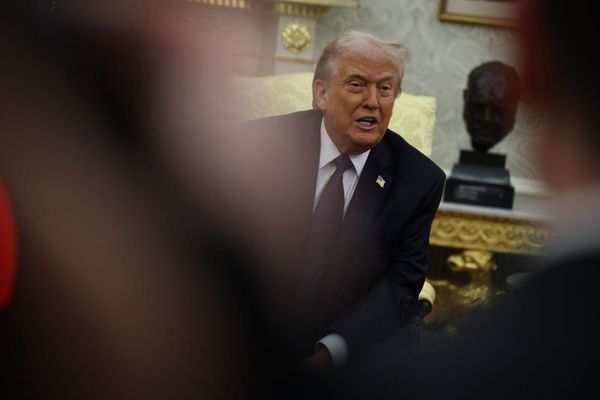
Hillary Clinton won the popular vote among all stripes of Americans _ but whites, especially fundamentalists, tipped the electoral majority to Donald Trump. Exit polls said 81 percent of white evangelicals chose Trump.
How long can the GOP keep winning as a mostly-white party? In the future, Census Bureau projections foresee a relentless "browning of America" _ and most of the minorities tend to vote Democratic.
By 2040, minorities will pass 50 percent, and traditional European whites will become a minority in America (although they will continue to control most wealth and power).
Conservative columnist George Will says Republicans are wrong to depend on the "kamikaze arithmetic of white nationalism." He wrote:
"Arizona whites have gone from 74 percent to 54 percent of the population in 25 years; minorities will be a majority there by 2022. Texas minorities became a majority in 2004; whites are now 43 percent of the population. Nevada is 52 percent white and projected to be majority-minority in 2020. Georgia is 54 percent white, heading for majority-minority in 2026. ... In 2016, Republicans won a ruinous triumph that convinced them that they can forever prosper by capturing an ever-larger portion of an ever-smaller portion of the electorate."
Researcher Steve Phillips wrote a book titled "Brown is the New White: How the Demographic Revolution Has Created a New American Majority."
Minority people _ often treated as outsiders _ generally have liberal, progressive, humane values and tend to support the Democratic Party. Their relentless increase helps Democrats. But they often don't vote.
Author Phillips says the Democratic Party could secure a strong, permanent, national edge if it focused more money and energy on recruiting minority voters through low-cost, door-to door personal contact.
He outlined this strategy in a New York Times analysis titled "How to Build a Democratic Majority that Lasts."
Churchless Americans who say their religion is "none" have become the largest single bloc in the Democratic Party base. They're growing steadily, and now are the nation's biggest faith category. The Public Religion Research Institute says "nones" have reached 25 percent of the adult population, outstripping Catholics (21 percent) and white evangelicals (16 percent). They're destined to increase more, because 39 percent of adults under 30 have no church affiliation.
Unfortunately, the churchless are poor voters. Evidently they shun politics as much as they shun religion. A quarter of them aren't even registered to vote. In the 2012 election, when they comprised 20 percent of U.S. adults, they were only 12 percent of voters. In 2016, as one-fourth of the populace, they were 15 percent of voters, according to Pew Research.
Will all these varied minorities someday constitute a Democratic powerhouse? I hope so. But remember, groups aren't monolithic. Some blacks, Hispanics, educated women, agnostics and the like voted for Trump (only God knows why).
The tide of demographic change is unstoppable. Eventually, I hope, Democrats may become an inclusive "rainbow" party with better chances for success. It almost happened in 2016. As losers say in sports, wait till next time.