There are plenty of reasons to believe that Democrats are headed toward a blue wave. Democrats are turning out in record numbers in primary contests even in “safe” races. They continue to over-perform in special elections, even flipping the state legislative seat that includes Donald Trump’s Mar-a-Lago estate.
Added to that, the war in Iran is already causing Trump to crater with groups of voters that had boosted him to reelection such as Latino voters. And most major pollsters show that voters would overwhelmingly vote for a generic Democrat for Congress compared to a generic Republican.
But one of the biggest indicators of an impending Democratic win come November is the number of Republicans in the House of Representatives not running for reelection.
As of Monday, a record 36 Republicans have announced they would not run again. That is a record for the largest number of retirements for a midterm election cycle since 1930, in the throes of the Great Depression, according to the Brookings Institution. And if history is any indication, it is a bad sign for Trump and his party to retain control of the House.
To give a good contrast, in 2018, when Democrats won back the House with a net margin of 41 seats, 34 Republicans did not run for re-election. That wave of retirements came amid Trump’s regime of family separation for undocumented immigrants and after the failed attempt to repeal the Affordable Care Act.
In addition, only 21 Democrats are not seeking reelection. The rationale is clear: If members of the minority party think they will win the House, they are less likely to retire because they can get committee chairmanships, plum positions in leadership and the chance to pass legislation. By contrast, retirements offer a dignified alternative to losing in a humilating fashion or, given the majoritarian nature in the House, being in a far diminished stature in the minority.
Not all of these retirements are because of exhaustion with Congress. Some members are leaving the House to run for governor — as is the case with Reps. Byron Donalds (R-Fla.) and Randy Feenstra (R-Iowa), or for Senate, as with Reps. Wesley Hunt (R-Texas) and Buddy Carter (R-Ga.).
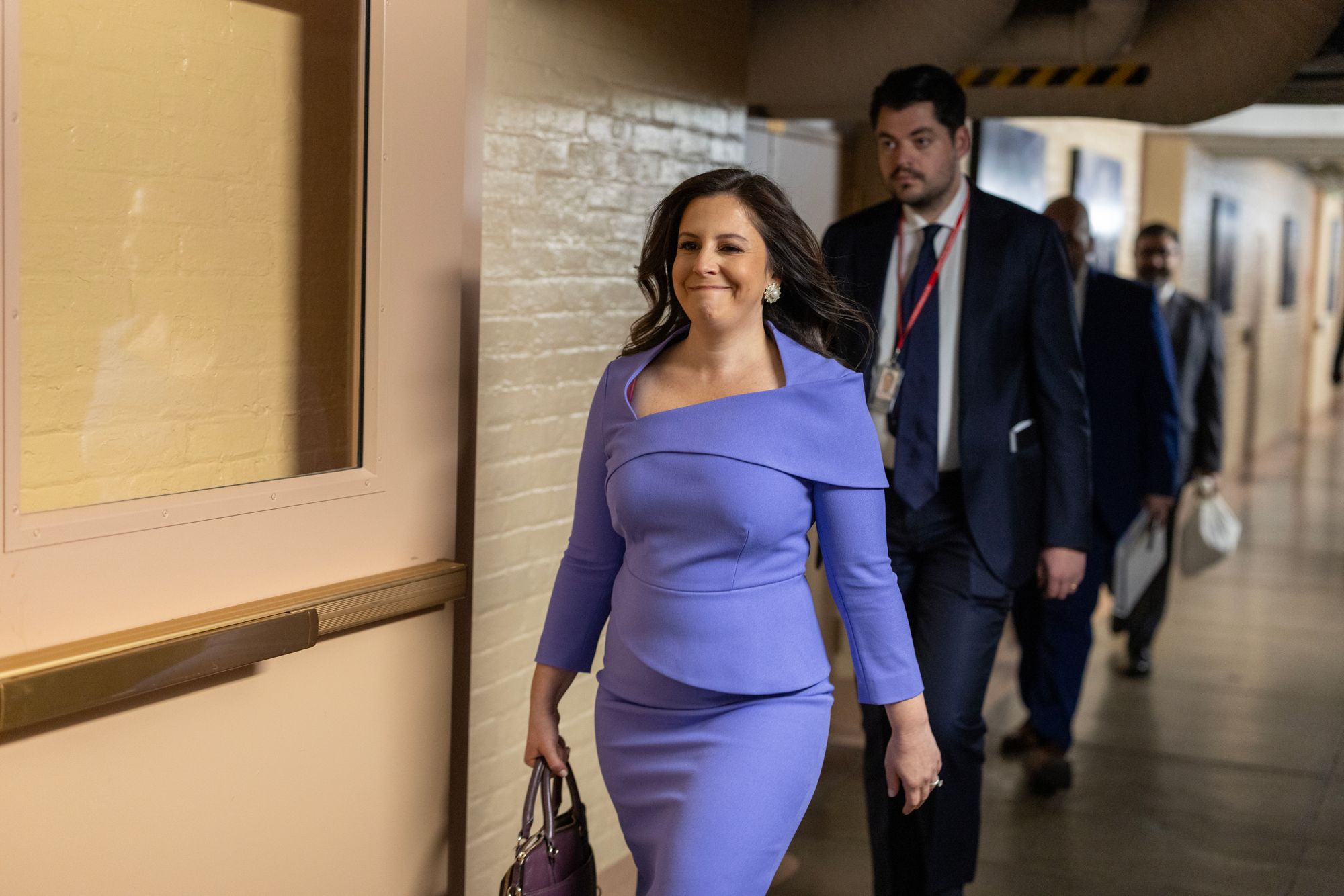
But even so, Rep. Elise Stefanik, for example, had planned to run for governor of New York after Trump and House Speaker Mike Johnson pulled back her nomination to be ambassador to the United Nations. Then, surprisingly, she announced she would not run for governor nor seek re-election. This came only a year after she had been in the running to become Trump’s running mate.
Another bad sign for Republicans is how both more experienced members and junior ones are calling it a day. Rep. Michael McCaul of Texas served as chairman of the House Foreign Affairs Committee and was a major supporter of Ukraine.
But so, too, did fellow Texas Rep. Morgan Luttrell, a retired Navy SEAL first elected in 2022. Luttrell will not even be eligible for a pension. The same goes for Hunt, who staged a quixotic campaign for Senate against incumbent Sen. John Cornyn and MAGA Attorney General Ken Paxton, where he placed third, making him ineligible for the runoff election.
Some of those retirements are a sign that Republicans think their seats can flip. Rep. Don Bacon of Nebraska represents one of only three districts held by a Republican that also voted for Kamala Harris. Rep. Darrell Issa is retiring after a comeback tenure in Congress after Proposition 50 passed in California, which allowed Democrats to draw him into a more competitive district.
Other times, it means that a member can hand-pick their preferred candidate, as is the case with Rep. Troy Nehls of Texas, whose twin brother Trever is the nominee for his seat.
To be sure, Democrats have their own retirements. The backlash from former President Joe Biden’s decision to seek re-election in his 80s seems to have prompted an older generation of Democrats including Rep. Jerry Nadler of New York, former House Majority Leader Steny Hoyer of Maryland and former House Speaker Nancy Pelosi to head for the exits.
But that also allows them to ensure their seats stay in blue hands. Only two Democrats–Reps. Chris Pappas of New Hampshire, who is running for Senate, and Rep. Jared Golden of Maine, whose district voted for Trump–are vacating seats that might be considered competitive.
This is not to say that the retirements guarantee a wave election. In 2010, only 17 Democrats and 15 Republicans did not seek re-election, when Republicans won a whopping 63 seats in the House of Representatives. And in 2022, 29 Democrats did not run for re-election compared to 20 Republicans. But most of those retirements came before the Dobbs v. Jackson decision that killed the right to an abortion and Republicans barely won the House majority, creating the tight margins that Johnson must manage now.
But the resignations, combined with the sluggish economy, lagging poll numbers as well as the House overall surrendering its authority as an independent body to Trump show just how miserable being in the House is and might be the first rumbles of a blue wave.
Democrats mulling if a ‘straight, white man’ must be the pick in 2028
Some wait times at airport bottlenecks are easing with TSA paychecks promised
‘We’ll see’: Tom Homan coy over whether ICE will leave airports once shutdown ends
Nick Cannon slams Democrats as the ‘party of KKK’ and says he’s a Trump fan
How ICE turned into Trump’s personal police
Usha Vance claims she’s ‘not a hat lady’ after being asked if she owns a MAGA cap