WASHINGTON _ Another Democratic candidate jumped into the race Monday to take on Texas Republican Sen. John Cornyn _ the latest sign that Democrats could face multiple contested primaries for Senate seats they think they can win in 2020.
Despite the prospect of intramural warfare, Democrats say they aren't concerned yet the primaries could endanger efforts to win control of the Senate, which will likely go through Texas, Colorado and other states.
"I'm not concerned because it's so early," said Katie Farnan, a leader of Indivisible Front Range Resistance in Colorado, where 15 Democrats have filed with the Federal Election Commission so far to take on first-term GOP Sen. Cory Gardner.
"If you come back in 2020 at the top of the year, I'm going to have a different answer," Farnan said.
Primaries can be early tests for candidates by helping them work out the kinks before a competitive general election. But primaries can also drain resources and damage the eventual nominees with bruising political attacks.
Republicans could face their own problematic primaries, with contests in two of the three states with Democratic senators facing what Inside Elections with Nathan L. Gonzales rates as competitive races.
But primaries could be a bigger problem for Democrats, who are targeting more races in their effort to flip the chamber.
Six of the seven Republican-held Senate seats that Inside Elections rates as competitive _ Colorado, Maine, North Carolina, Georgia, Texas and Iowa _ feature multiple Democrats who have been raising money. But Democrats aren't sweating yet, since some top contenders have already started to emerge.
The race to take on Cornyn became more crowded Monday with state Sen. Royce West launching his campaign. The primary already features Houston City Councilmember Amanda Edwards, who launched her campaign last week, and Air Force veteran MJ Hegar, who lost a 2018 House race.
Hegar has raised more than $1 million in her Senate campaign so far. Edwards' campaign spokeswoman, Andra Belknap, said Monday that their campaign raised more than $200,000 in its first 24 hours. West said in a brief interview Monday that he expects he will have to raise between $4 million and $5 million to win the primary.
Primaries often raise concerns that candidates will be forced to empty their campaign coffers, while the incumbent rakes in money. Cornyn, for example, already has $9.1 million in his campaign fund.
But Democrats tried to frame expensive primary fights as a positive.
"Six years ago, we couldn't get one candidate to run against John Cornyn," said Texas Democratic Party spokesman Abhi Rahman. He said the nominee will have the necessary resources because Texas "is now on the map" as a battleground state.
Texas isn't the Democrats' best Senate pickup opportunity, given President Donald Trump won the state by 9 points in 2016.
That title may belong to Colorado, where Gardner is running in a state Hillary Clinton won by 5 points in 2016. Inside Elections rates the race a toss-up.
Nine Democrats have filed with the FEC so far, and the field could grow. Colorado Secretary of State Jena Griswold formed an exploratory committee last week.
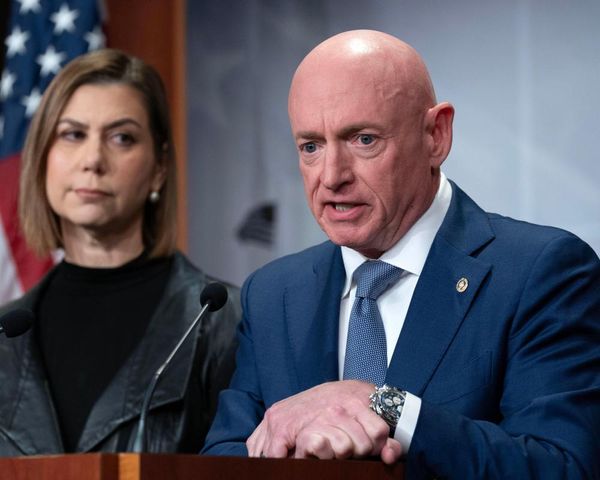
Democrats' next best opportunity is the toss-up race in Arizona, where Democrat Mark Kelly has virtually cleared the field. But the other competitive states that Democrats are targeting, including Maine, North Carolina, Georgia and Iowa feature multiple Democratic candidates.
Colorado presents the most wide open primary, with multiple candidates raising more than $750,000 so far. The top fundraiser has been former state Sen. Mike Johnston, who has raised $3.4 million.
No concerns about the crowded field came up at an Indivisible forum last month, which was the first time nearly all of the candidates shared a stage. Farnan, who organized the event, said at this point she enjoys hearing from a diverse field. But she hopes it narrows by the beginning of next year so they can better focus resources on amplifying the Democrats' message and boosting their name recognition.
In three states with multiple Democratic candidates _ Maine, North Carolina and Iowa _ some Democrats are separating from the field early.
Army veteran and former state Sen. Cal Cunningham raised the most of the Democratic field so far in North Carolina, bringing in $722,000 since launching his campaign last month. While a few other Democrats are in the race, the other candidate who had raised more than $100,000, former state Sen. Eric Mansfield, ended his campaign earlier this month.
In the race to face Maine GOP Sen. Susan Collins, state House speaker Sara Gideon won the endorsements of the Democratic Senatorial Campaign Committee and EMILY's List. Betsy Sweet, who ran unsuccessfully for governor in 2018 has been endorsed by the liberal group Justice Democrats. Gideon has raised more than $1 million so far, compared to Sweet's $81,000.
The DSCC and EMILY's List have also endorsed Theresa Greenfield in the race to take on Iowa GOP Sen. Joni Ernst, who is also the top fundraiser in a field that includes two other Democrats.
It's possible EMILY's List could endorse in other primaries as well. The group's spokesman, Ben Ray, said EMILY's List is "always open to working through a contested Democratic primary."
But national groups' involvement has drawn the ire of other Democratic candidates.
"Here we go again. The DC political elite is trying to tell Mainers who our candidate should be," Sweet tweeted after the DSCC backed Gideon.
Eddie Mauro, who is running for Senate in Iowa, said after the DSCC backed Greenfield that "Iowans want a spirited primary not influenced by Washington insiders or the establishment."
Democrats' intraparty battles could raise questions about whether anyone will be challenging the GOP incumbent while the Democrats fight each other.
Some Democratic operatives pushed back on those concerns, noting state parties and candidates themselves will continue to place pressure on Republicans. Rahman, the Texas Democratic spokesman, noted the party has a dedicated "Cornyn war room" to target the senator in digital campaigns, and to conduct polling and research.
Republicans are anticipating these crowded primary fights will force the eventual Democratic nominees to take positions that are too liberal for a general election.
But Democrats are quick to note that Republicans will have to contend with primaries of their own. Inside Elections rates three Democratic-held Senate seats as competitive: Alabama, Michigan and New Hampshire.
Republicans' best pickup opportunity is in Alabama. There a crowded field, including Roy Moore, who lost the special Senate race after facing allegations of sexual misconduct, is vying to take on Democratic Sen. Doug Jones. There is a also a potential crowded field in New Hampshire, with GOP candidates already trading barbs in the race to face Democratic Sen. Jeanne Shaheen.