TOPEKA, Kan. _ Promising a new era of stability, Democrat Laura Kelly will be the next governor of Kansas.
Kelly has vowed to put former Gov. Sam Brownback, and the years of budget woes brought on by his signature tax cuts, in the past.
"We can either go back to the Sam Brownback devastating years or we can elect a governor who will work like the devil to rebuild our state," Kelly said just a few days before the election.
Just after 9 p.m., Kelly led Kobach 51 percent to 41 percent with 1,599 of 3,556 precincts reporting.
Independent Greg Orman had 6 percent of the vote, Libertarian Jeff Caldwell 2 percent and independent Rick Kloos 1 percent.
Kelly was expected to speak to supporters in Topeka later Tuesday night.
In electing Kelly, Kansas rejected Republican Kris Kobach, who ran against her and promised to cut taxes and spending.
Kelly, a state senator from Topeka, campaigned as a moderate. She contended the bipartisan relationships she has built in the Statehouse since joining the Senate in 2005 will make her an effective governor.
Kelly focused much of her time in the Legislature on the state's child welfare system, which has been rocked by a series of shortcomings and controversies over the past several years. She has also been critical of how the state's welfare programs have been run over the past few years as Brownback and Republican lawmakers restricted benefits.
Kelly will be the third woman to occupy the governor's office in state history, following in the footsteps of her close friend and mentor, Kathleen Sebelius, the last elected Democratic governor of Kansas.
Going forward, Kelly has promised to bring stability to state government while beginning to restore services that took a hit during the past several years.
She has no immediate plans to cut income taxes, though she has voiced support for reducing the tax on food. Kansas taxes food at the same rate as other goods, unlike many other states.
Kelly has also indicated she generally supports property tax relief, but has not detailed specific plans.
Kelly also supports boosting education spending to the amount needed to finally resolve a yearslong lawsuit over school funding
Earlier this year, lawmakers approved an annual increase of more than $500 million that's phasing in over five years. The state's Supreme Court largely signed off on the package, but wants lawmakers to take inflation into account.
Kelly also wants to overhaul the state's Medicaid program _ a move that could affect more than 400,000 participants.
Sen. Barbara Bollier, a Mission Hills Republican who opposed Kobach during the campaign, said Kobach's loss is a rejection of the Brownback mentality toward government.
"(It's) people saying enough," Bollier said. "We're not going down that road anymore."
Jean Hughes, 57, of Wichita, said she voted for Brownback for his first term as governor, but not the second time, because "he was cutting into the teachers' money."
"Brownback had such a poor demonstration of his tenure," Hughes said.
Hughes said she voted for Kobach because "Brownback's not running. It's Laura Kelly. I don't trust Democrats."
Connie Buss, 85, of Wichita, said she didn't like Brownback's education policies, and she thought Kobach is too much like Brownback.
"I voted for Laura Kelly because I don't want another Brownback," she said.
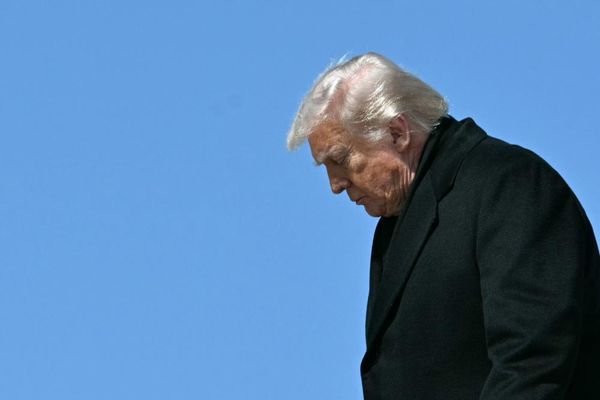
The Kansas governor's election came during nationwide midterm contests that were largely seen as a referendum on the first two years of Trump's presidential term. No Kansas politician more closely aligned himself with Trump than Kobach, who informally advised the president on immigration and voter fraud.
Before the polls closed Tuesday, Kobach remained mum about Trump's comment at an October rally that he'll bring Kobach into the administration if he loses the race.
"I have not had those discussions with the president," Kobach said. "But it was an interesting joke, that's for sure."
But while Kobach tethered himself to the nation's top Republican, Kelly won the backing of past Kansas Republican leaders such as former Govs. Bill Graves and Mike Hayden.
Former Republican U.S. Sen. Nancy Kassebaum also endorsed Kelly earlier this fall, saying "It seems to me that Kobach has developed a record that shows a focus on ways and how to accomplish his end goals that I think are not the best for Kansas."
During the fall campaign, Kelly developed a clear money advantage over Kobach.
Kelly outraised Kobach by more than $900,000 between late July and late October. Kobach's running mate, Wichita businessman Wink Hartman, also loaned the campaign more than $1.5 million during that time. Kelly and her running mate, Wichita Sen. Lynn Rogers, gave minimal amounts to their campaign.
Kelly's campaign has also spent significantly more than Kobach. From July 27 through Oct. 25, Kelly spent $2 million while Kobach spent $1.3 million.
For Orman's part, he collected $805,351 during that same period, with $580,000 of that coming from himself. At the same time, he spent $1.2 million.
But none of it improved Orman's standing in the polls, where he remained at either 9 percent or 10 percent.
Throughout the race, Democrats feared that Orman would draw away voters who would otherwise vote for Kelly, and possibly hand Kobach the election.
That fear even came from inside Orman's campaign. In the final days of the race, Tim Owens, a former Republican state senator, resigned his position as Orman's campaign treasurer and instead endorsed Kelly as the only way to stop Kobach.
Fears that Orman would act as a spoiler ended up not coming true. In the end, Kelly continued the historic pattern in Kansas of the governorship flipping between political parties.
(Jason Tidd of the Wichita Eagle contributed to this report.)