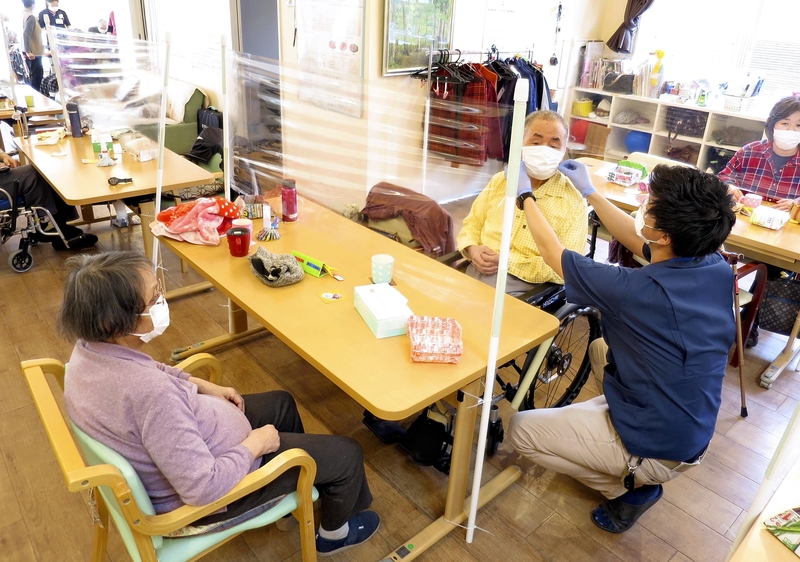
As the coronavirus continues to spread, 85% of caretakers for dementia patients think dementia symptoms are progressing among sufferers because there are fewer opportunities for them to interact with other people, according to a recent survey.
The results of the survey, which was conducted by the Center for Dementia Care Research and Practices, suggest that a progression of dementia symptoms is associated with having fewer opportunities to interact with others and doing daily activities.
The organization trains care workers and nurses who play a vital role in caring for dementia patients at nursing homes and other facilities nationwide based on a governmental dementia policy.
The online survey was conducted in May, and of the 2,410 people who trained at the organization, 767, or 32% responded.
The survey showed that the workplaces for 86% of the respondents had restricted or suspended visits from family members of dementia patients.
Regarding how much of an effect the restrictions had on the progression of a patient's dementia symptoms, 37% said it affected their patients "a lot," and 48% said their patients were "somewhat" affected. This showed that 85% of respondents noticed the restrictions had some effect on their patients. However, 6% said they saw "no difference," 5% said they saw "very little" difference and 3% said they "don't know."
When respondents were asked, with multiple answers accepted, about the behavioral and psychological issues that arose among their dementia patients, 49% said their wards were "wishing to see their families," 40% said they were "irritated" and 29% said they were "restless." A "decline in health" was also noticed by 28% of respondents.
Under the circumstances, many of these facilities are looking for ways to ease a total ban on visits. Among the measures that have already been taken -- multiple answers accepted -- are "allowing outings in small groups" by 38% and "allowing meetings with visitors while avoiding the so-called Three Cs [closed spaces, crowded places and close-contact settings]" by 45%. Some facilities allow users to meet visitors via the internet or face to face through windowpanes.
Koichi Nakamura, a senior training planner at the center who was in charge of the survey, said: "Elderly people with dementia tend to be adversely affected mentally and physically when their chances of doing activities and interacting with other people are restricted, like this time. It is important to take measures to prevent infections, but we also need to find ways to have them keep communicating with their family members."
Read more from The Japan News at https://japannews.yomiuri.co.jp/