As the new coronavirus continues to spread, the demand for deliveries of foodstuffs and other daily necessities has soared. This is due to the spread of "sugomori-shohi," or stay-at-home shopping. Along with a shortage of trucks and delivery staff, package handling businesses are desperate to prevent infections of their workers when dropping off orders at people's homes.
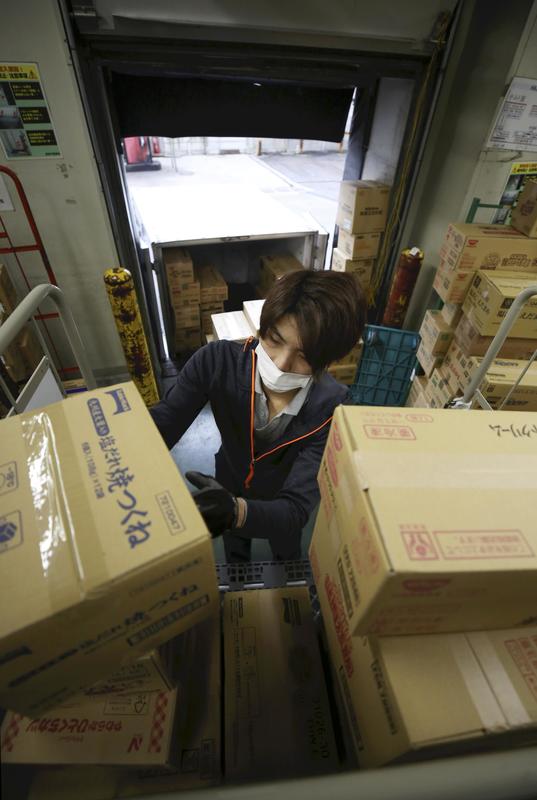
Early on Wednesday morning, cardboard boxes filled with frozen food were loaded one after another into trucks at a distribution center of transport company Takaido Coolflow Co., located in Suginami Ward, Tokyo.
Their daily deliveries from April have increased to a maximum of 4,000 boxes a day, which is more than double their usual 1,200 to 1,500 boxes. The company dealt with the increase by borrowing about 10 trucks from other distribution centers.
"It's nice to have a job, but drivers have physically reached their limit," Hiroshi Miyamoto, an official of the company said.
Demand for deliveries of daily necessities and foodstuffs started to increase in late February, when the government decided to ask schools nationwide to close. It then surged in April when, after authorities had first asked people to refrain from going out, the government declared a state of emergency.
Major online retailer Amazon Japan Inc. has had to prioritize purchases of daily necessities and sanitary goods, and it restricts the arrival of certain other goods at its distribution facilities.
Home delivery company Demae-can Co., located in Osaka City, has also seen a sharp increase in home deliveries of foods and drinks. The company has begun using employees from restaurants to temporarily deliver food and drinks.
Delivery Service Corp., located in Fuchu, Tokyo, handles packages from online shopping sites. It hired about 10 new employees from restaurants and other businesses in response to their shipments increasing by about 30% between March and April.
While shipments to households are increasing rapidly, those to businesses are decreasing due to the widespread closures amid the nationwide emergency declaration.
Major transport companies such as Yamato Transport Co. and Sagawa Express Co. have been able to handle both services under their regular systems. But according to an executive at Last One Mile Co-op in Tokyo, which consists of small-lot carriers, some small and midsize firms have seen their handling of packages for businesses plunge 90%.
Protecting delivery workers against coronavirus infections on the job is a pressing issue.
Amazon in March began its "Okihai" safe drop-off delivery service, in which parcels can be placed at predesignated locations such as building entrances and garages even if the recipient is not at home, in some areas in 30 prefectures.
Yamato Transport Co. and Sagawa Express Co. have also made it possible to receive packages without face-to-face contact by telling delivery staff where to put them through home interphones.
Even the home-delivery service Uber Eats has added an option to allow users to select a safe drop-off site to its ordering application. A labor union comprising Uber Eats delivery staff has demanded the company to pay a 300 yen allowance for each hazardous delivery and distribute masks and antiseptic solution.
Read more from The Japan News at https://japannews.yomiuri.co.jp/