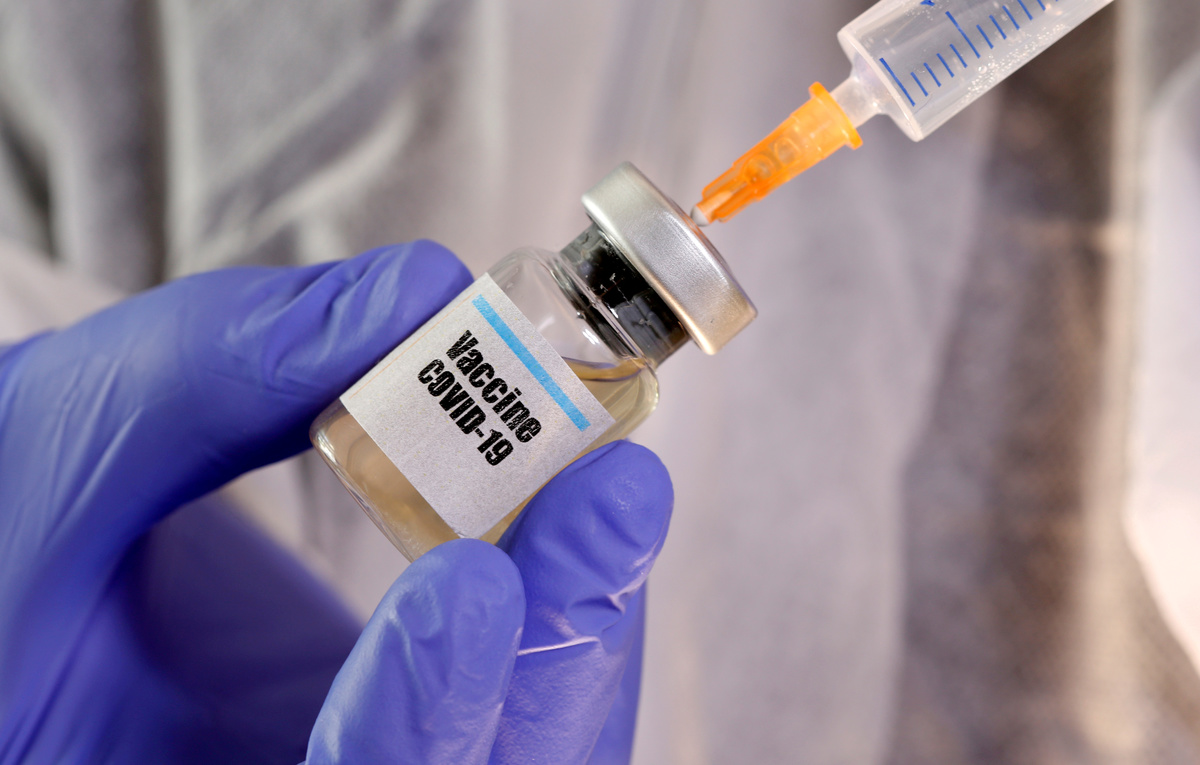
Getting a coronavirus vaccine from manufacturing sites to parts of the developing world supply will be an immense challenge, given the need to store some vials at temperatures as low as minus 80 Celsius (-112 Fahrenheit), Deutsche Post warned on Tuesday.
The German logistics firm said that distribution of an eventual vaccine across large parts of Africa, South America and Asia would require extraordinary measures to keep deliveries of so-called mRNA vaccines refrigerated.
Companies developing vaccines requiring exceptional cold storage, such as Moderna Inc and CureVac, are working to make their injections last longer in transit.
The novel class of mRNA vaccines is among the furthest advanced in a field of 33 immunisation shots currently being tested on humans.
But upgrading cold storage infrastructure in regions outside the 25 most advanced countries, home to one-third of the global population, will pose an immense challenge, said Deutsche Post in its study, conducted with consultancy firm McKinsey.
Moderna said on Tuesday it expects its mRNA vaccine to be stored at minus 20 Celsius and after thawing to be kept at between plus 2 degrees and minus 8 degrees for about a week.
Translate Bio Inc said in June it is working so its vaccine can be shipped and stored at less extreme temperatures than minus 80 degrees.
CureVac said its vaccine will likely be stored in a regular fridge and that it was confident final data on durability would be "competitive".
Deutsche Post said that even if the vaccine cold chain requires temperatures of only minus 8 Celsius the share of the world’s population with reliable access increases only to about 70%, with parts of Africa at risk of missing out.
"We anticipate 10 billion vaccine doses will have to be distributed across the world, and that includes regions that don't have motorway access every five miles," said Katja Busch, chief commercial officer of Deutsche Post's DHL global forwarding unit.
(Additional reporting by Lisa Baertlein, editing by Louise Heavens and Lisa Shumaker)






.png?w=600)