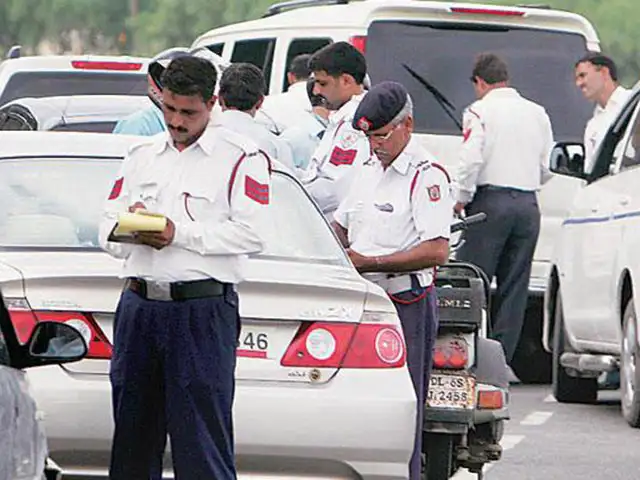
The Delhi District Courts have announced the launch of Weekend Traffic Courts (WTC) to facilitate the disposal of pending traffic challans. The initiative will be operational across all district courts in Delhi on the second Saturday and all Sundays of every month, with court proceedings scheduled between 10:00 AM and 4:00 PM.
According to a public notice issued by the Delhi District Courts, the move aims to provide motorists with a convenient option to resolve traffic challans without having to visit courts on regular working days.
The notice stated that all compoundable challans will be taken up in the Weekend Traffic Courts on designated weekends for disposal.
How to download challans
Traffic violators will be able to download their challan slips online through the official Delhi Traffic Police portal. The challans can be accessed using the registration number of the vehicle.
The facility to download challans will be made available to the public from 10:00 AM on June 25, 2026. While downloading the challan, violators will be required to select a court complex, date of appearance and a preferred time slot. Available time slots include 10:00 AM to 1:00 PM and 2:00 PM to 4:00 PM.
Weekend Traffic Courts to begin from July 5
The Delhi District Courts said the Weekend Traffic Courts will commence functioning from July 5, 2026.
Motorists who select a court complex and hearing slot must visit the chosen court on the scheduled date and time. They will also be required to carry a printed copy of the challan slip before appearing before the concerned judge for disposal of the challan.
The initiative is expected to help streamline the settlement of traffic violations and reduce the burden on regular court proceedings while offering greater convenience to vehicle owners across the national capital.
As per a report of the Times of India, 22 benches across Delhi's 11 district courts will conduct proceedings under the newly introduced Weekend Traffic Courts. Each bench is expected to dispose of around 700 challan cases per day, with a single case potentially involving multiple pending challans linked to the same vehicle.
The Weekend Traffic Courts will only hear compoundable traffic offences, which can be settled by paying a prescribed fine. Non-compoundable offences, which require judicial scrutiny because of their serious nature, will not be taken up by these courts.
DCP (Traffic Headquarters) S K Singh said that unresolved challans are eventually transferred to virtual courts based on the nature of the offence, contributing to the growing pendency of cases.
While the traffic police already conduct daily evening courts, special evening courts and periodic Lok Adalats to facilitate disposal of pending challans, many working professionals find it difficult to attend proceedings on weekdays. "The weekend courts are being introduced primarily for their convenience," Singh said.
He added that motorists will also be able to settle challans using digital payment modes such as UPI and the Bharat Bill Payment System (BBPS), making the process faster and more convenient.
Currently, motorists have multiple options for settling traffic challans. Eligible cases can be resolved through the Virtual Court platform, which operates round the clock and does not require a physical appearance. Cases requiring judicial intervention are heard in evening courts, which function on working days between 5 pm and 7 pm, while selected matters are periodically referred to Lok Adalats for bulk settlement drives.
As per Delhi Traffic Police data available till June 15, more than 4.3 crore traffic challans and camera-generated notices are pending. This includes over 1 crore on-the-spot challans and 3.3 crore notices issued through automated enforcement cameras.
So far in 2026, the traffic police have issued more than 42.2 lakh challans and notices through field enforcement and automated camera systems. However, nearly 96.5% of these cases, or over 40.7 lakh challans and notices, remain unresolved.
Among the violations recorded this year, improper and obstructive parking was the most common offence, accounting for 12.2 lakh cases. The figures highlight the continuing issue of vehicles being parked along roadsides, intersections and designated no-parking zones. Driving without a helmet was the second most frequently reported violation, with more than 6.7 lakh cases involving riders and pillion passengers. Another 2.3 lakh motorists were penalised for driving without a valid Pollution Under Control Certificate (PUCC).