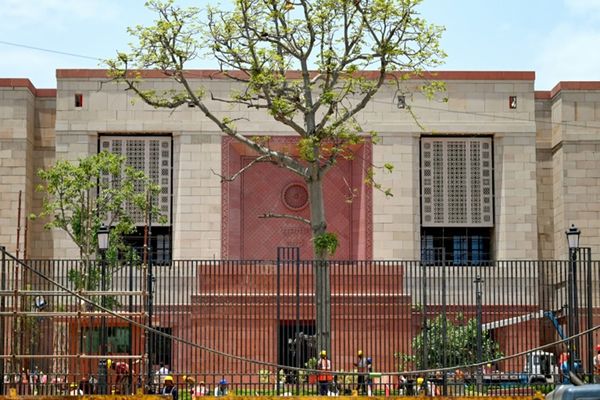
India’s Supreme Court has warned that toxic air in Delhi could cause “permanent damage” to people’s health, as pollution levels in the capital remained in the “severe” range on Thursday.
Justice PS Narasimha made the remarks during a hearing, urging lawyers to use virtual facilities instead of attending court in person.
“Why are you all appearing here? We have the virtual hearing facility. Please avail it. This pollution ... this will cause permanent damage,” he said.
Senior advocate and MP Kapil Sibal, who was present, told the bench, “We are using the mask,” to which Justice Narasimha replied, “Even masks are not enough. It will not suffice.”
The court also directed the governments of Punjab and Haryana to file status reports on efforts to curb stubble burning, which adds to Delhi’s winter smog.
Delhi’s air quality index (AQI) stood at 425 on Thursday morning, according to the Commission for Air Quality Management (CAQM), placing it in the “severe” range for the third consecutive day. The city first crossed the 400 mark this season on Tuesday, when the AQI hit 428 – the worst since December last year.
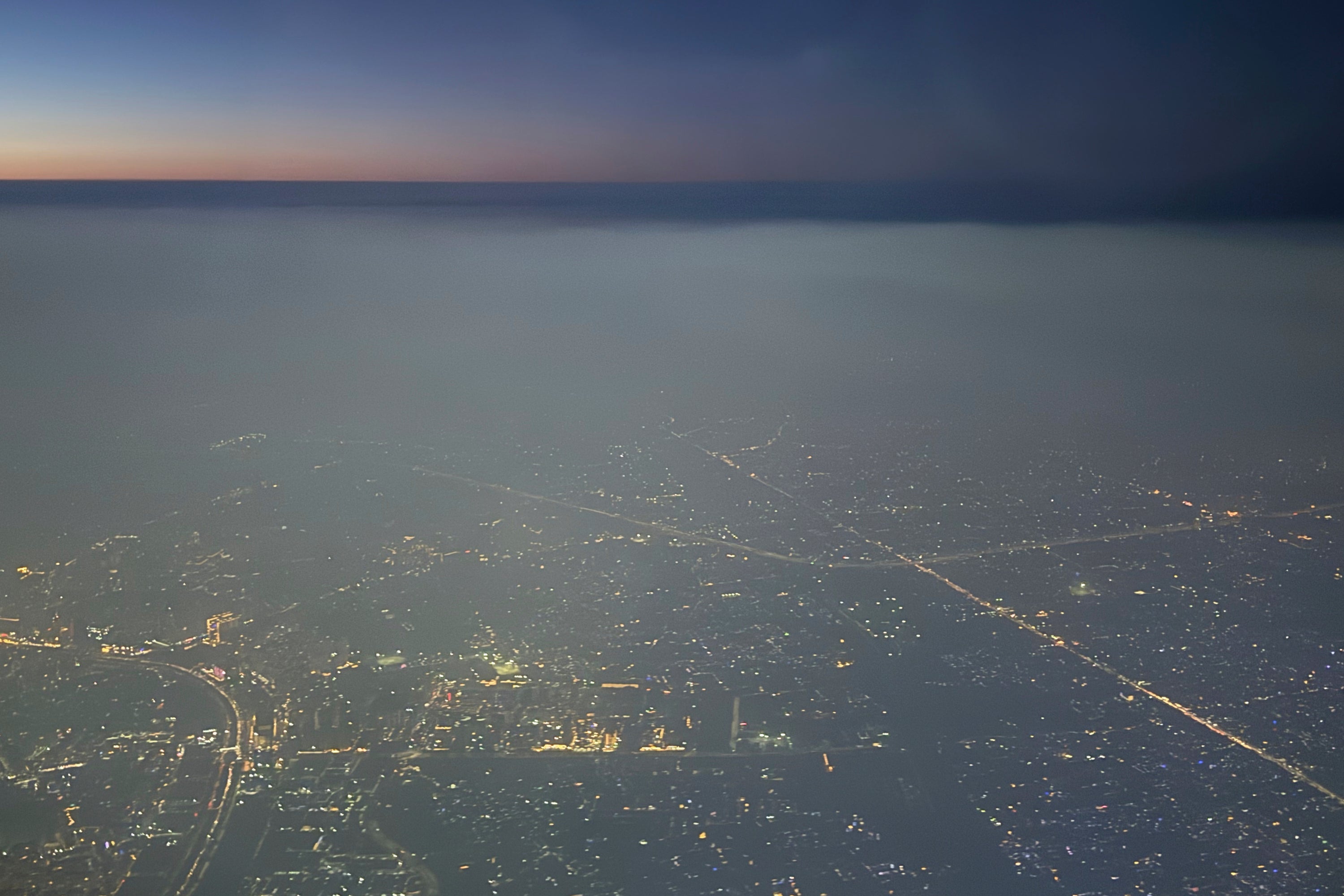
It triggered the third phase of restrictions under the city’s Graded Response Action Plan, which includes bans on construction work, curbs on older vehicles and a programme of online classes for younger students.
A separate Supreme Court bench led by Chief Justice Bhushan R Gavai is monitoring efforts to control pollution, including stubble burning in nearby states. The court has asked the governments of Punjab and Haryana to file reports detailing their actions after satellite data showed thousands of crop-fire incidents over the past week.
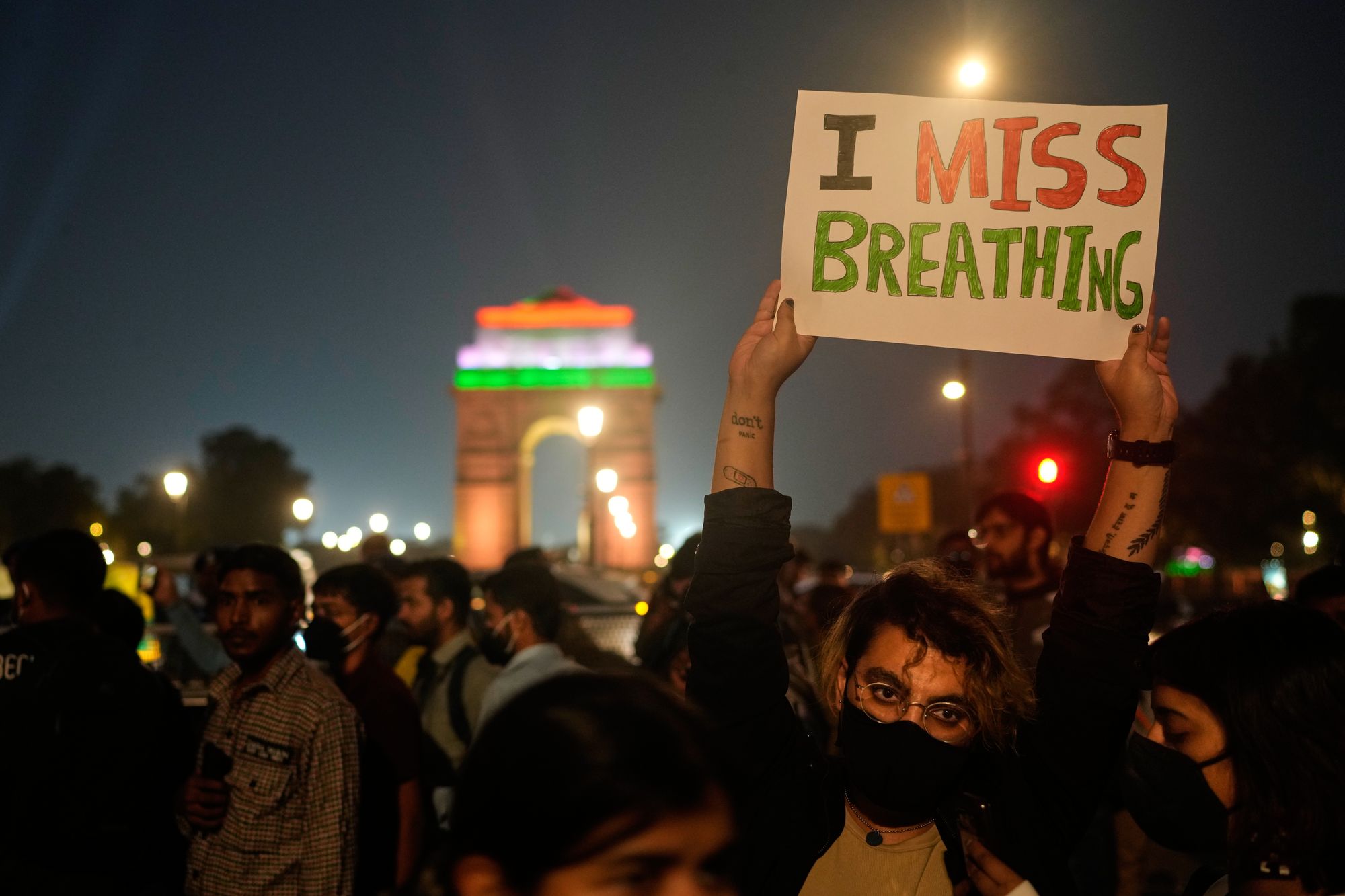
Increasing air pollution levels also prompted hundreds of people, including parents and environmental activists, to gather at Delhi’s India Gate last weekend in a rare protest, urging authorities to act. Many wore masks and carried placards, with one reading: “I miss breathing.”
Delhi’s toxic haze, a recurring winter crisis, results from a mix of vehicle exhaust, industrial emissions, crop-burning smoke, and stagnant weather patterns that trap pollutants close to the ground.
With PM2.5 concentrations often more than 20 times higher than World Health Organisation guidelines, Delhi remains one of the world’s most polluted capitals.
According to a study published by the medical journal The Lancet, exposure to pollution has contributed to millions of deaths across India over a decade.
The Supreme Court will review the matter again on Monday.
Warming limit of 1.5C ‘no longer plausible’ as study shows emissions at new high
Delhi tightens anti-pollution curbs after citizens take to streets over air quality
Ed Miliband urges progressives to unite around green policies ahead of Cop30
Cop30: Key questions about the UN climate conference
Top UN official warns inaction on climate crisis ‘will never be forgiven’