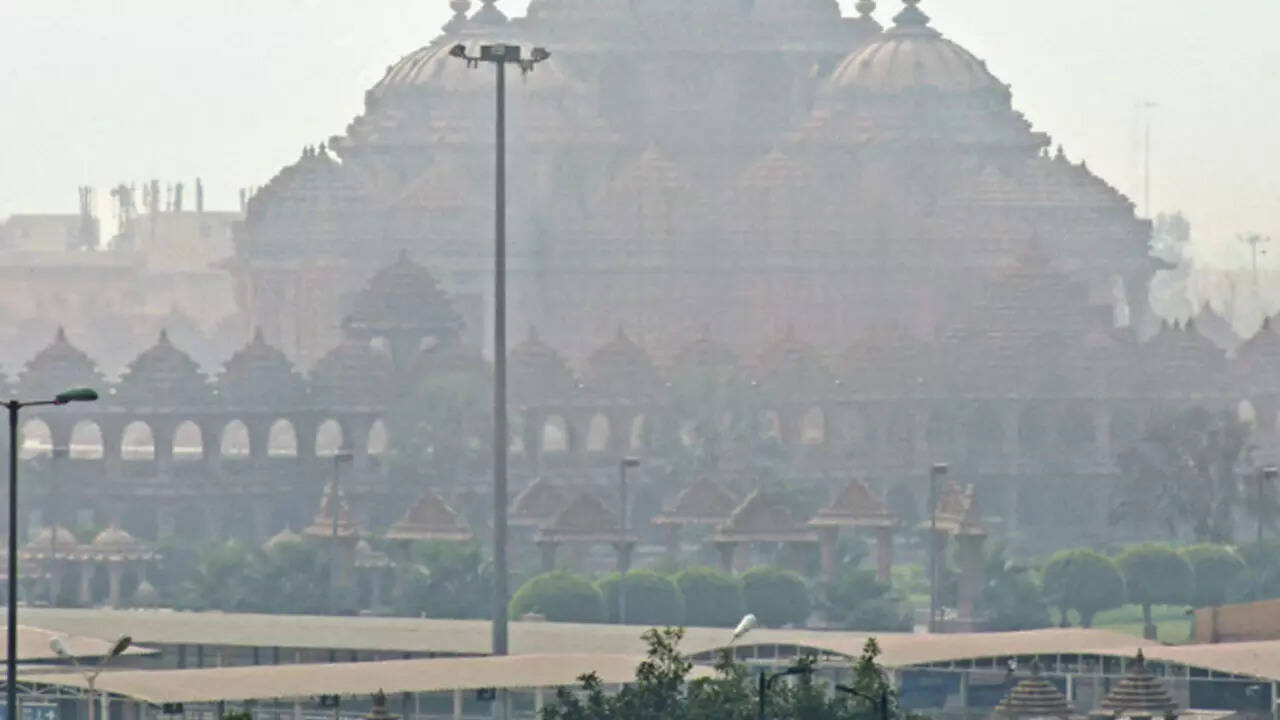
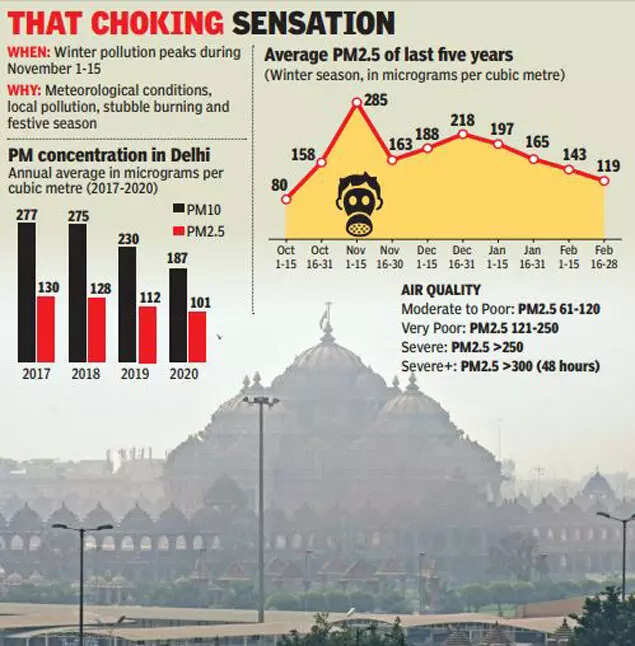
NEW DELHI: Delhi’s air is most polluted from November 1 to 15, according to an analysis of the PM 2.5 levels of the past five years by the capital’s environment department.
Track the pollution level in your city
The average PM 2.5 value is 285 micrograms per cubic metre during this period. Officials said this is the only period that has been put in the ‘severe’ range (when the PM 2.5 concentration is more than 250 micrograms per cubic metre).
“The period witnesses severe pollution mainly due to a rise in stubble burning and Diwali celebrations,” according to an official of Delhi Pollution Control Committee (DPCC).
Dec 16 to 31 is second most polluted fortnight in winter
The second most polluted fortnight of this season is December 16 to 31 with an average PM 2.5 level of 218 micrograms per cubic metre, according to this report. “Meteorological conditions are one of the most important factors through the entire winter season but the average PM2.5 crosses the 200-mark in the second half of December because of farm fires, festivals and marriage season,” said the official.
Delhi’s air quality remains in the ‘moderate’ to ‘poor’ categories during the beginning (October 1-15) and end (February 16-28) of the winter season. However, it remains in the ‘very poor’ category in the other fortnights.
The air quality is considered ‘moderate’ to ‘very poor’ when PM 2.5 is between 61 and 120 micrograms per cubic metre. It is considered to be ‘very poor’ when the PM 2.5 level is between 121 and 250 micrograms per cubic metres.
“Based on this analysis, all the agencies will intensify their actions to control pollution. We have come up with the Delhi Winter Action Plan, listing 10 points to tackle this,” said a senior official of the environment department.
Anumita Roychowdhury, executive director, research and advocacy, Centre for Science and Environment, said, “Smog episodes intensify in two distinct phases during winter — early November and end December— January. Low temperature, inversion, calm wind and atmospheric changes trap air and pollution. The pollution concentration starts to build up from mid-October. Farm fires, Diwali firecrackers and an increase in traffic intensity around festivals contribute to the November smog. In subsequent phases, more intense winter conditions create opportunities for more severe smog episodes.”
She said the winter conditions cannot change but the authorities can bring down the pollution levels. “If the authorities take round-the-year action with a systemic approach, develop infrastructure and implement strategies, overall pollution can be reduced and the levels sustained. However, during extreme pollution episodes, immediate emergency measures are needed to ensure that pollution levels do not worsen,” she said.