NEW DELHI: New Delhi Municipal Council will soon begin constructing modular rainwater harvesting pits. These will be cost-effective, take a shorter time to install and require less maintenance.
The civic body will create these at 95 locations, with the work order to be awarded by July-end and the project to be completed by March next year.
“This technology uses recycled plastic for prefabricated blocks used in the setup,” said NDMC vice chairman Satish Upadhyay. “We have decided to share the concept on the Swachh Bharat Mission portal.”
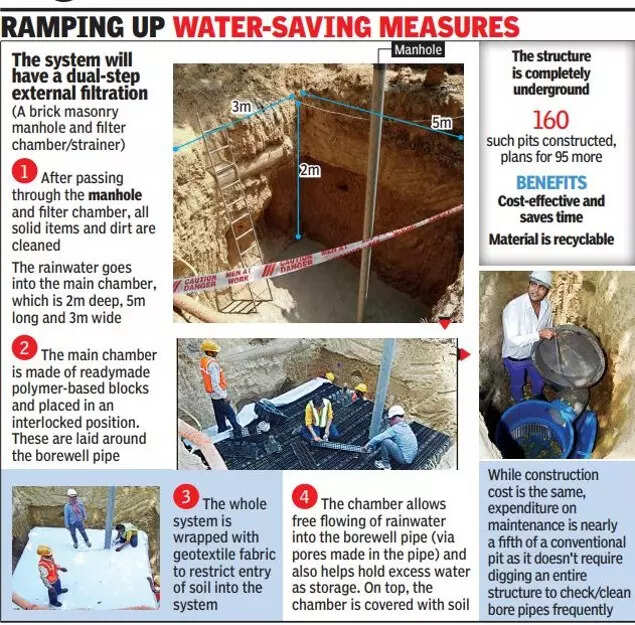
The modular system consisted of three chambers. “To begin with, the rainwater collected from stormwater drains enters the underground brick masonry manholes, which are around 1.2-metre wide and 1.2-metre deep. From the middle of a chamber here, a pipe goes to the second chamber called the filter unit, which is around 2-metre deep. It has a strainer to catch dirt, silt and other solids allowing movement of the steel bucket installed on the lower side of this chamber,” said Upadhyay.
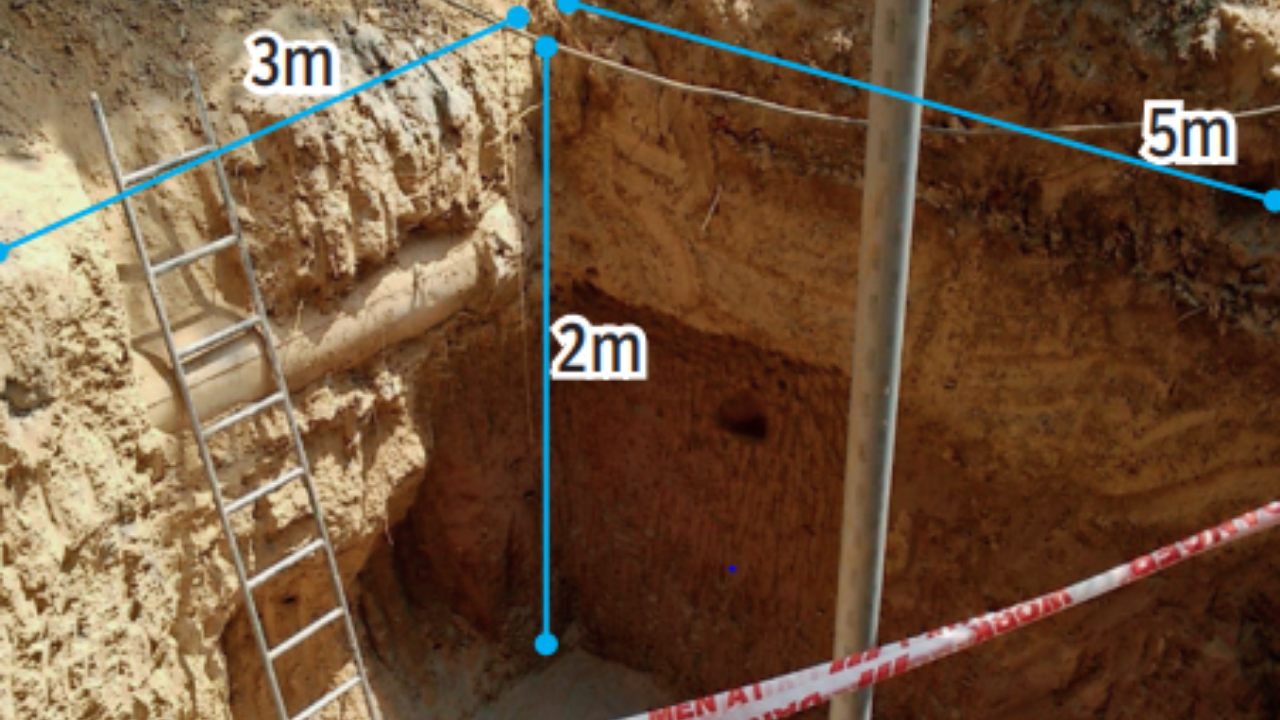
The bucket has a pipe going to the third and main chamber. “The main chamber is made of pre-fabricated polymer-based blocks that are placed in an interlocked configuration. These are laid around the borewell pipe which is 30-35 metre deep and the whole system is wrapped with geotextile fabric to restrict the entry of soil into the system,” said the vice chairman.
The chamber allows percolation of rainwater through the borewell pipe via pores made on pipe while also storing any excess water. The structure is completely underground and its surface can be used for parking, gardening, etc. “These polypropylene blocks are very strong and can easily bear 5-10 tonnes without requiring any special load-bearing designs,” said Upadhyay. “In other words, unlike conventional pits where nothing can be done on top of the main chamber, with this technology we can put the space to many uses.”
He also pointed out that unlike conventional rainwater harvesting pits in which the drainpipe goes to the main chamber passing through sand or gravel, in the new system, a three-tier framework cleaned the rainwater before allowing it into the borewell. “Also, the gravel and the pores on the borewell pipes required frequent cleaning earlier because of silt and clogging by sand and soil. In the case of the modular rainwater harvesting pits, the solid waste and silt are sorted by the filter, which can be removed easily for period cleaning without disturbing the entire setup,” said Upadhyay.
Construction too causes no dust pollution because polypropylene blocks are used instead of gravel, sand and dust necessary in the conventional pits. The pre-made blocks are simply ferried to the site and interlocked into place.