One in six babies born with a cleft palate is not diagnosed with the condition when they are first examined within 72 hours of their birth, paediatricians reveal.
Failure to spot that they have a cleft palate can lead to newborns suffering impaired growth or development.
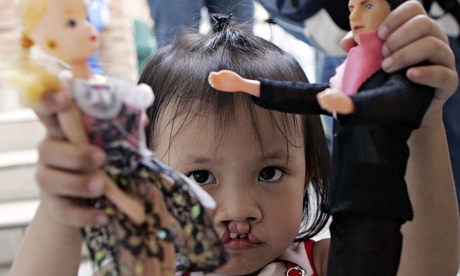
A cleft palate is the most common facial defect in the UK, with one in every 700 babies born with the disfigurement – over 1,000 newborns a year. Babies with it have a split in their lip or palate, or both.
“Every child deserves the best start in life. This delay is totally unacceptable,” said Dr Alex Habel, an expert in the condition and member of the Royal College of Paediatrics and Child Health, on Thursday.
It is issuing new guidance to paediatricians, midwives and GPs to help improve detection rates. The physical examination newborns undergo includes a visual cleft palate assessment.
Babies whose cleft palate is detected usually have surgery soon after, but often also need speech therapy, orthodontic treatment and other help.